





Period Parlour Sofa
A period parlour sofa brings grounded elegance to a sitting room, offering deep seating wrapped in traditional upholstery and rich timber frames.
Period Parlour Sofa
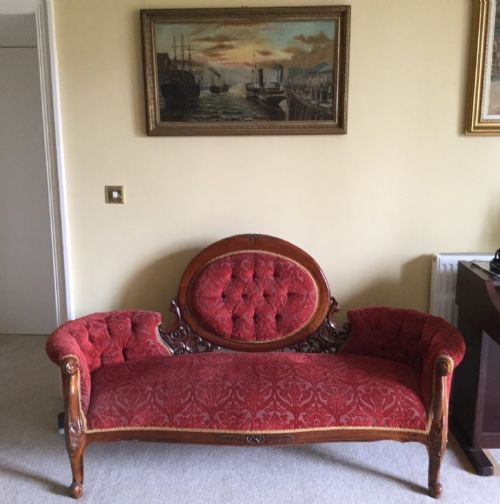
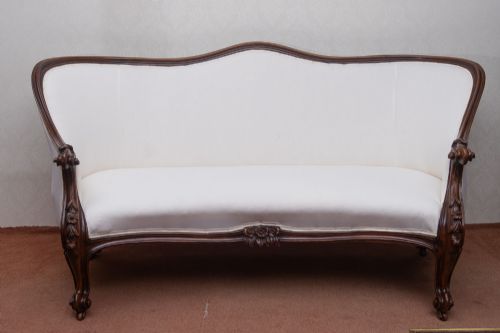
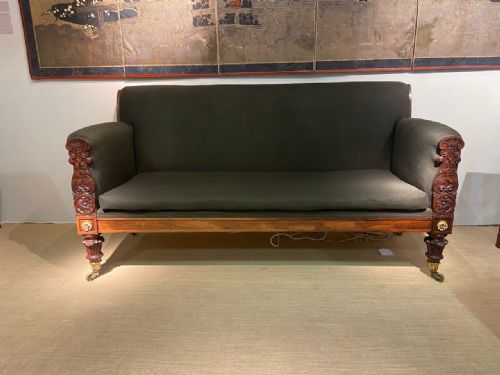
A period parlour sofa is a seating piece designed for formal reception rooms, drawing rooms, and private parlours across the nineteenth and early twentieth centuries. These furnishings range from compact two-seat settees to grand country house couches, built to anchor a formal interior.
The most common examples on this page hail from the nineteenth century, including Victorian walnut and mahogany frames, alongside Edwardian satinwood designs. Makers often styled these after French Rococo, Empire, and Aesthetic movements, creating pieces with distinct regional and stylistic character.
Beyond standard sofas, buyers encounter related seating forms like settees, canapes, and full salon suites that include matching chairs. These seating arrangements provide a cohesive historical look for period properties and modern homes alike.
How they were made
Cabinetmakers constructed these frames using dense timbers such as mahogany, walnut, rosewood, satinwood, and ebonised hardwood. Artisans shaped these woods through carving and gilding, producing structural frames that supported heavy upholstery.
Upholstery techniques relied on sprung settee bases paired with deep pile brocade, velvet, damask, and standard fabric coverings. Brass details and intricate woodwork completed the construction, ensuring both durability and visual warmth.
Period Parlour Sofa Retail Price Guide 2026
Typical asking prices for period parlour sofa among the pieces listed under this phrase on Sellingantiques today, from the lower quarter to the upper quarter. They describe what is for sale here now, not the wider market.
Some double-ended sofas allowed nineteenth-century callers to converse face-to-face without anyone having to slide along the seat.
What varies in quality
Quality rests in the precision of the timber framing, from hand-carved walnut details to the selection of figured mahogany and satinwood. Finer pieces display crisp architectural lines and sculptural woodwork that remain sharp across the arms and backrest.
The standard of upholstery and internal springing dictates the finish, with deep pile brocade, velvet, and damask reflecting the original opulence of the piece. Well-executed re-upholstery maintains the integrity of the original frame shape.
Robert Strahan & Co·Jas James Shoolbred
The Period Parlour Sofa Glossary
- Settee
- A long upholstered seat for more than one person, sharing characteristics with both a bench and a sofa. These pieces formed standard seating in nineteenth-century drawing rooms.
- Canape
- An ornamental sofa or settee, heavily influenced by French design traditions. They frequently feature exposed carved wooden frames and decorative gilt finishes.
- Aesthetic Movement
- A late nineteenth-century style focusing on artistic refinement and form. Furniture from this period often utilises ebonised finishes and clean structural lines.
- Brocade
- A rich, heavy fabric woven with raised patterns, often utilised for traditional upholstery. This material adds texture and depth to nineteenth-century seating.
- Double Ended Sofa
- A sofa featuring raised, symmetrically curved ends that allow a person to recline at either side. This form was popular in late Victorian and Edwardian interiors.
Period Parlour Sofa: Frequently Asked Questions
Where did people put a period parlour sofa?
These sofas were traditionally placed in the formal parlour, drawing room, or reception rooms of nineteenth-century homes. They served as central seating for receiving guests and family gatherings.
Today, they function well in living rooms, studies, and wide hallways, adding historic character and comfortable seating to modern interiors.
How do I identify a Victorian sofa?
Victorian sofas are typically identified by their use of dark timbers like mahogany and walnut, combined with heavy sprung bases and substantial upholstery. Their stylistic details often draw on French Rococo Revival or heavier classical forms.
Examining the underside of the frame and the joinery helps confirm the nineteenth-century origin of the piece.
Can I use an antique sofa every day?
Many period parlour sofas are structurally robust enough for daily use, provided the internal frame and springing remain sound. High-quality timber construction ensures enduring stability.
If the piece has been recently re-upholstered with modern webbing and springs, it offers reliable support for regular sitting and lounging.
What is the difference between a settee and a sofa?
Historically, a settee often referred to a lighter, two-seat wooden or partially upholstered frame, while a sofa denoted a larger, fully upholstered piece meant for reclining. Over time, the terms became largely interchangeable.
On this page, both forms share similar nineteenth-century construction methods and decorative styles.