





Period Parlour Settee
These period parlour settee pieces bring formal nineteenth-century and Edwardian seating into modern rooms with traditional presence.
Period Parlour Settee
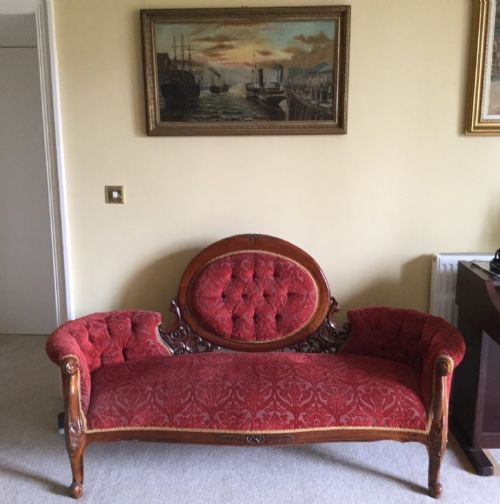
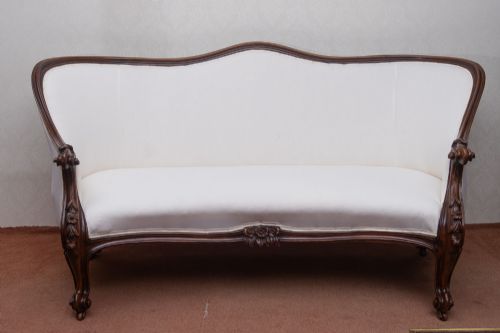
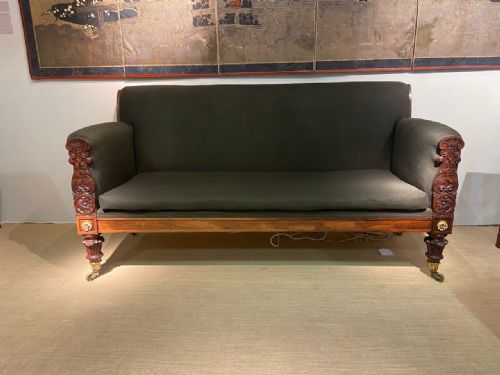
A period parlour settee represents the principal seating of nineteenth-century and early twentieth-century reception rooms, functioning as both a decorative centrepiece and a formal seat. The selection ranges from compact two-seat couches to larger country house sofas and matching salon suites.
Buyers will encounter various stylistic interpretations on this page, spanning Regency, Victorian, Edwardian, and French revival designs. These pieces include mahogany frames, giltwood canapes, and ebonised aesthetic frames upholstered in brocade, velvet, or damask.
Materials and construction
Timbers such as mahogany, rosewood, satinwood, walnut, and hardwood form the structural frames of these settees, often shaped through carving or painted and gilt finishes. Brass details and spring-loaded bases appear across several nineteenth-century examples to support the upholstered cushions.
Upholstery techniques utilise traditional textile coverings including deep-pile brocade, velvet, damask, and fabric. These materials are fitted to double-ended frames, multi-piece salon suites, and French-style gilt or gold-painted frames.
Period Parlour Settee Retail Price Guide 2026
Typical asking prices for period parlour settee among the pieces listed under this phrase on Sellingantiques today, from the lower quarter to the upper quarter. They describe what is for sale here now, not the wider market.
Some Victorian settees were designed with double-ended frames so two people could converse closely without ever making eye contact.
Judging quality in antique settees
The distinction between standard examples and finer pieces rests upon the crispness of the timber carving and the sophistication of the frame design. Superior settees display thoughtful proportions, refined woodwork in mahogany or rosewood, and cohesive stylistic details like French Rococo Revival or Empire influences.
Upholstery choices and finishing treatments also differentiate pieces, with deep-pile brocade, velvet, and quality fabric enhancing the visual weight of the frame. Maker attribution and original suite configurations further elevate certain pieces above standard single items.
Robert Strahan & Co·Jas James Shoolbred
The Period Parlour Settee Glossary
- Canape
- An ornamental French-style sofa featuring an exposed wooden frame, often carved and gilded. These pieces were designed for formal reception rooms.
- Aesthetic Movement
- A late nineteenth-century design style focusing on artistic visual value, often demonstrated through ebonised woodwork and refined ornamentation. Pieces from this period reflect a departure from heavy Victorian styling.
- Brocade
- A rich shuttle-woven fabric featuring raised patterns, frequently utilised for period upholstery. It provides a heavy texture suited to formal settees.
- Double Ended Sofa
- A sofa design featuring symmetrically scrolled or raised ends rather than a single distinct back and arm arrangement. This layout allows for reclining from either side.
Period Parlour Settee: Frequently Asked Questions
How do I clean an antique settee fabric?
Surface dust should be removed gently using a soft brush or low-suction vacuum attachment to protect fragile historic fibres.
Liquid cleaners must be avoided unless tested on a hidden area, as older textiles and natural dyes react unpredictably to moisture.
Were these settees used in bedrooms?
Parlour settees were primarily positioned in formal reception rooms, drawing rooms, and large parlours for entertaining guests.
Some smaller salon suite pieces occasionally served private dressing rooms or boudoirs depending on the scale of the house.
How do I identify a Regency settee?
Regency pieces typically draw on classical Neoclassical and French Empire motifs, featuring clean structural lines and restrained classical ornamentation.
Dark timber frames and precise symmetry help distinguish this period from later ornate Victorian revival designs.
Can I use a period settee daily?
These pieces accommodate everyday sitting provided the internal sprung base and frame joinery remain stable and secure.
Heavy daily use can accelerate wear on fragile historic textiles, so rotating seating or placing them in low-traffic rooms helps preserve them.