

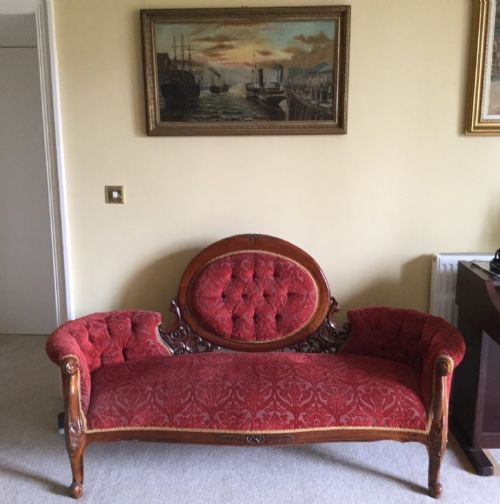


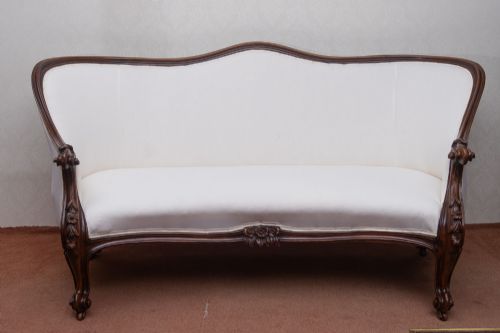

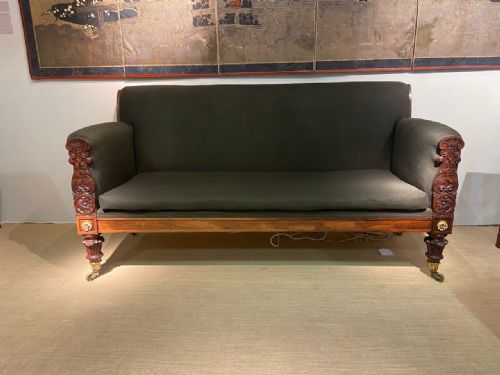


Period Parlor Sofa
These period parlor sofa examples bring nineteenth-century reception rooms to life with generous upholstery and distinct historical styling.
Period Parlor Sofa
A period parlor sofa serves as the principal seating piece of a formal nineteenth-century reception room, designed for comfort and social display. Buyers seeking this phrase encounter various nineteenth-century forms ranging from Regency and William IV frameworks to late Victorian and Edwardian iterations.
Makers and workshops of the era employed robust timbers including mahogany, walnut, rosewood, and ebonised hardwoods, often enriched with giltwood or brass details. Forms vary from double-ended settees and country house sofas to matching salon groups with accompanying chairs.
How they were made
Frames are constructed from dense timbers such as mahogany, walnut, and rosewood, carved by hand with floral motifs, scrolls, or classical mouldings. Some examples utilise giltwood or gold paint over carved wooden structures to achieve an opulent court finish.
Upholstery techniques rely on traditional sprung settee bases paired with deep-pile textiles like velvet, brocade, and damask. Exposed wooden components are polished or ebonised, whilst brass castors and fittings provide mobility to heavier seating frames.
Period Parlor Sofa Retail Price Guide 2026
Typical asking prices for period parlor sofa among the pieces listed under this phrase on Sellingantiques today, from the lower quarter to the upper quarter. They describe what is for sale here now, not the wider market.
Materials recorded across current items include brass, giltwood, damask, velvet, and various hardwoods.
What varies in quality
Quality rests in the crispness of the timber carving and the architectural proportion of the frame, where fluid lines distinguish superior workshop production from simpler output. The choice of primary wood, whether figured mahogany or burr walnut, dictates the baseline elegance of the piece.
The integrity of the internal sprung base and the suitability of modern or historic fabric re-upholstery influence the overall finish. Pieces retaining original gilding or intricate structural carving represent the higher tier of nineteenth-century seating design.
Robert Strahan & Co·Jas James Shoolbred
The Period Parlor Sofa Glossary
- Settee
- A long upholstered seat with a back and arms, designed for multiple occupants in a drawing room or parlor.
- Giltwood
- Wood that has been coated with a thin layer of gold leaf or gilt paint to simulate solid gold enrichment.
- Damask
- A reversible figured fabric woven on a jacquard loom, frequently utilised for formal nineteenth-century upholstery.
- Brocade
- A rich shuttle-woven fabric featuring raised decorative patterns, often incorporating metallic threads for decorative effect.
- Ebonised
- Wood finished with a dark stain or black lacquer to imitate expensive ebony timber.
Period Parlor Sofa: Frequently Asked Questions
Where did these sofas sit?
These seating pieces occupied the formal front rooms of nineteenth-century houses, where hosts received guests and displayed their social standing.
Their generous proportions and decorative frames suited large reception spaces rather than private family quarters.
How do I clean the upholstery?
Maintenance depends entirely on the specific fabric textile used, whether fragile antique silk damask or sturdier modern velvet.
Gentle surface brushing and professional specialist cleaning preserve delicate fibres without compromising the underlying frame.
Can I use one daily?
Many examples feature robust hardwood frames and traditional sprung bases built for regular domestic use over generations.
Placing them away from direct sunlight protects vulnerable textiles and polished wooden surfaces from fading.
How do I date the style?
Stylistic clues such as Regency classical restraint, Victorian exuberant carving, or Aesthetic ebonised finishes help determine the period.
Timber choices like rosewood, mahogany, and walnut also offer clear indicators of nineteenth-century manufacturing decades.