




Period Oak Hanging Cupboard
A period oak hanging cupboard brings warmth and solid timber construction to a wall space, saving floor area while offering compact storage.
Period Oak Hanging Cupboard
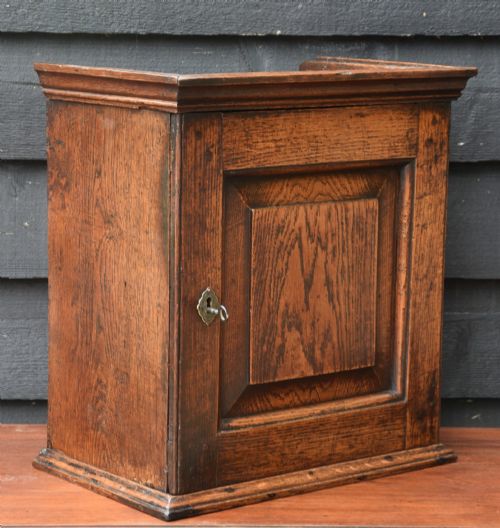
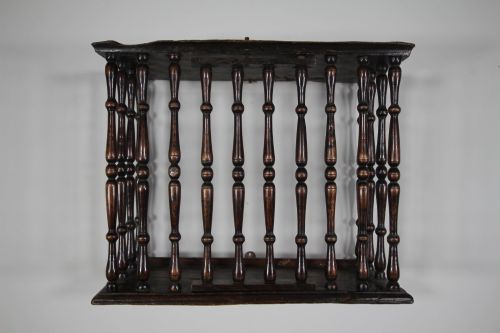
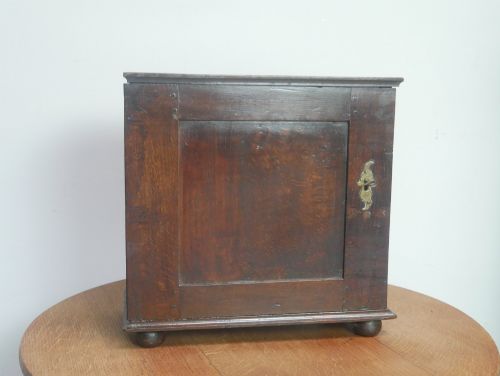
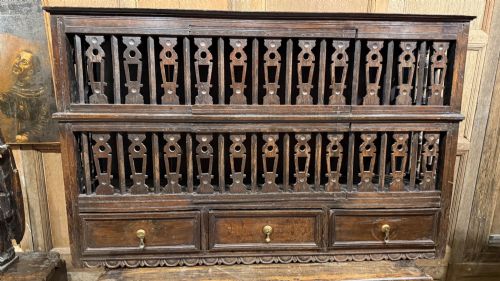
When searching for a period oak hanging cupboard, you encounter a selection spanning the seventeenth, eighteenth, and nineteenth centuries. These pieces range from early spice cupboards and livery cabinets to regional Welsh vernacular designs and Georgian corner cabinets built to utilise awkward room angles.
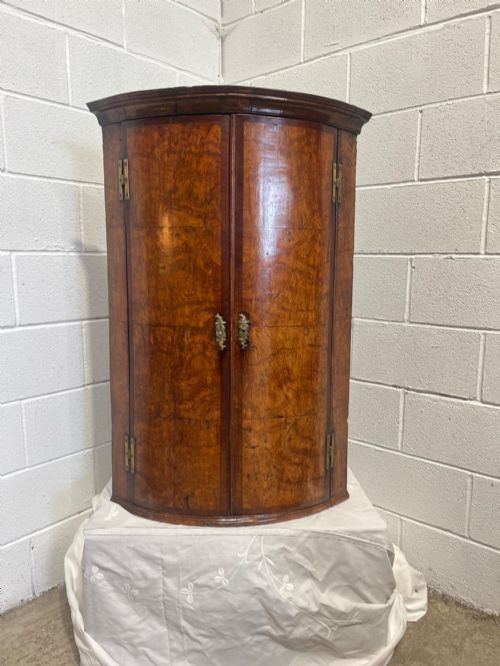
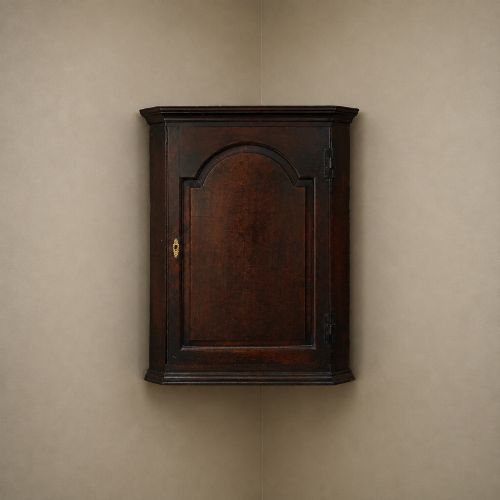
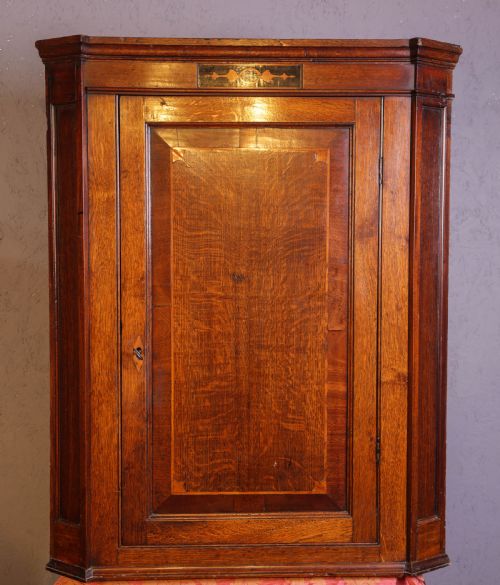
The version you meet most often on this page is the Georgian oak hanging corner cupboard, frequently featuring raised panels and brass H-hinges. These were designed to mount securely on walls, keeping household provisions, spices, or valuables safe and dust-free.
How they were made
Joiners built these cupboards predominantly from solid oak, sometimes selecting burr oak for decorative front panels or incorporating mahogany, ebonised wood, and wood inlay for contrast. Panels were typically set into grooved frames to allow for the natural seasonal expansion and contraction of the timber.
Hardware played a functional and structural role, with forged iron and brass used for hinges, escutcheons, and latches. Cabinets often featured shaped or raised panels on the doors, demonstrating the timber-framing skills of regional cabinet makers.
Period Oak Hanging Cupboard Retail Price Guide 2026
Typical asking prices for period oak hanging cupboard among the pieces listed under this phrase on Sellingantiques today, from the lower quarter to the upper quarter. They describe what is for sale here now, not the wider market.
Listings span seventeenth-century styles through to the Victorian era, showcasing oak, burr oak, mahogany, and brass hardware.
What varies in quality
The distinction between standard domestic furniture and finer examples lies in the selection of timber grain and the crispness of any carved or shaped detail. Cabinets featuring burr oak veneers, intricate cross-banding, or well-executed raised panels represent a more ambitious level of craftsmanship.
Structural integrity also separates examples, particularly the survival of original brass hardware, stable wall-mounting points, and unwarped doors that close flush against the frame.
The Period Oak Hanging Cupboard Glossary
- Livery cupboard
- A traditional storage piece originally used for keeping food rations or provisions ventilated and secure.
- Spice cupboard
- A small wall-mounted timber cabinet fitted with multiple internal small drawers for storing expensive culinary spices and medicinal ingredients.
- Raised panel
- A central wooden panel with edges thinned down to fit into a grooved frame, creating depth and visual shadow lines on cabinet doors.
- Bow front
- A convex, curved cabinet front that projects outward, offering a softer aesthetic than flat-fronted corner cupboards.
- H-hinge
- A common surface-mounted iron or brass hinge shaped like the letter H, frequently found on seventeenth and eighteenth century cabinet doors.
Period Oak Hanging Cupboard: Frequently Asked Questions
How were hanging cupboards used?
These cupboards were mounted on walls to store valuable household items, spices, or documents while keeping them out of reach of damp floors and pests.
In many homes, smaller spice or corner cupboards served daily domestic needs in the kitchen or parlour, saving valuable floor space.
How do I hang an old oak cupboard?
Due to the weight of solid oak and aged fixings, these cabinets require secure attachment directly into structural wall studs or masonry using appropriate heavy-duty brackets.
Professional installation ensures the weight of the timber and its contents is safely supported without straining historical joints or hinges.
How can I tell the period?
Period indicators include construction methods, such as hand-cut dovetails, iron or brass hardware styles, and the cut of the oak timber itself.
Seventeenth-century pieces often display heavier frame-and-panel construction and Jacobean influences, whereas Georgian examples favour cleaner lines and raised panels.
Will an oak cabinet darken over time?
Exposing oak timber to natural light over decades deepens its colour, resulting in a rich, warm patina unique to aged wood.
Placing cabinets away from direct, harsh sunlight prevents uneven fading while allowing the natural ageing process of the oak to mature gracefully.