


Period Oak Bench
A period oak bench brings heavy timber, centuries of wear and honest utility straight into a modern hallway.
Period Oak Bench
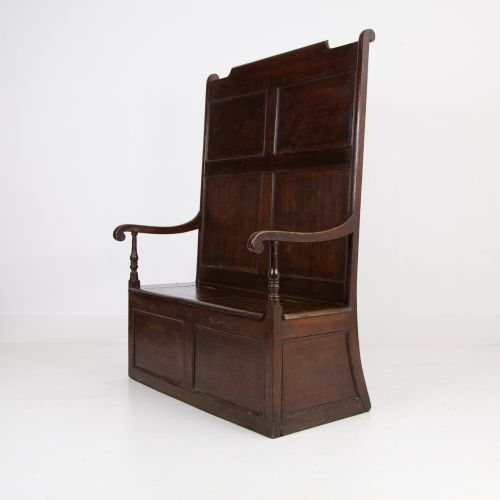
A period oak bench encompasses robust seating forms shaped from solid timber over several centuries, stretching from the seventeenth century through the Georgian era and into later nineteenth-century revivals. Buyers searching for a period oak bench will encounter sturdy settles, panelled box seats and low joint stools, reflecting the domestic needs of early English and British homes.
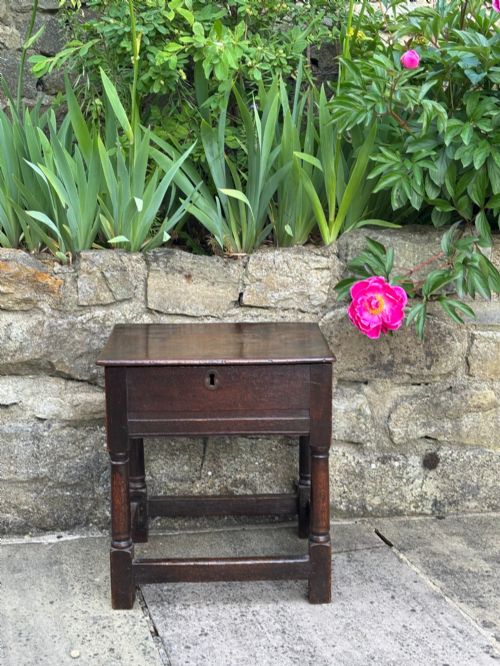
The most frequent examples on this page are settles with high backs or panelled construction, alongside simpler boarded forms and joint stools. These pieces range from seventeenth-century provincial seating to eighteenth-century Georgian designs and nineteenth-century Gothic or Arts and Crafts interpretations.
Originating primarily from English workshops, these benches served communal purposes beside hearths and in hallways. Their survival charts changes in domestic comfort, shifting from austere boarded construction to panelled backs designed to keep out drafts.
How they were made
Construction relies heavily on solid oak timber, worked with hand tools to produce pegged joints, mortise and tenon framing and pegged panel assemblies. Iron and brass hardware occasionally appears in hinges, latches or structural reinforcement, while fabric is sometimes added to later upholstered seats.
Joinery techniques define the early pieces, where frame-and-panel construction accommodated the natural seasonal movement of unseasoned timber. Carved decoration, when present, is chipped, gouged or panel-moulded directly into the solid wood rather than applied as separate veneer.
Some settles were built with high winged backs specifically designed to trap the heat from an open fire and keep the sitter's ears warm.
What varies in quality
Quality rests upon the integrity of the original timber and the structural honesty of the joinery. Benches retaining their original boards, unreplaced feet and untouched surface patination command greater regard than those rebuilt with replacement panels or modern fixings.
The sophistication of the carving and the balance of proportions distinguish finer examples from provincial work. Subtle details such as pegged joints that remain tight and timber surfaces showing deep, unforced wear indicate superior craftsmanship from the outset.
Wylie & Lochhead·Liberty's
The Period Oak Bench Glossary
- Settle
- A wooden bench with a high back, solid arms and often a box base, designed to keep out cold drafts in early homes. They were commonly placed near hearths in domestic interiors.
- Joint stool
- A sturdy wooden stool constructed with mortise and tenon joints rather than turned legs driven into a seat. These pieces date largely from the seventeenth century and served multiple household uses.
- Box settle
- A variation of the settle featuring a storage compartment beneath the seat accessed by lifting the lid. This form combined seating with practical domestic storage.
- Trestle form
- A construction method where the top rests upon end supports or feet rather than four separate legs. This architectural approach appears in early stools and benches.
Period Oak Bench: Frequently Asked Questions
What is a period oak bench used for today?
These benches fit naturally into entrance halls, mudrooms or large dining spaces, offering robust seating and historic character. Their solid construction easily handles daily domestic use.
Many examples also incorporate storage beneath the seat or high panelled backs that create a defined architectural presence against a plain wall.
How do I tell a seventeenth-century bench from a Georgian one?
Seventeenth-century pieces typically display heavier framing, pegged joints, boarded construction and simpler, more utilitarian lines. The timber often shows deeper patination and tool marks from hand conversion.
Georgian examples generally exhibit more refined proportions, lighter framing and cleaner panel mouldings reflecting changing interior fashions of the eighteenth century.
Did these benches originally have cushions?
Early settles and benches were designed for functional wooden seating without upholstery, relying on the warmth of the oak itself. Later nineteenth-century interpretations sometimes introduced fabric or padding.
Owners today frequently add loose squab cushions for comfort, which can be easily removed to reveal the original timber seat boards underneath.
How should I care for an antique oak bench?
Keep the timber away from direct heat sources and sudden temperature shifts to prevent the wood from splitting or warping. Natural beeswax applied sparingly helps nourish the dry surface.
Avoid modern liquid polishes that build up a residue over the historic finish, preferring a soft, dry cloth for routine dusting.