



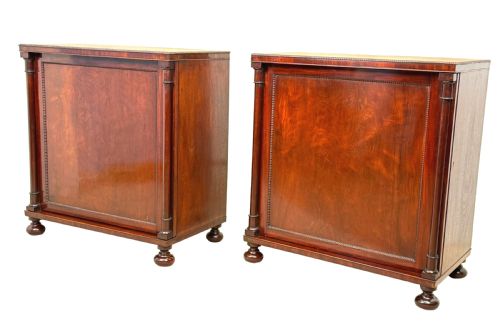


Period Nightstand
A period nightstand provides bedside storage and surface space while anchoring a bedroom with traditional cabinet-making.
Period Nightstand
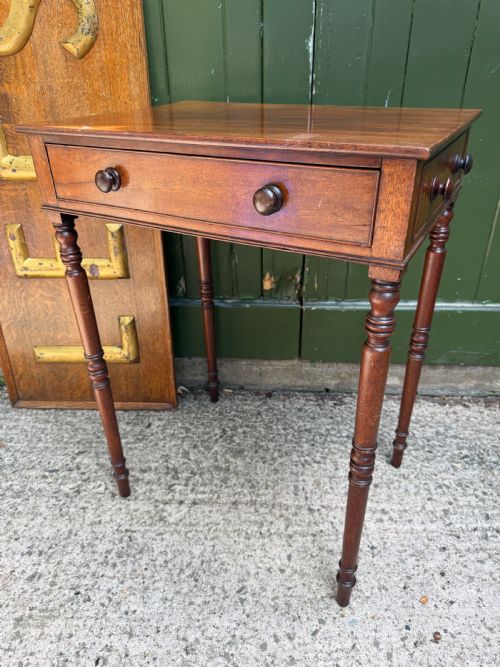
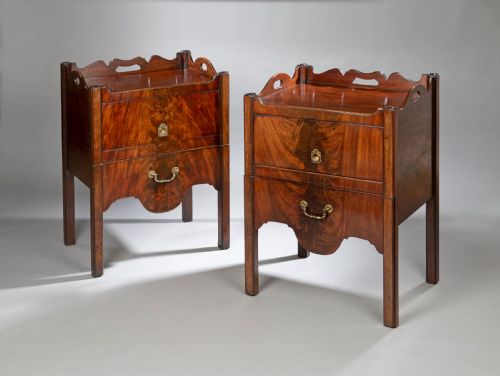
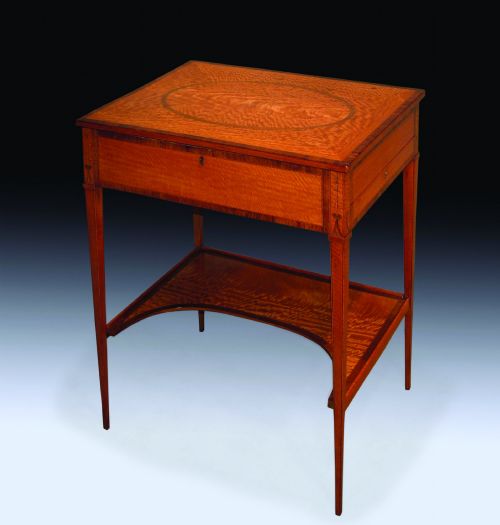
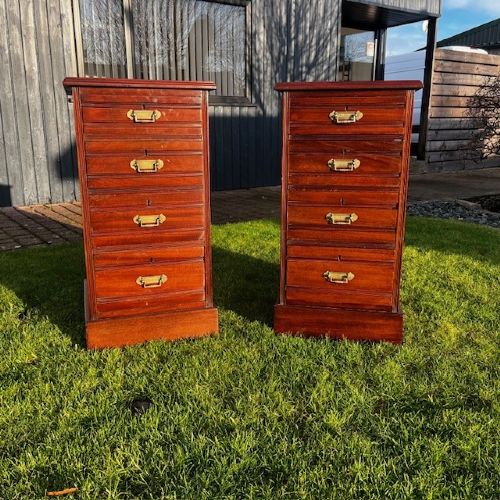
A period nightstand encompasses forms such as bedside cabinets, pedestals, commodes and small side tables originating from the Georgian, Regency, Victorian and Art Deco eras. Buyers searching for a period nightstand encounter pieces designed to sit beside a bed or in small spaces, functioning variously as cupboards, drawer chests and lamp tables.
Originating predominantly from English and French workshops, these items reflect centuries of domestic utility scaled for the bedroom. The forms vary from straightforward rectangular side tables to architectural column designs and serpentine cabinets.
Materials and construction
Makers relied heavily on dense timbers such as mahogany, oak, rosewood and walnut, often employing satinwood, kingwood and birds eye maple for contrasting veneers and marquetry details. Structural integrity was achieved through traditional joinery, sturdy drawer construction and careful timber selection.
Surface decoration frequently involved ebony line inlay, brass hardware and shaped tray tops designed to keep items secure. Finishes ranged from polished flame-mahogany grains to intricate French marquetry in the Louis XVI taste.
Some Regency bedside cabinets hide a pull-out wooden step, designed to help eighteenth-century sleepers climb safely into their towering four-poster beds.
Markers of quality
Quality in these bedside pieces rests on timber selection, such as the depth of figure in flame-mahogany or rosewood, and the crispness of inlaid details and brass fittings. Superior examples display thoughtful proportions, such as freestanding forms finished on all sides and clever internal mechanics like sliding steps.
The integration of secondary timbers, dovetail precision and the retention of original surfaces separate standard utility items from masterwork specimens produced during the George III and Regency periods.
The Period Nightstand Glossary
- Commode
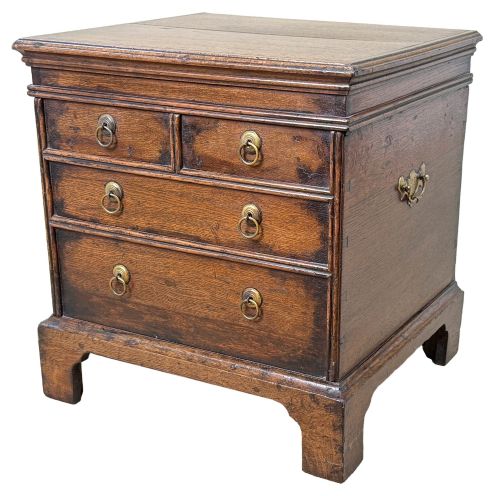
- A low cabinet or chest of drawers, often used historically as a bedside piece or enclosed washing stand. In Georgian examples, these frequently incorporated tray tops or internal compartments.
- Pedestal cupboard
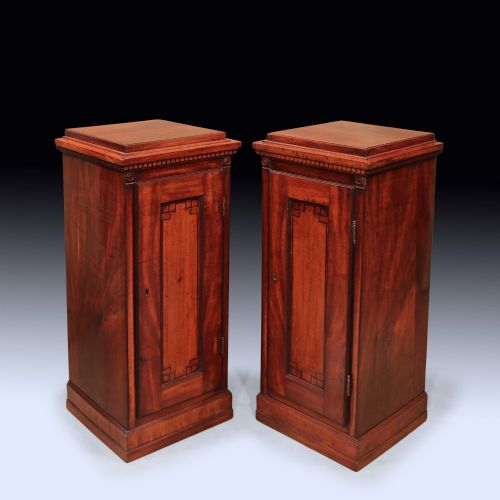
- A tall, narrow freestanding cabinet designed to stand beside a bed or in a corner. These units often feature cylindrical or architectural column forms.
- Pembroke table
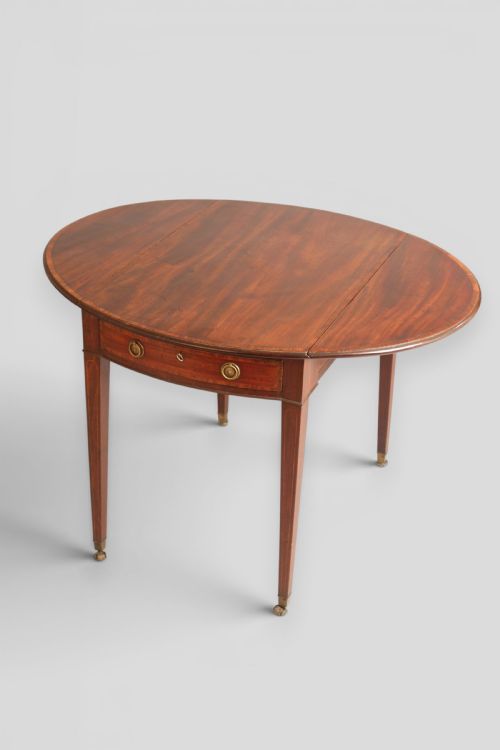
- A small occasional table featuring hinged drop leaves on two opposing sides. They were commonly utilised for light writing or bedside placement.
- Marquetry
- Decorative patterns formed by fitting together small pieces of coloured wood veneers. This technique appeared frequently on fine satinwood, rosewood and kingwood furniture.
- Tray top
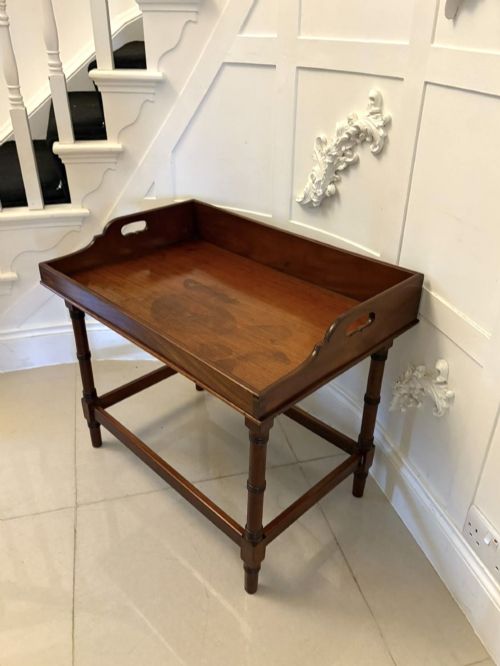
- A tabletop finished with a raised moulded edge or gallery designed to prevent items from rolling off. This feature is particularly common on Georgian bedside commodes and lamp tables.
Period Nightstand: Frequently Asked Questions
What is a period nightstand used for?
These pieces provide a stable surface for lamps, books and personal items while concealing storage within drawers or cupboards. Historically, many served specialised roles such as holding wash basins or containing close stools.
Today, they function as bedside tables in traditional and contemporary bedrooms alike, adding historic character and compact surface utility to smaller spaces.
How do I identify a Georgian nightstand?
Georgian pieces, spanning the eighteenth and early nineteenth centuries, typically feature dense mahogany or oak construction, straight or slightly curved lines, and practical elements like tray tops or panelled doors. Look for hand-cut dovetails and traditional brass hardware.
Many incorporate enclosed cabinet space or pull-out sections designed for chamber pots, reflecting the domestic habits of the period.
Are Regency nightstands different from Victorian ones?
Regency pieces often exhibit classical influences, featuring flame-mahogany veneers, cylindrical or architectural column shapes, and delicate ebony line inlay. They prioritize clean architectural silhouettes and rich timber grains.
Victorian bedside chests tend to be heavier in proportion, utilising robust mahogany or walnut timbers with simpler lines suited to mid-nineteenth-century bedroom suites.
How do I fit a period nightstand into a modern bedroom?
The compact scale of these tables allows them to sit comfortably beside contemporary bed frames, providing a grounding contrast of rich timber and historical craftsmanship. Their enclosed cupboards and drawers help conceal modern bedside clutter.
Pay attention to the height of your mattress relative to the tabletop to ensure comfortable daily access to lamps and books.