

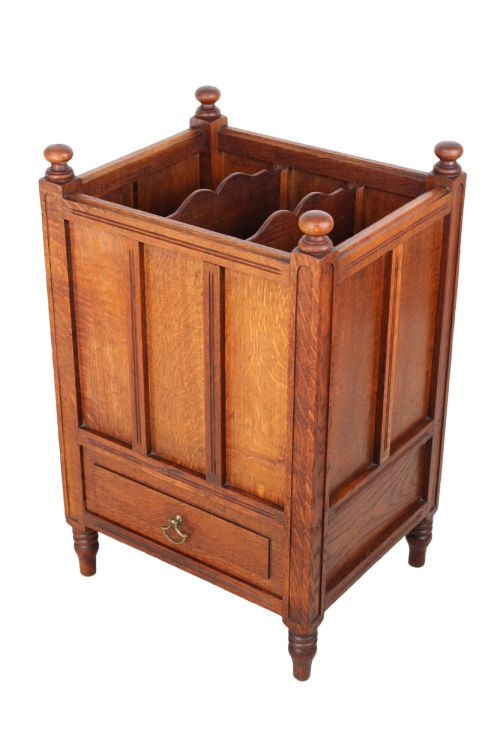
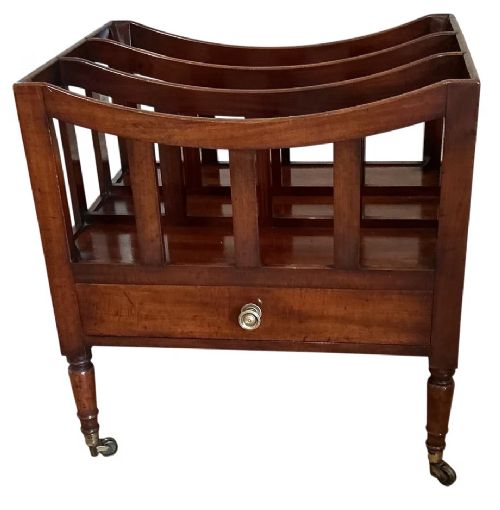
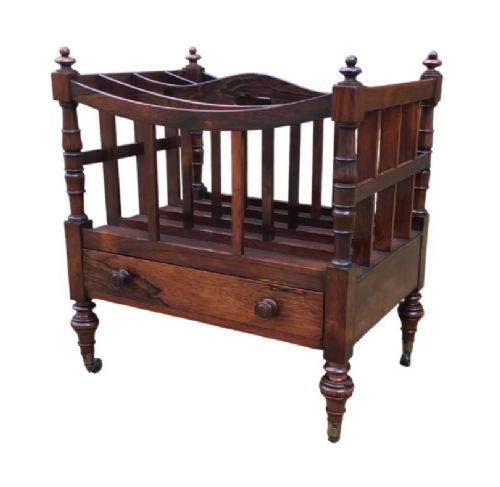
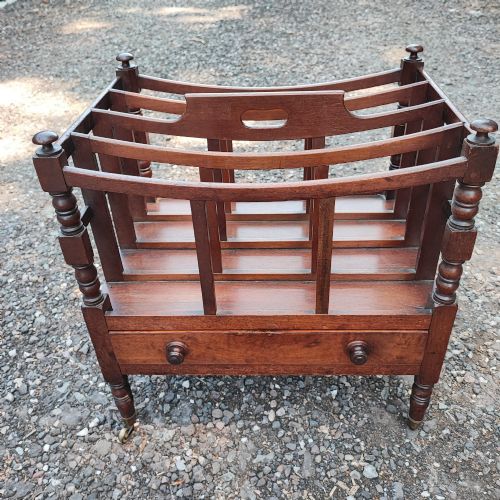


Period Newspaper Rack
These period newspaper racks bring daily reading to hand with timber frames and divided slots built to last.
Period Newspaper Rack
A period newspaper rack serves as a neat holder for daily papers and journals, appearing across several distinct historical eras. Buyers searching for a period newspaper rack will encounter traditional formats like the low wooden Canterbury alongside framed wire or metal stands.
Most examples found here date from the Regency, Victorian, and Edwardian periods, constructed primarily to sit beside a reading chair or library desk. These stands combine upright partitions with low shelves or drawers, keeping current sheets tidy and within easy reach.
The term often covers traditional music stands and multi-tiered magazine racks from the nineteenth and early twentieth centuries. These pieces reflect the domestic habits of earlier households where newspapers and journals formed a central part of daily leisure.
Materials and construction
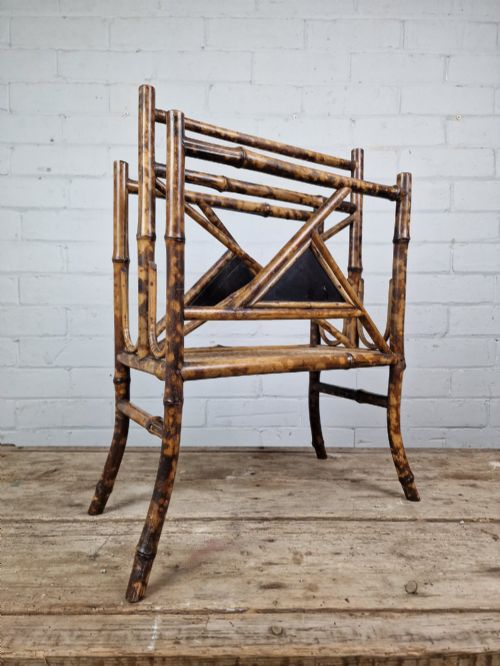
Cabinetmakers built these pieces using dense hardwoods like mahogany, rosewood, and oak, often shaping the rails by hand. Bamboo and lacquer appear in later nineteenth-century examples, bringing lighter frames and decorative finishes to the form.
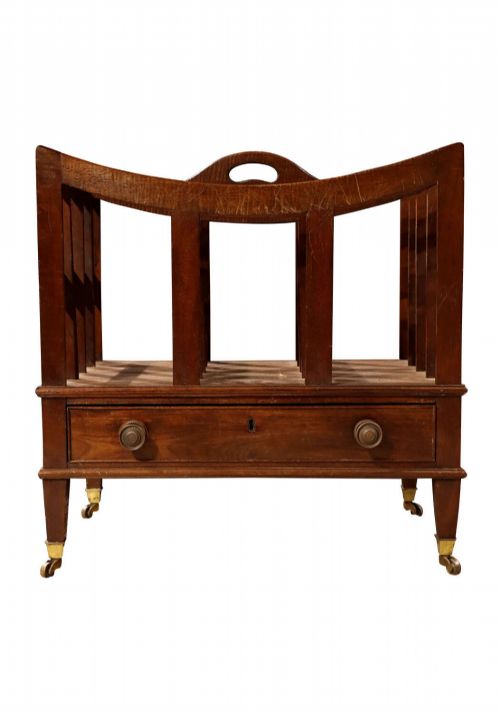
Joinery techniques included pegged mortise and tenon joints for the upright partitions and dovetailed drawers where storage compartments were integrated. Brass casters, carrying handles, and open metalwork provided both mobility and structural support.
Period Newspaper Rack Retail Price Guide 2026
Typical asking prices for period newspaper rack among the pieces listed under this phrase on Sellingantiques today, from the lower quarter to the upper quarter. They describe what is for sale here now, not the wider market.
The selection includes pieces from the Regency, Victorian, and Edwardian eras.
What separates the finest examples
The standard of timber selection and turned detail marks the division between standard workshop items and finer pieces. Better examples utilise figured mahogany or rich rosewood veneers, finished with careful hand-polishing that highlights the grain.
Structural integrity also separates the grades, visible in the rigidity of the divided slots and the crisp execution of carved or reeded uprights. Simple utility pieces rely on straightforward plank construction, whereas superior pieces incorporate finely turned spindles and integrated drawers.
Gillows
The Period Newspaper Rack Glossary
- Canterbury
- A low stand with divided partitions designed for holding sheets of music, books, or newspapers. This form originated in the late eighteenth century and remained popular through the Victorian era.
- Regency
- A British design period spanning the early nineteenth century, characterised by classical restraint, architectural lines, and dark woods. Pieces from this era often feature curved boat-shaped frames or reeded supports.
- Aesthetic Movement
- A late nineteenth-century style that emphasised visual beauty over narrative content, often drawing inspiration from Japanese design. Items from this movement frequently utilise bamboo and lacquered surfaces.
- Edwardian
- A stylistic period covering the early years of the twentieth century up to the First World War. Furniture from this time tends to be lighter in scale, sometimes reviving earlier Georgian and Sheraton motifs.
Period Newspaper Rack: Frequently Asked Questions
What is a Canterbury stand?
A Canterbury is a low stand featuring slatted partitions, originally built to hold sheet music or books before adapting to newspapers and periodicals. These pieces usually include a low drawer beneath the main compartments.
Cabinetmakers designed them to sit easily beside chairs or tables in a parlour or study, making daily reading materials simple to access and stow away.
How do I date a newspaper rack?
Dating relies on timber choices, construction methods, and stylistic cues such as reeded legs or brass castors. Regency pieces often display boat-shaped frames in rosewood or mahogany, while Edwardian versions use lighter oak frames.
Examining the underside and drawer joints also reveals the period of manufacture, as hand-cut dovetails give way to machine methods by the early twentieth century.
Can these hold modern newspapers?
Most period racks accommodate folded newspapers and magazines within their vertical wooden or bamboo partitions. The width of the slots varies depending on whether the piece was originally built for sheet music or journals.
Larger broadsheets may require folding to fit neatly between the dividers, while standard magazines slide directly into the compartments without issue.
Where should I place a Canterbury?
These stands suit living rooms, studies, or hallways where reading material collects near seating areas. Their compact footprints allow them to fit beside armchairs or against panelled walls.
Keeping them away from direct heat sources helps preserve the polished wood surfaces and prevents the timber veneers from drying out.