





Period Mantel Clock
A period mantel clock anchors a room with mechanical precision and sculptural weight, combining functional timekeeping with the decorative arts of past centuries.
Period Mantel Clock
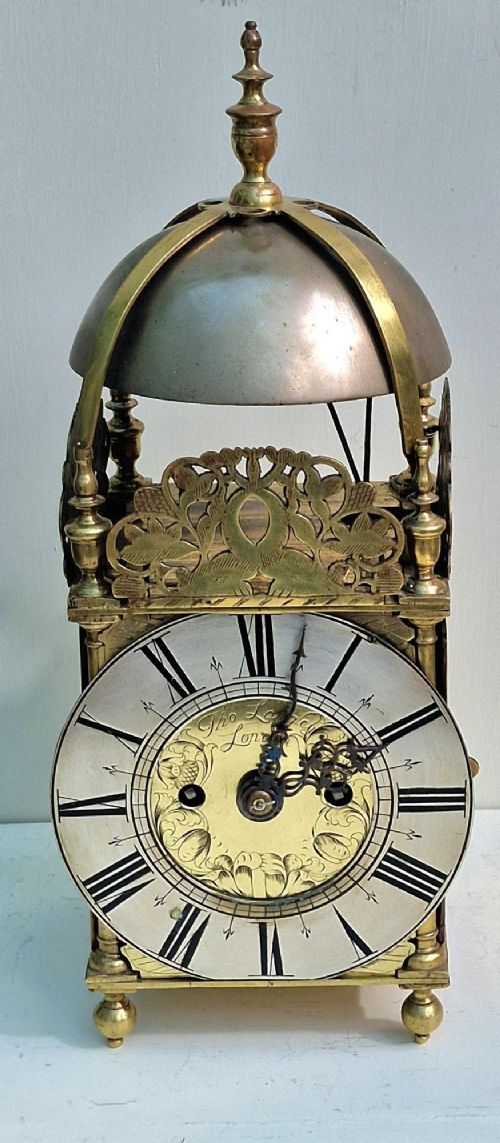
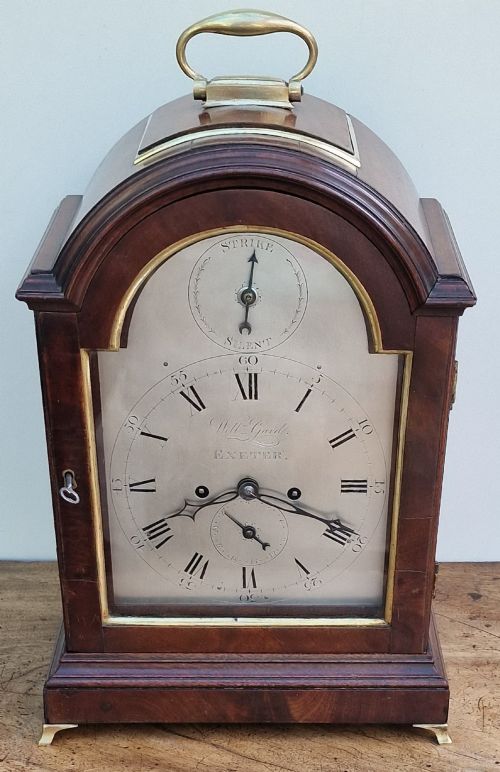
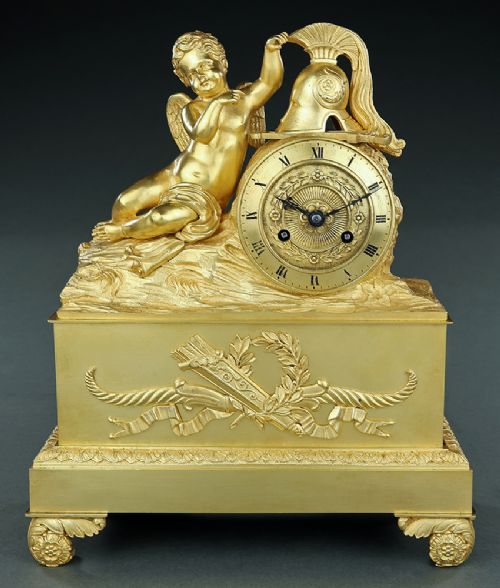
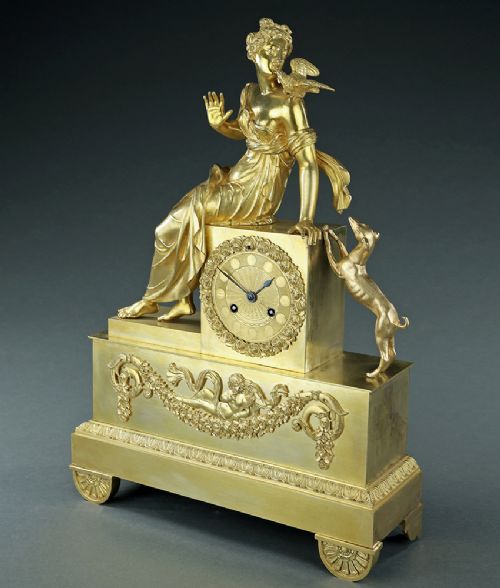
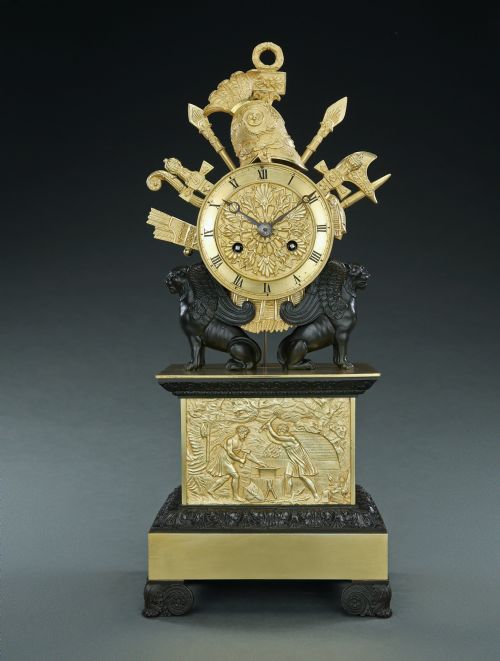
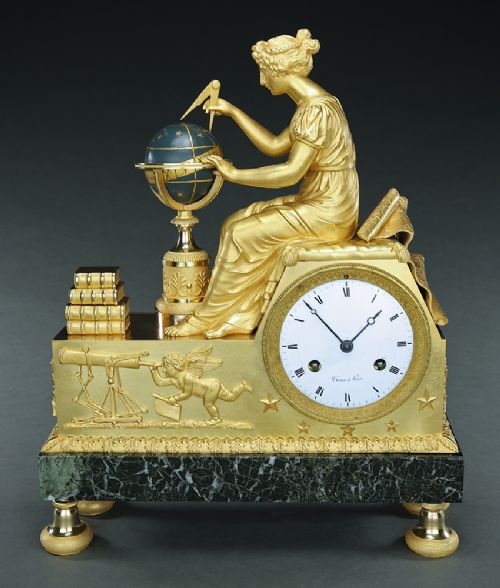
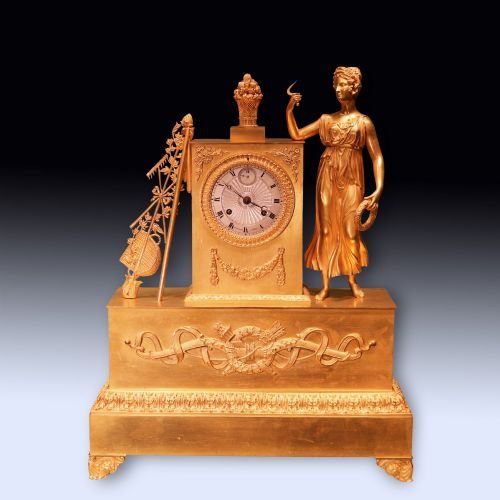
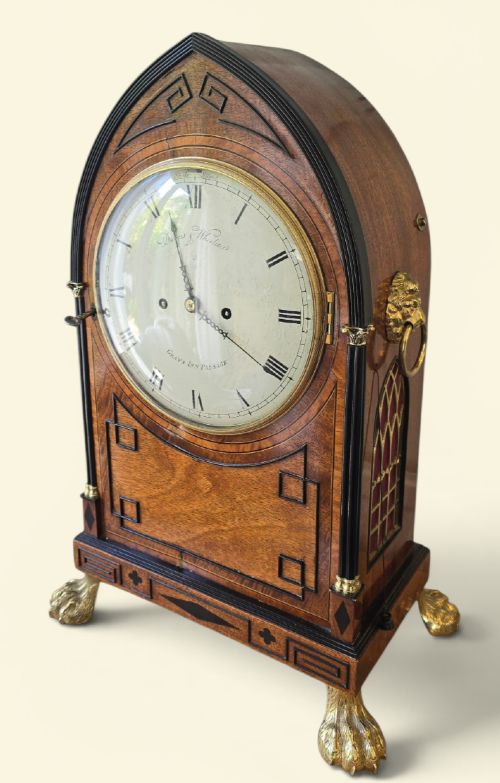
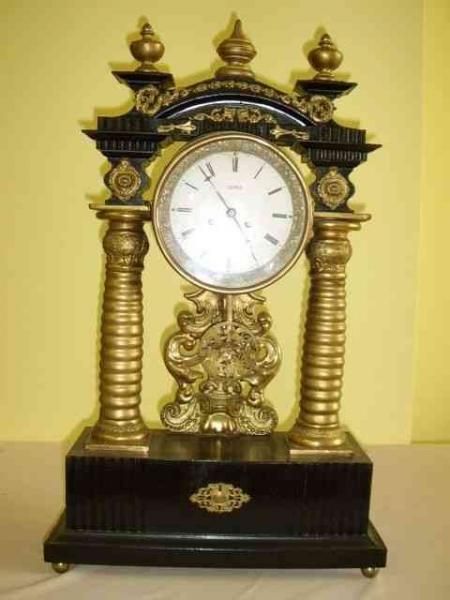
A period mantel clock encompasses a diverse range of horological forms, from early brass lantern clocks and wooden bracket clocks to grand French portico and figural mantel pieces. Buyers searching for a period mantel clock will frequently encounter 19th-century French ormolu designs alongside 17th-century English brass and 18th-to-19th-century mahogany bracket clocks.
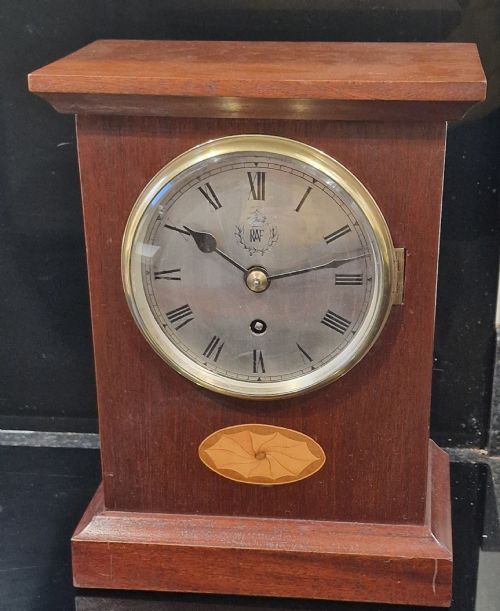
The selection ranges from architectural portico models and rosewood Regency timepieces to specialised military and aviation instruments such as mid-20th-century mess clocks. These pieces reflect the domestic and civic interior styles of the 17th, 18th, 19th, and early 20th centuries across England, France, and Japan.
Materials and Technique
Cases were constructed from dense cabinet timbers such as mahogany, ebony, and rosewood, often enhanced with brass inlay, carving, or fine joinery. Metalwork relied heavily on cast brass, patinated bronze, and mercury-gilded ormolu to create sculptural mounts, bezels, and detailed figural subjects.
Movements utilised fusee or spring-driven mechanisms housed within sturdy brass plates, paired with enamel dials, painted chapter rings, and protective glass bezels. Lantern clocks employed iron and brass components with exposed striking trains and bell domes, representing earlier vernacular metalworking traditions.
Listings feature period mantel clocks spanning from the 17th century to the mid-20th century, utilising brass, mahogany, and ormolu.
Craftsmanship and Proportion
The standard of a period mantel clock rests upon the crispness of the bronze or ormolu chasing and the fidelity of the cabinetmaker's timber selection. Superior examples display harmonious proportions, sharp architectural detailing, and original mercury gilding that retains its matte and burnished contrasts.
Internal mechanism quality is defined by the precision of the wheel-cutting, the integrity of the original fusee chain or gut line, and the signing of the backplate by a recorded maker. Altered dials, replacement movements, and softened cast ornament separate standard production items from masterwork specimens.
Thomas Langley·William Gard·Reiche·Canaillor of Paris·Desbois and Wheeler·William Speakman·Peter Closon·James Ogden Senior·William Clement·Taylor of London·Ravrio·Paul Garnier·Pons de Paul·William Hardy·Seikosha
The Period Mantel Clock Glossary
- Fusee
- A conical pulley used in spring-driven clocks to maintain equal power as the mainspring unwinds. This device ensures more accurate timekeeping throughout the running period.
- Ormolu
- Finely chopped high-zinc brass applied to objects through a mercury amalgamation technique. It produces a rich golden finish characteristic of French decorative arts.
- Bracket clock
- A portable spring-driven clock originally designed to sit on a wall bracket. Many later examples sat directly on furniture surfaces.
- Portico clock
- A mantel clock featuring an architectural frame supported by columns. This symmetrical style gained popularity during the late 18th and early 19th centuries.
- Chapter ring
- The outer ring on a clock face that bears the hour numerals. In earlier pieces, these are often separate silvered or engraved brass plates.
Period Mantel Clock: Frequently Asked Questions
Where should I place a period mantel clock?
Position the clock on a stable, level surface away from direct sunlight, exterior doors, and fluctuating heat sources like radiators. A firm mantelpiece, sideboard, or dedicated wall bracket prevents vibrations that might disrupt the pendulum's swing.
Ensure the room humidity remains relatively stable to protect sensitive wooden veneers and iron internal components from warping or corrosion.
How do I identify a French Empire clock?
Look for neoclassical motifs such as martial trophies, mythological figures, and architectural portico structures framed in fire-gilded ormolu and patinated bronze. These pieces frequently draw upon classical themes of love, astronomy, and empire.
The dial surrounds and pendulum bobs often incorporate symbolic iconography reflecting the political and cultural climate of the early 19th century.
What is the difference between a bracket clock and a lantern clock?
A bracket clock is an enclosed, wooden-cased timepiece featuring a glazed door and sophisticated spring-driven fusee movement designed for domestic interior elegance. A lantern clock is an earlier, brass-framed English design with an exposed bell on top and weight-driven or spring mechanisms.
Lantern clocks display a distinct cage-like structure intended for wall suspension or table placement, whereas bracket clocks emphasise fine cabinetry and joinery.