



Period Magazine Rack
A period magazine rack brings timeless organisation to a room, offering sturdy wooden or brass compartments for your daily papers and journals.
Period Magazine Rack
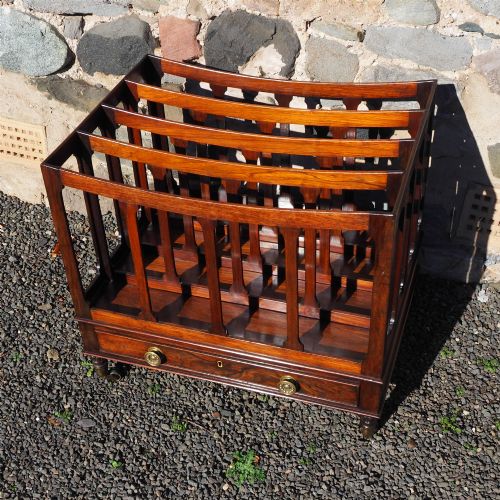
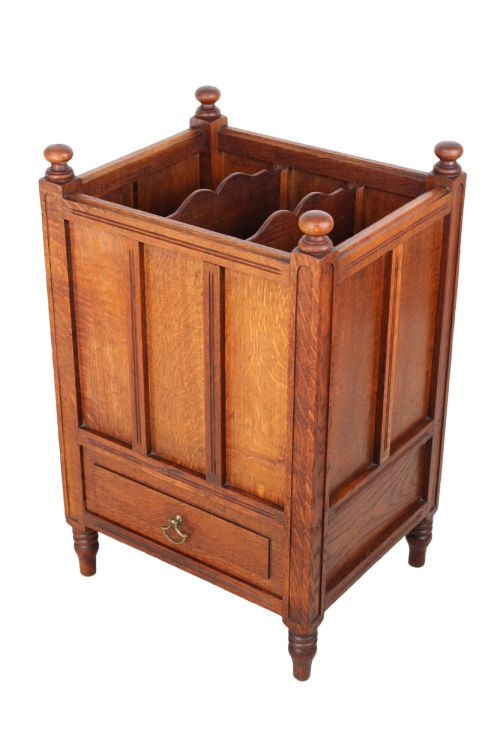
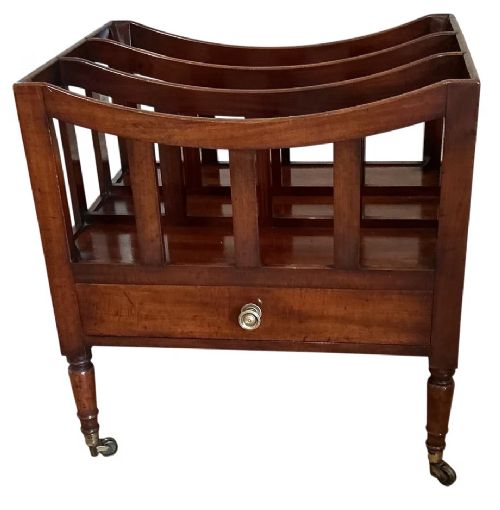
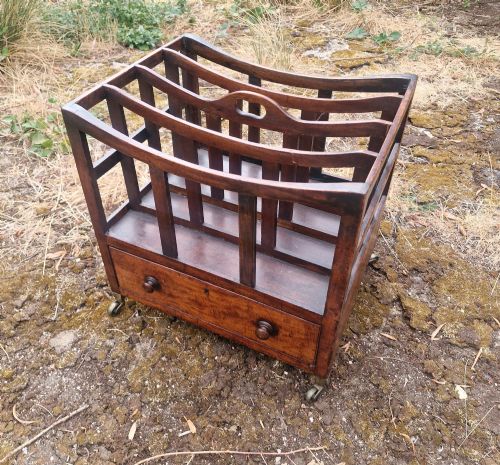
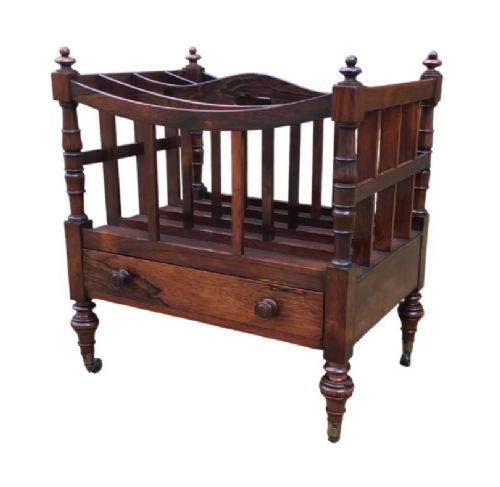
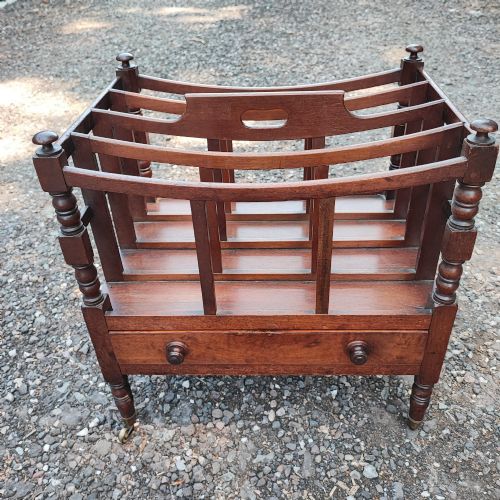
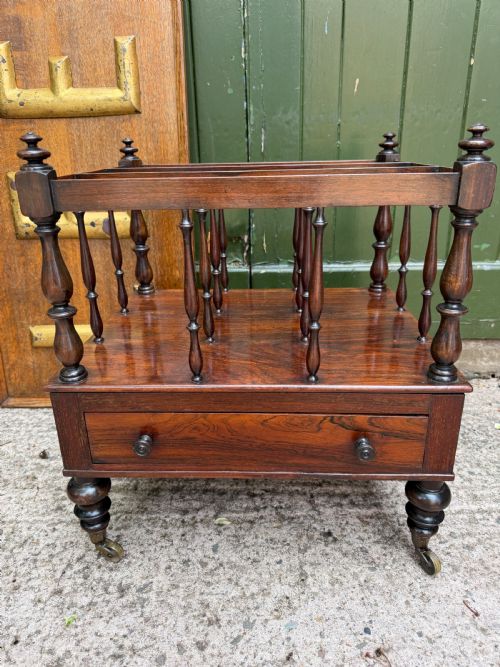
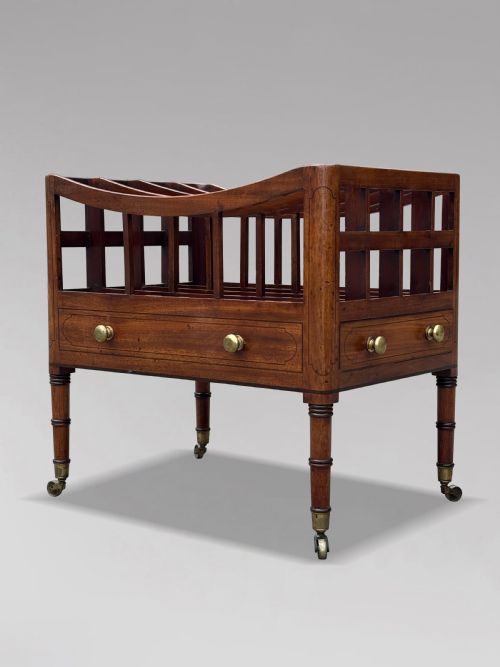
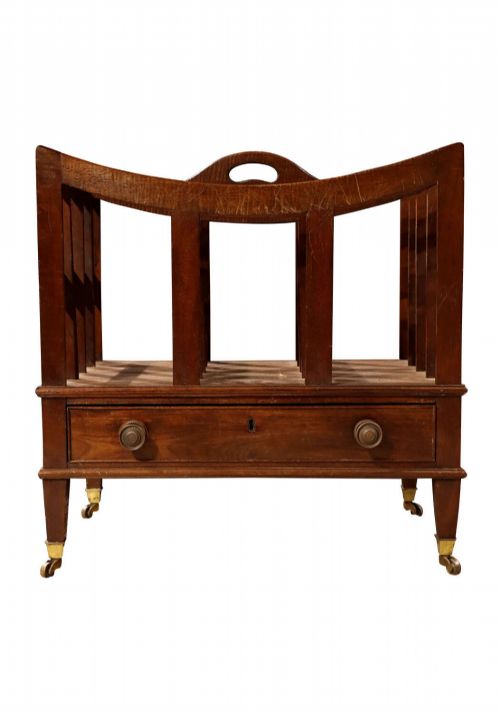
A period magazine rack encompasses traditional canterburys, music stands and newspaper stands originating from the Georgian, Regency, Victorian and Edwardian eras. These pieces bridge the gap between practical storage and elegant furniture, designed specifically to hold unbound sheets, journals and periodicals in upright divisions.
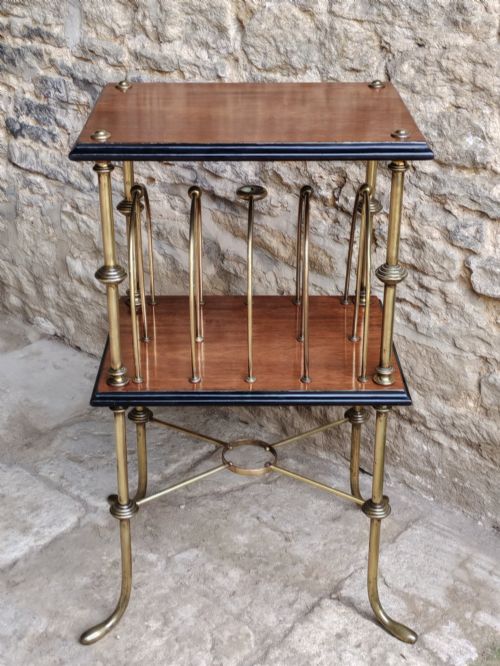
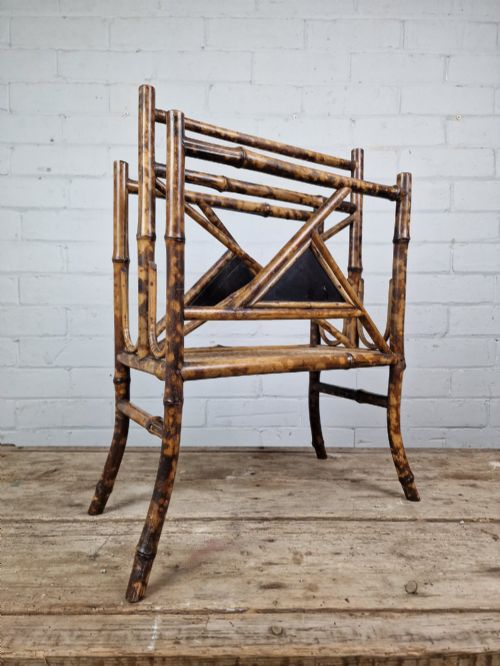
Most examples encountered here are mahogany or rosewood canterburys from the Regency period, alongside walnut, oak, bamboo and brass variations spanning the nineteenth and early twentieth centuries. Forms range from boat-shaped compartment racks to tiered etageres and occasional tables with integrated storage.
How they were made
Cabinet makers utilised dense hardwoods such as mahogany, rosewood, burr walnut and oak, shaping them into slatted partitions, drawers and turned supports. Brass accents frequently appear in the form of castors, carrying handles, spindles and ornate newspaper stands.
Construction techniques include precise joinery for the vertical divisions and low drawers, sometimes combined with turned columns and carved details reflecting George III, Regency, William IV or Aesthetic Movement styles.
Period Magazine Rack Retail Price Guide 2026
Typical asking prices for period magazine rack among the pieces listed under this phrase on Sellingantiques today, from the lower quarter to the upper quarter. They describe what is for sale here now, not the wider market.
Materials span mahogany, rosewood, burr walnut, oak, bamboo and solid brass across multiple design movements.
What varies in quality
Quality rests in the choice of timber figure, such as richly grained rosewood or burr walnut, and the crispness of any turned or carved ornamentation. Compact scale, balanced proportions and original brass castors separate finer workshop pieces from standard utility items.
The sophistication of the internal divisions and the inclusion of drawers or multi-tiered structures elevate certain items, distinguishing simple newspaper stands from grander, double-size canterburys.
Gillows
The Period Magazine Rack Glossary
- Canterbury
- A low, stand-up rack with divisions for holding sheet music, books or periodicals, often fitted with a drawer below. This form originated in the eighteenth century and remained popular through the Victorian era.
- Etagere
- A set of open shelves for displaying small objects or holding books and magazines, sometimes combined with a canterbury base. It provides tiered vertical storage.
- Boat Shaped
- A distinctive curved profile given to the partitions of certain Regency canterburys, resembling the hull of a vessel. This contour softens the linear geometry of the rack.
- Whatnot
- A piece of furniture consisting of open shelves for displaying or storing items, appearing alongside magazine racks in several nineteenth-century variants.
Period Magazine Rack: Frequently Asked Questions
What is a canterbury?
A canterbury is a traditional wooden stand featuring vertical partitions designed to hold sheet music, magazines and newspapers off the floor.
Many examples also incorporate a small low drawer beneath the compartments for smaller accessories.
How old are these racks?
The pieces span from the late eighteenth century through the Georgian and Regency periods into the Victorian, Edwardian and early twentieth-century eras.
Stylistic details and timber choices help identify whether an item dates from the Regency years or later Victorian decades.
Where were they used?
These items were placed beside reading chairs and sofas in period drawing rooms and parlours to keep current journals tidy.
Their portable nature allowed servants or residents to move them easily around the room as needed.
Are they sturdy enough for modern magazines?
Solid mahogany, rosewood and oak construction provides robust support for contemporary periodicals and heavy daily newspapers.
The sturdy partitions and integrated handles were built to withstand regular handling.