

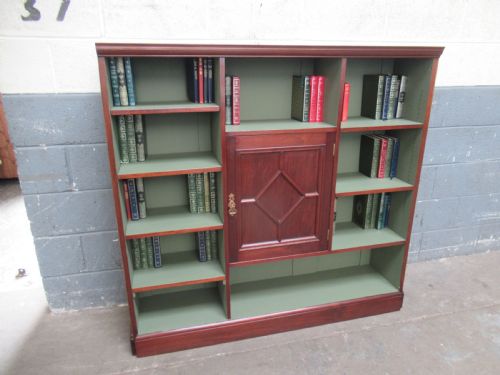


Period Library Bookcase
A period library bookcase brings deep mahogany timber and architectural presence to a room, offering substantial shelving for serious collections.
Period Library Bookcase
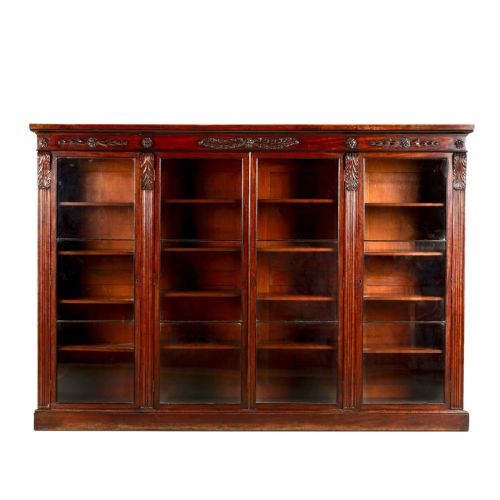
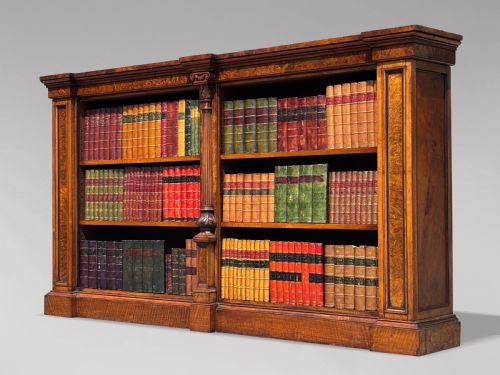
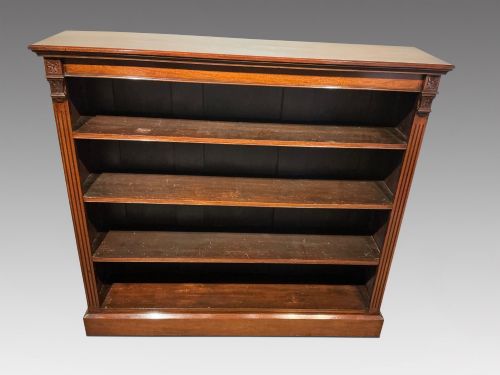
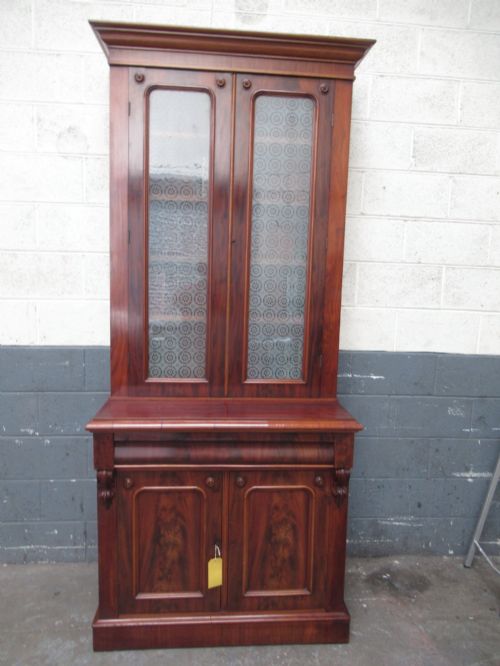
A period library bookcase is a tall or low cabinet designed for housing books, appearing in forms such as breakfront bookcases, open shelving units, and two-door glazed cabinets. These pieces anchor a room with their architectural proportions and substantial timber construction.
The selections span the Georgian, Regency, and Victorian eras, with mahogany remaining the dominant timber alongside rosewood, burr walnut, and satinwood. Breakfront bookcase designs and open bookcases dominate the available examples, reflecting the functional demands of historic libraries.
Makers utilised flame mahogany veneer, brass fittings, and glass panel doors to create sophisticated storage solutions for domestic studies and large libraries. Pieces range from grand breakfronts with four doors down to smaller open bookcases suitable for modest spaces.
Materials and construction
Cabinet makers constructed these pieces primarily from solid mahogany and pine carcasses, often applying figured flame mahogany veneers to the primary display surfaces. Rich timbers like rosewood, burr walnut, satinwood, and exotic woods such as gonçalo alves provide distinctive grain patterns on specific pieces.
Glass panels are fitted into wooden frame doors for enclosed cabinets, while brass details appear on grilles, hinges, and hardware. Joinery techniques ensure structural stability across large breakfront configurations and tall proportions.
Period Library Bookcase Retail Price Guide 2026
Typical asking prices for period library bookcase among the pieces listed under this phrase on Sellingantiques today, from the lower quarter to the upper quarter. They describe what is for sale here now, not the wider market.
The listings encompass items from the 18th century through the Victorian era, utilising mahogany, rosewood, burr walnut, and satinwood.
Judging quality and proportion
Quality rests in the selection of timber veneers, such as richly figured flame mahogany or burr walnut, matched symmetrically across large expanses of doors and drawers. Finer pieces display refined architectural mouldings, well-proportioned breakfront outlines, and integrated brass work.
The integrity of the original glass, the crispness of carved details, and the depth of the timber patination separate standard commercial cabinet work from exceptional library furniture. Superior examples maintain balance between their structural weight and delicate decorative elements.
Gillows
The Period Library Bookcase Glossary
- Breakfront
- A cabinet design where the central section projects forward from the flanking wings. This configuration creates visual depth and architectural interest in large bookcases.
- Waterfall bookcase
- A set of open shelves that steps back progressively from bottom to top, creating a profile resembling falling water. This lighter form often appears in rosewood or satinwood.
- Flame mahogany veneer
- A slice of mahogany timber cut from the fork of the tree where branches join the trunk, producing a distinctive flickering flame pattern. Cabinet makers laid this veneer over solid secondary timbers.
- Secretaire
- A desk component incorporated into a bookcase, featuring a drop-front writing flap that conceals small drawers and pigeonholes. It combines study and storage functions in a single piece.
- Glazed bookcase
- A bookcase featuring glass-panelled doors that protect books from dust while keeping volumes visible. These doors often incorporate wooden glazing bars arranged in geometric patterns.
Period Library Bookcase: Frequently Asked Questions
How do I care for a mahogany bookcase?
Maintain mahogany bookcases by keeping them away from direct sunlight and sudden temperature shifts that dry out old timber and veneers. Apply a traditional wax polish occasionally to nourish the surface.
Avoid placing these heavy wooden pieces near active heat sources or damp exterior walls to protect the structural joinery.
Are open bookcases original to the period?
Open bookcases were produced during the Regency and Victorian eras for easy access to working volumes in studies and libraries. Many surviving examples retain their original shelf supports and proportions.
They offer a lighter visual alternative to glazed breakfront bookcases while maintaining formal period styling.
How do I date a library bookcase?
Dating relies on observing timber choices, hardware, architectural style, and construction methods characteristic of periods like Georgian, Regency, or Victorian. Regency pieces often showcase rosewood and brass inlay, while Victorian examples frequently utilise burr walnut or heavier mahogany.
Changes in door configuration and plinth design also help place a piece within its manufacturing decade.