





Period Leather Seating
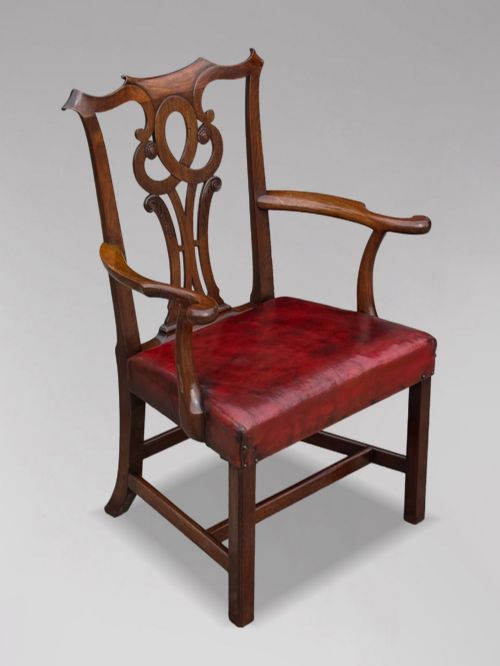
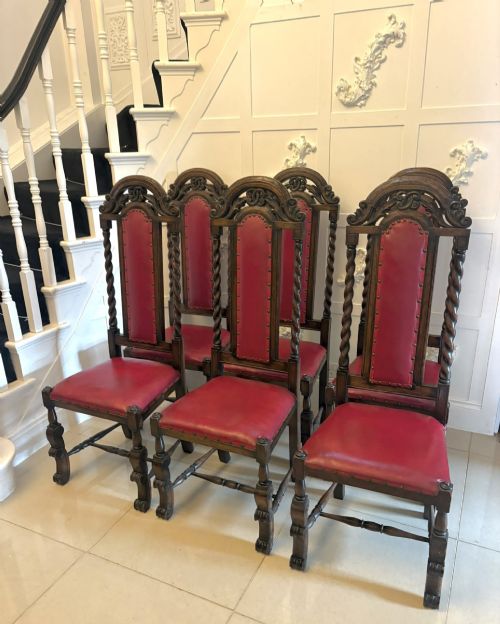
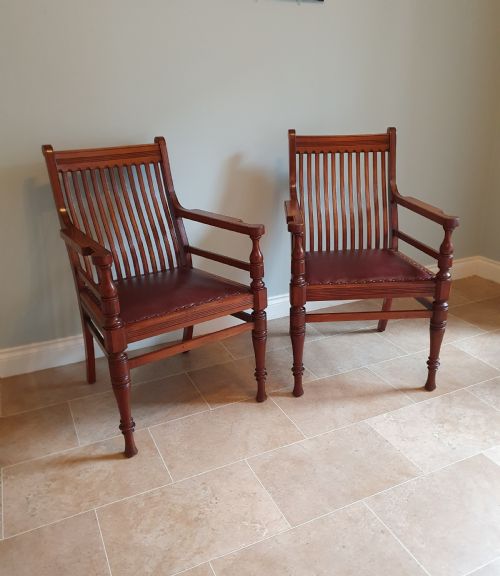
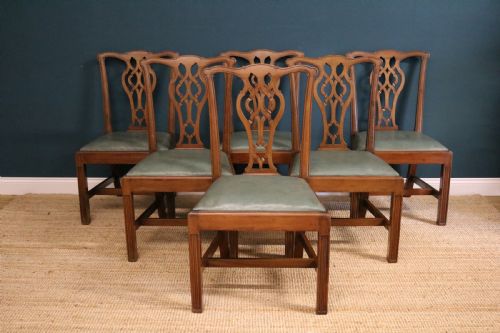
Period leather seating brings tangible history to a room through sturdy mahogany, rosewood and oak frames fitted with supple animal hides.
Period Leather Seating
Period leather seating encompasses chairs, armchairs, sofas, stools and ottomans produced across the eighteenth, nineteenth and early twentieth centuries. These functional items served dining rooms, libraries and drawing rooms in British and European homes.
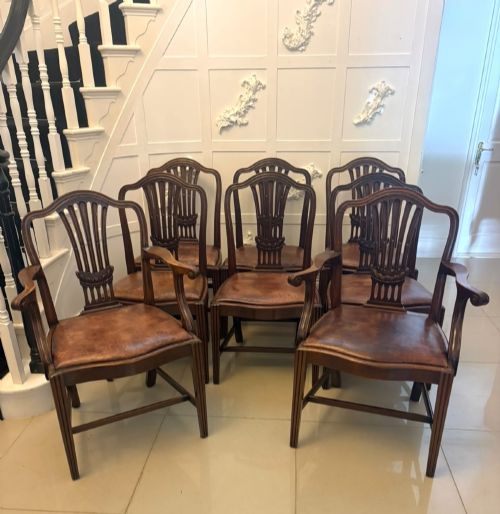
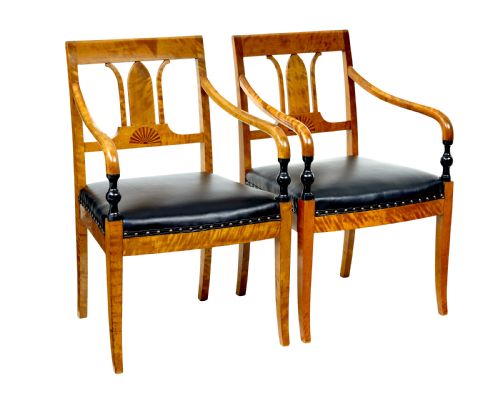
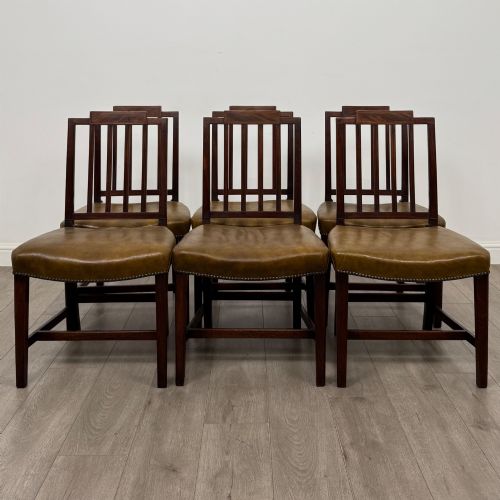
Dining chairs and library armchairs dominate the selection available on this page, often appearing in large matching sets or smaller pairs. Buyers frequently encounter robust mahogany frames alongside lighter birch, walnut and oak examples.
The objects span distinct design movements including Georgian, Regency, Victorian and Art Deco. Craftsmanship adapts across these eras from strict classical symmetry to ornate carvings and sturdy vernacular styles.
Materials and Construction
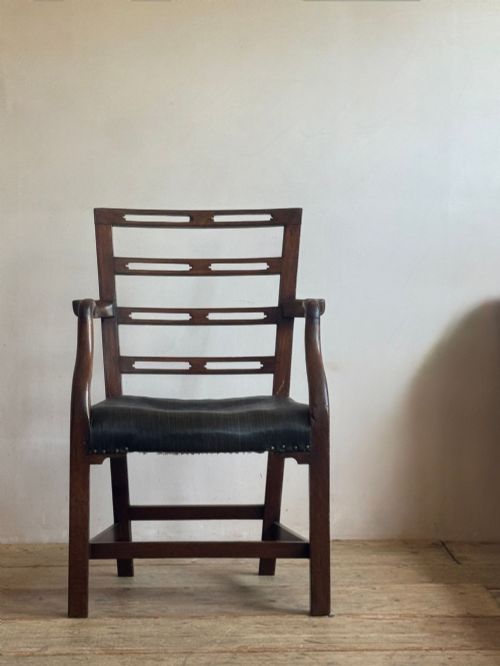
Wood forms the primary structural skeleton, utilising dense hardwoods like mahogany, rosewood, walnut and oak to withstand daily use. Joinery relies on traditional methods such as mortise and tenon to secure frames without modern adhesives.
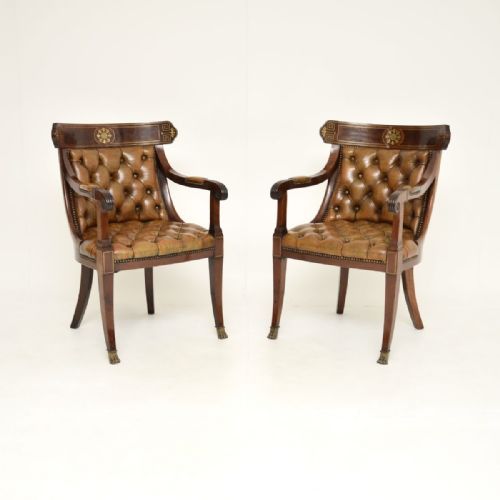
Upholstery incorporates tanned leather stretched over padding materials, frequently secured with decorative brass tacks or deep buttoning. Secondary timbers like cane appear alongside wood in specific seat panels and backing details.
Period Leather Seating Retail Price Guide 2026
Typical asking prices for period leather seating among the pieces listed under this phrase on Sellingantiques today, from the lower quarter to the upper quarter. They describe what is for sale here now, not the wider market.
Small children received proper leather seating too, with miniature rocking chairs and buttoned armchairs built to adult standards.
Markers of Distinction
Quality rests upon the integrity of the timber frame and the depth of carving executed by the maker. Crisp lines on shield backs, sabre legs or barley twist turnings separate ordinary utility items from superior commissions.
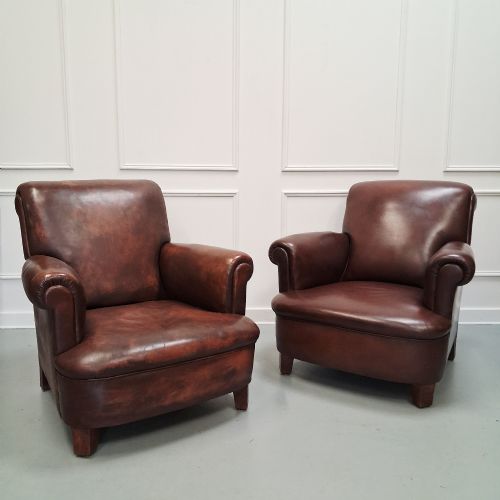
The grade and condition of the leather upholstery dictate the tactile experience of the piece. Intact hand-dyed hides and period buttoning retain greater authenticity than modern replacements.
Robert Strahan & Co·William Walker & Sons·Henry Maxwell
The Period Leather Seating Glossary
- Carver chair
- An armchair designed to match a set of smaller dining chairs, typically placed at the head of a table. These pieces often feature more substantial arm supports.
- Library chair
- A comfortable armchair intended for reading, frequently upholstered in leather and constructed from mahogany or rosewood during the Regency and Victorian periods.
- Shield back
- A chair back shaped in the outline of a heraldic shield, popularised by designers like Hepplewhite during the eighteenth century.
- Sabre leg
- A concave-tapered furniture leg curving outwards in the manner of a cavalry sabre, common on Regency dining and library chairs.
- Ottoman
- A low upholstered seat or bench without a back or arms, utilised as a footstool or window seat in nineteenth-century interiors.
Period Leather Seating: Frequently Asked Questions
How do I care for antique leather?
Maintain leather upholstery by keeping it away from direct heat sources and applying appropriate conditioning balms periodically to prevent drying.
Avoid harsh chemical cleaners that strip natural oils and damage historical finishes.
Were these chairs used at dining tables?
Many examples on this page functioned as dining chairs, supplied in sets ranging from four up to fifteen pieces.
Larger armchairs known as carvers accompanied these sets for use at the table ends.
How can I identify a Regency period chair?
Regency pieces often incorporate classical motifs, brass inlay, sabre legs and rich rosewood or mahogany timbers.
Construction dates generally span the early nineteenth century during the Regency and George IV eras.
Can I mix different wood types in one room?
Period interiors naturally blend various woods like mahogany, walnut and oak through decades of accumulated furnishing.
Matching the formal style or historical era often creates more visual cohesion than identical timber selection.