

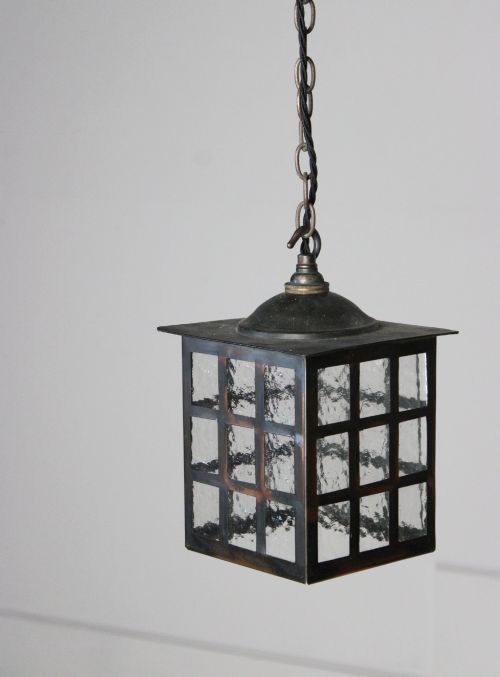

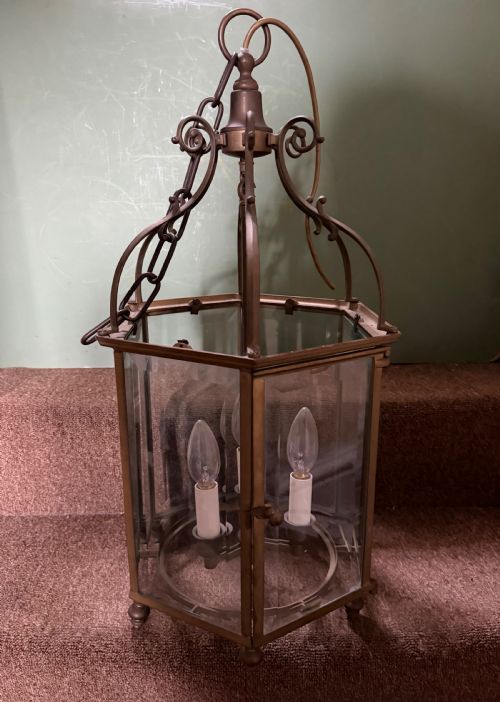


Period Hanging Lantern
These period hanging lantern examples bring authentic character to hallways and vestibules through enduring design and robust metalwork.
Period Hanging Lantern
A period hanging lantern provides overhead illumination while establishing a distinct architectural presence in an entrance or corridor. These fittings take the form of pendant lights and ceiling lanterns suspended from chains or brackets.
The selections available here span several distinct eras, drawing from Edwardian, Victorian, and early twentieth-century design. Examples range from simple utilitarian hallway lights to ornate French Rococo and Empire styles.
Buyers most frequently encounter brass and copper frames paired with clear, frosted, or cut glass panels. These fixtures originate from various design movements including Arts and Crafts, Art Nouveau, and Art Deco.
How they were made
Construction relies heavily on metals such as brass, copper, iron, and wrought iron formed into rigid structural cages to support glass panels. Artisans shaped these materials using casting, smithing, and soldering techniques appropriate to each workshop tradition.
Glass elements are integrated directly into the metal frameworks, utilising clear, frosted, or cut glass panes to diffuse the internal light source. Decorative elements such as gilded finishes, applied bronze, and cast motifs like the green man add surface detail to the primary metal structures.
Period Hanging Lantern Retail Price Guide 2026
Typical asking prices for period hanging lantern among the pieces listed under this phrase on Sellingantiques today, from the lower quarter to the upper quarter. They describe what is for sale here now, not the wider market.
Keep an eye out for the occasional green man peering out from the copper work, keeping watch over the hallway.
What varies in quality
Quality rests upon the weight of the metal framework and the precision of its assembly, distinguishing substantial cast or forged elements from lighter folded sheet construction. Superior examples exhibit clean lines in the metalwork and secure seating for every glass panel.
Decorative refinement also separates standard production from finer work, seen in the depth of cast ornamentation, hand-cut glass details, and the integrity of applied finishes like gilding or patination. The complexity of the style, from restrained Edwardian forms to elaborate French Rococo designs, influences the overall visual impact.
The Period Hanging Lantern Glossary
- Arts and Crafts
- A design movement emphasising handcraftsmanship and simple forms, frequently utilising exposed copper and brass in utilitarian lighting.
- Art Deco
- A twentieth-century style characterised by streamlined geometric forms, often paired with frosted glass panels in ceiling fixtures.
- Art Nouveau
- A decorative style featuring organic, flowing lines inspired by natural plant forms, commonly expressed in brass metalwork.
- French Empire
- A classical revival style drawing on Roman motifs, resulting in formal and symmetrical decorative lighting fixtures.
- Frosted Glass
- Glass treated to diffuse light evenly, reducing glare while maintaining brightness within an enclosed lantern frame.
Period Hanging Lantern: Frequently Asked Questions
Where should I hang a period lantern?
These fixtures suit entrance halls, stairwells, and high-ceilinged corridors where their vertical drop and decorative frames can be appreciated. They provide adequate ambient light while serving as a focal point upon entering a space.
Ensure adequate clearance beneath the fitting so foot traffic passes comfortably. High ceilings allow for longer suspension chains, while lower spaces require closer ceiling mounting.
How do I identify the period of a lantern?
Dating relies on observing stylistic markers such as the geometric lines of Art Deco or the organic curves of Art Nouveau. Material choices and manufacturing methods, such as wrought iron smithing or cast brass details, also point to specific eras.
Compare the construction techniques and decorative motifs against known historical styles like Edwardian simplicity or French Rococo revival. Each movement utilised distinct hardware and glass treatments.
Are these lanterns wired for modern use?
Most antique lighting is inspected and re-wired with contemporary flex to meet current electrical standards before installation. It is advisable to consult a qualified electrician to ensure compatibility with modern domestic circuits.
Original lamp holders may be upgraded for safety while preserving the external period appearance of the brass or copper housing.
How do I clean a brass and glass lantern?
Dust glass panels regularly with a soft cloth and use a mild glass cleaner applied to a cloth rather than sprayed directly onto the metal. This prevents moisture from reaching vulnerable joints and older finishes.
Avoid abrasive polishes on aged brass or copper surfaces to preserve the natural patina developed over decades of exposure.