




Period Hall Bench
A period hall bench greets visitors with solid timber and centuries of craft, offering an immediate practical seat in the entranceway.
Period Hall Bench
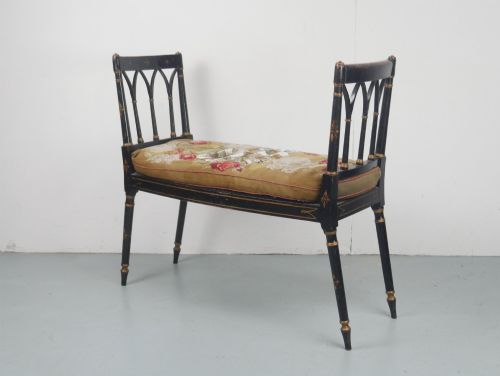
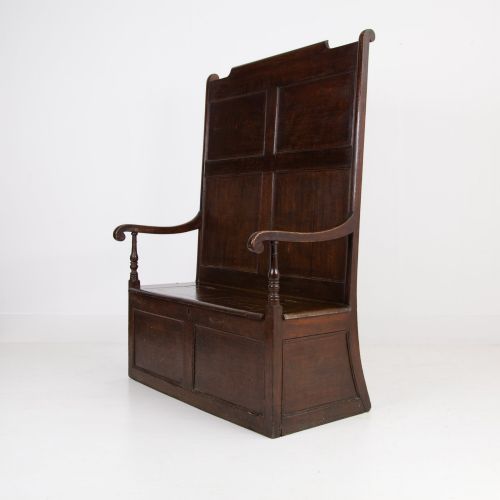
A period hall bench encompasses sturdy oak settles, mahogany window seats, and formal settees designed for the entranceway or principal rooms. These seating forms range from high-backed wooden settles built to block draughts to refined Regency and George II style mahogany benches.
The versions most frequently met on this page date from the seventeenth, eighteenth, and nineteenth centuries, constructed predominantly in oak or mahogany. Settles often feature panelled backs and box bases, while mahogany examples display the lighter neoclassical and Regency lines suited to grander reception spaces.
Makers and joiners adapted these benches for domestic use across several distinct eras, spanning early oak vernacular pieces to later revival styles. Each object type serves as a primary point of rest upon entering the house, combining utilitarian strength with the prevailing aesthetic of its period.
How they were made
Cabinet makers and joiners relied heavily on solid oak and mahogany for structural integrity, shaping panels, legs, and frames by hand. Timber was selected for grain and durability, ensuring the benches could withstand constant daily use in busy entrance halls.
Construction techniques included traditional panel and frame joinery for settles, alongside finely turned legs and carved details on mahogany sofas and window seats. Metal elements such as brass tacks occasionally secure upholstery where fabric and linen are present.
Period Hall Bench Retail Price Guide 2026
Typical asking prices for period hall bench among the pieces listed under this phrase on Sellingantiques today, from the lower quarter to the upper quarter. They describe what is for sale here now, not the wider market.
Early wooden settles were clever draught excluders before hallways had central heating.
What varies in quality
Quality rests upon the selection of timber, the integrity of the original joinery, and the crispness of any carved ornamentation. Superior examples retain their original structural timbers without extensive timber replacement or unsympathetic alterations to the frame.
The proportion and balance of the design distinguish finer pieces, particularly in revival works like the George II style or refined Regency models. Proportionate scaling and well-executed joinery separate standard vernacular seating from exceptional architectural examples.
The Period Hall Bench Glossary
- Settle
- A wooden bench with a high back, solid arms, and often a box seat or enclosed base designed to keep out cold draughts. These pieces represent some of the earliest domestic seating found in halls.
- Regency
- An English architectural and decorative style spanning the early nineteenth century, characterised by classical restraint and mahogany frames. Pieces from this period often borrow heavily from ancient Greek and Roman motifs.
- Panelling
- The method of framing thin sheets of wood within grooved stiles and rails to allow for natural wood movement. This technique prevents splitting in large wooden settle backs.
Period Hall Bench: Frequently Asked Questions
Where did people use a period hall bench?
These benches stood primarily in entrance halls, corridors, and large reception rooms to provide seating for guests and household members waiting to be received.
In earlier centuries, high-backed wooden versions were positioned near doorways to block cold air and drafts from chilling the main living spaces.
How do I tell an oak settle from a mahogany bench?
Oak settles generally display heavy paneled construction, high backs, and an earlier seventeenth or eighteenth-century vernacular aesthetic.
Mahogany benches tend to follow later Regency or George II styles, showcasing smoother polished surfaces, exposed legs, and lighter architectural proportions.
Did these benches always have upholstered seats?
Many early oak settles and benches relied on plain timber surfaces, sometimes softened later with loose cushions or squabs.
Later nineteenth-century pieces and formal window seats frequently incorporated integrated fabric or linen upholstery secured with brass tacks.
How do I care for antique wood in an entrance hall?
Antique timber seating thrives in stable indoor environments away from direct heat sources and sudden temperature fluctuations that can cause wood to split.
Regular dusting and occasional application of traditional wax help maintain the finish of both oak and mahogany surfaces over time.