




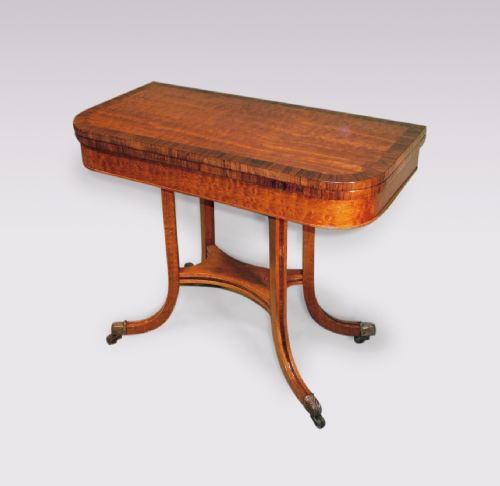

Period Gaming Furniture
Period gaming furniture brings tactile pleasure to the drawing room, offering ingenious folding surfaces and clever compartments designed for traditional evening card play.
Period Gaming Furniture
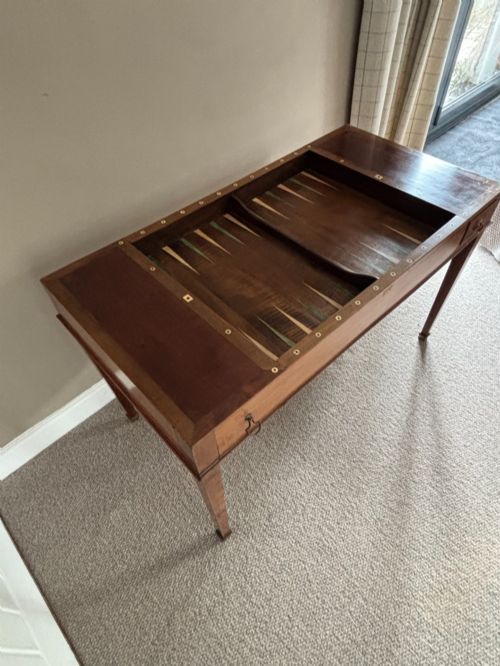
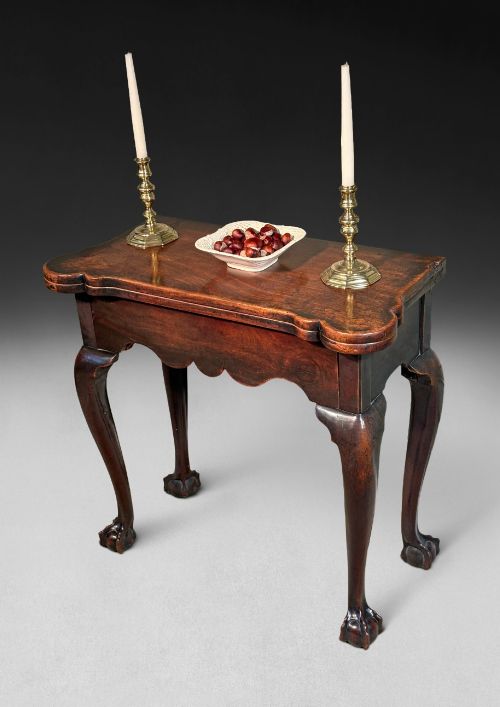
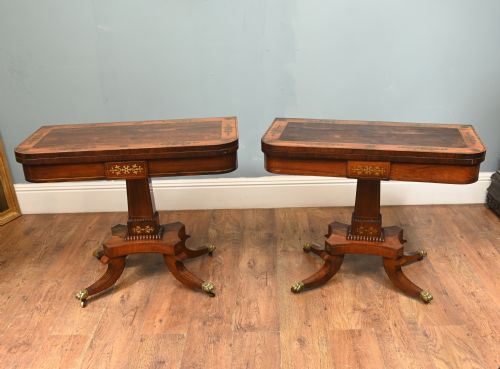
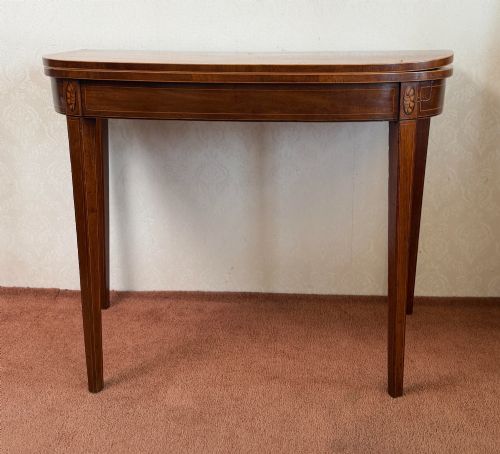
Period gaming furniture comprises specialised wooden tables engineered primarily for card games and domestic leisure during the eighteenth and nineteenth centuries. These pieces span George II, Georgian, and Regency eras, reflecting the evolving social pastimes of elite households.
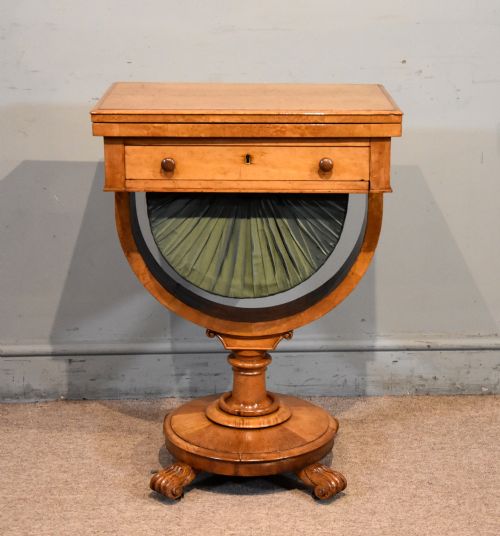
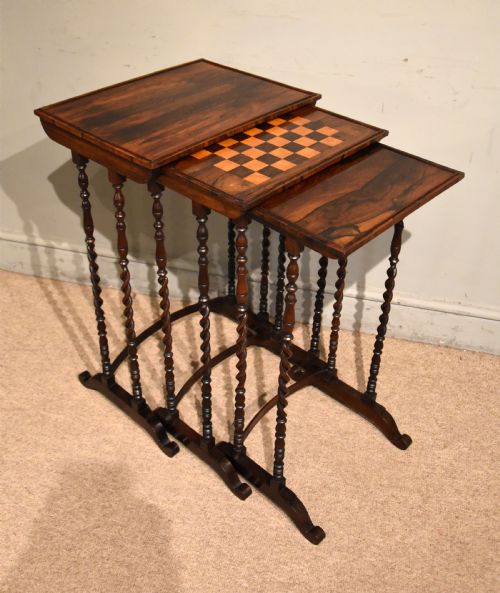
Card tables and combined games tables dominate this selection, featuring clever fold-over leaves that double their surface area when opened for play. Alongside them, occasional tables, work tables, and nesting sets provide versatile functionality for the period interior.
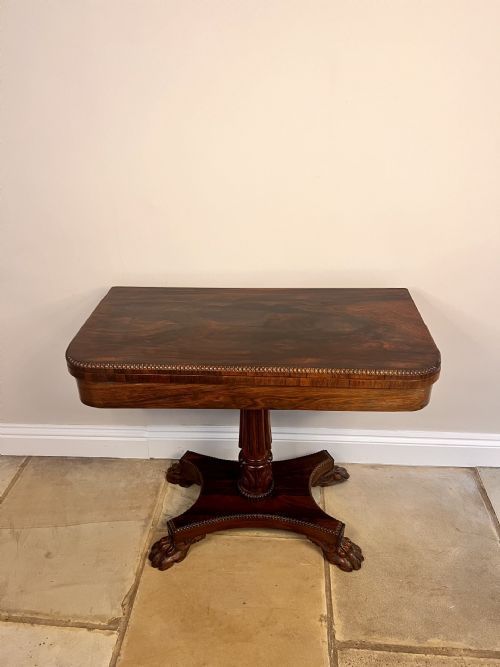
Makers utilised rich timbers like mahogany, rosewood, and satinwood to construct these functional objects, often incorporating intricate inlay work in boxwood and maple. The resulting pieces combine domestic utility with striking decorative presence.
Materials and methods
Cabinetmakers relied heavily on dense tropical hardwoods, choosing solid mahogany and figured rosewood for primary surfaces and structural integrity. Satinwood also appeared frequently, valued for its pale warmth and smooth grain.
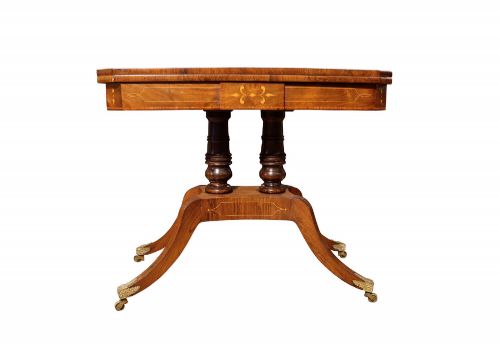
Surface decoration involved meticulous brass inlay, delicate stringing in boxwood and maple, and contrasting satinwood veneers. Brass sabots and castors frequently finished the legs, adding both protection and mobility.
Mechanical ingenuity defined the construction, utilising pivot hinges, rotating leaves, and concealed internal wells to securely hold cards, counters, and sewing implements.
Period Gaming Furniture Retail Price Guide 2026
Typical asking prices for period gaming furniture among the pieces listed under this phrase on Sellingantiques today, from the lower quarter to the upper quarter. They describe what is for sale here now, not the wider market.
Some tables feature secret compartments cunningly hidden beneath the folding top to store illicit gambling debts.
The markers of quality
Superior examples distinguish themselves through the exceptional choice of timber, displaying rich, highly figured grain patterns across the primary surfaces without artificial enhancement. Lesser pieces rely on plain, tightly cut veneers that lack depth and optical movement.
The precision of the cabinetwork dictates the overall standard, visible in the seamless fit of folding leaves and the stability of pivoting mechanisms. Finer construction ensures that joints remain tight and operating parts function smoothly over centuries of use.
Decorative details elevate specific pieces, from finely cast brass mounts and crisp carved elements to intricate contrasting stringing. The restraint and execution of these embellishments separate standard domestic items from high-status commissions.
William Trotter
The Period Gaming Furniture Glossary
- Card table
- A specialised small table with a hinged top that folds open to reveal a baize-lined playing surface. These items formed an essential part of Georgian and Regency drawing room furnishings.
- Sabot
- A protective or decorative metal mounting fitted to the foot of a furniture leg. Makers frequently cast these in brass to match other hardware on Regency pieces.
- Foldover top
- A dual-surface tabletop design featuring a hinged leaf that swings or flips open to double the available area. This mechanism allowed compact console tables to transform into gaming surfaces.
- Stringing
- Thin, linear inlay of a contrasting wood used to outline panels, borders, and legs. Cabinetmakers utilised boxwood and maple to create crisp geometric contrast against darker timbers.
Period Gaming Furniture: Frequently Asked Questions
How did people use card tables?
These tables sat against drawing room walls when closed, conserving floor space during the day. In the evening, servants or hosts unfolded the top to accommodate players for whist, quadrille, or other parlour games.
Interior wells beneath the folding top stored decks of cards, bone counters, and coinage safely between sessions. Some variants also served a dual purpose for writing or light tea service.
How do I tell Regency from Georgian pieces?
Georgian furniture, including George II and Sheraton styles, generally emphasises carved mahogany, classical proportions, and restrained architectural lines. These earlier pieces often showcase disciplined bracket feet or straight legs.
Regency design introduces bolder exotic timbers like rosewood and kingwood, frequently accented with brass inlay and carved animal motifs such as dolphins. The overall aesthetic shifts toward archaeological revivalism and dramatic contrast.
Are these tables sturdy enough for daily use?
Period gaming furniture is remarkably robust, constructed from dense hardwoods designed to withstand active domestic environments. Regular use for card playing or display requires only standard care and stable indoor humidity.
The folding mechanisms and pivot joints demand gentle handling to prevent strain on original nineteenth-century hinges and wooden pins.
What woods were most popular?
Mahogany dominated eighteenth-century production, valued for its deep reddish-brown tone and exceptional structural strength. Cabinetmakers selected it for both solid framing and fine decorative veneers.
By the nineteenth century, rosewood gained widespread favour for its striking dark grain and oily lustre. Satinwood and maple provided pale contrast for delicate inlay work.