

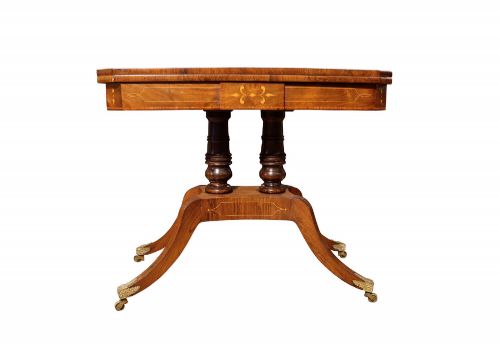


Period Foldover Table
A period foldover table brings ingenious domestic engineering to the drawing room, offering a compact console that opens to a generous surface for tea or cards.
Period Foldover Table
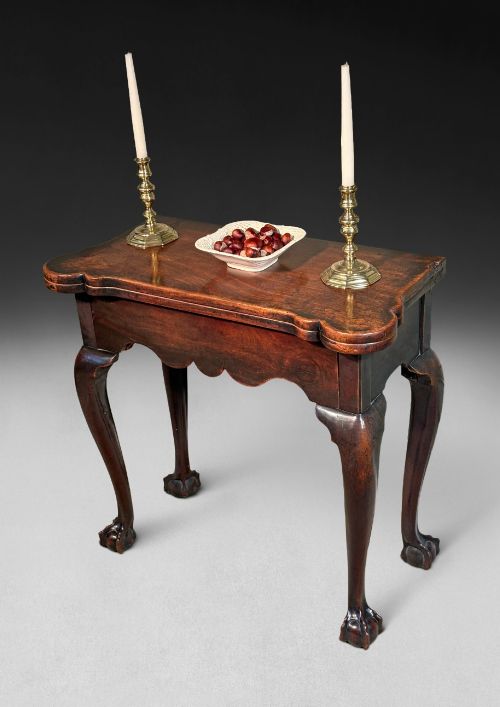
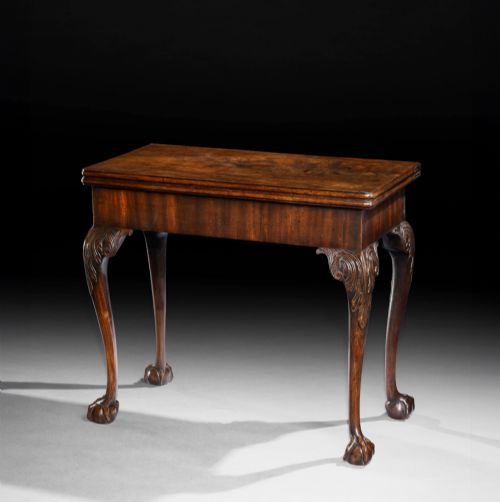
When you search for a period foldover table, you encounter versatile pieces designed to adapt to the changing needs of eighteenth and nineteenth-century parlours. These items function primarily as tea tables, card tables, or games tables, transforming from a slim profile against a wall into a stable, full-sized surface when the hinged top is unfolded.
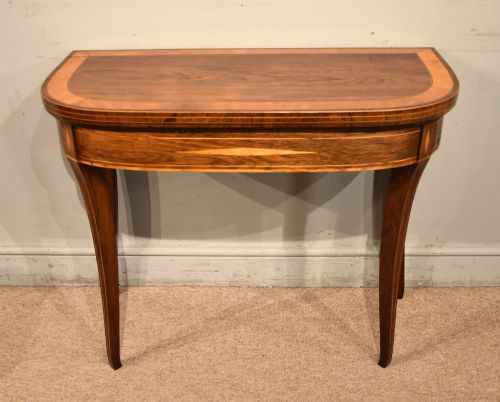
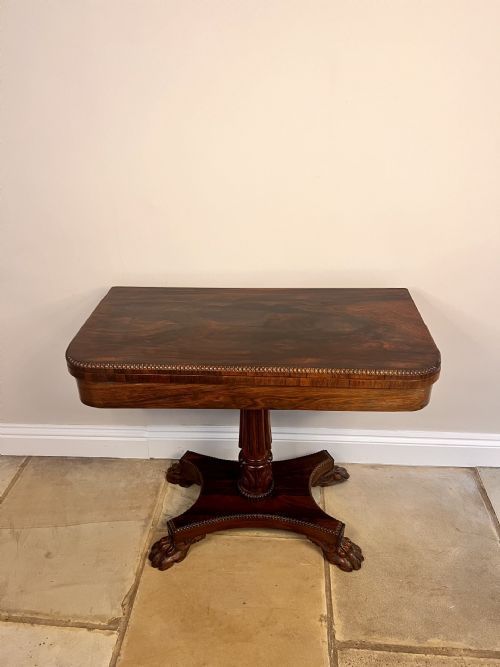
The versions most frequently met on this page span the Georgian eras, including George II, George III, and George IV designs, alongside substantial Regency pieces. The forms range from straightforward rectangular tea tables to serpentine card tables and 'D' shaped formats, often supported by columns or lyre bases.
Originating across the eighteenth and nineteenth centuries, these tables reflect the social habits of their eras, where furniture needed to be multi-functional. A buyer selecting a period foldover table secures an item that maintains its practical utility while anchoring a room with period proportion and timber richness.
How they were made
Cabinetmakers utilised rich primary timbers such as mahogany and rosewood, often applying delicate wood veneers like satinwood, boxwood, and ebony to create striking borders and geometric inlay. These surfaces showcase the natural grain of the wood, finished to highlight depth and warmth.
Structural stability relied on precise joinery and specialised hardware, including brass sabots and castors on Regency examples, as well as complex concertina actions that supported the heavy folding leaves without straining the hinges.
Period Foldover Table Retail Price Guide 2026
Typical asking prices for period foldover table among the pieces listed under this phrase on Sellingantiques today, from the lower quarter to the upper quarter. They describe what is for sale here now, not the wider market.
Many a Victorian card player surely blamed the table's concertina action for a poor hand of whist.
What varies in quality
The distinction between a standard piece and a superior example lies in the choice of timber and the ambition of the joinery. Figured rosewood and finely figured mahogany denote higher status, while concertina actions and intricate stringing demonstrate advanced craftsmanship.
Proportion and the integration of decorative elements such as brass mounts or inlaid borders separate workshop output. The crispness of the carving and the fidelity of the secondary woods reveal the original maker's investment of time and skill.
Giles Grendey
The Period Foldover Table Glossary
- Concertina action
- An expanding frame mechanism that allows a card table's rear legs to move outwards with the top, providing even support on all four corners when opened.
- D shaped card table
- A table with a semicircular top and straight back edge, designed to sit flush against a wall when folded.
- Sabot
- A decorative metal sleeve fitted to the foot of a furniture leg, commonly cast in brass on Regency pieces.
- Stringing
- A thin inlay of contrasting wood, such as boxwood or ebony, used to create fine linear borders on table tops and legs.
- Lyre base
- A furniture support shaped like an ancient Greek lyre, characteristic of early nineteenth-century Regency design.
Period Foldover Table: Frequently Asked Questions
What is a period foldover table?
A period foldover table is a piece of antique furniture with a hinged top that doubles the surface area when unfolded. They were principally designed for social pastimes like card games or serving tea in formal rooms.
These tables remain practical for modern interiors where space efficiency and historical character are equally valued. Their dual nature allows them to serve as slim side tables when closed.
How were foldover tables used?
In eighteenth and nineteenth-century homes, these tables sat against the wall until guests arrived. For tea service or card playing, the hinged leaf lifted and rotated to rest on a swivel or pull-out frame.
Some variants include wells beneath the folding top for storing cards and counters. This clever storage kept gaming equipment close at hand without cluttering the parlour.
How do I care for rosewood and mahogany?
Maintaining these timbers involves keeping them away from direct sunlight and sudden temperature changes that can dry out the old wood veneer. Regular dusting with a soft, dry cloth preserves the finish.
Applying occasional appropriate wax feeds the grain without building up a heavy residue. Avoid placing hot or damp items directly on the polished surface to protect the historic finish.
How can I tell Regency tables apart from Georgian ones?
Georgian pieces often feature straight legs, carved mahogany details, and classical proportions associated with cabinetmakers like Hepplewhite. The emphasis rests on solid timber construction and restrained ornamentation.
Regency examples tend to incorporate exotic veneers like rosewood, brass inlay, sabots, and architectural supports such as lyres or columns. They reflect a bolder aesthetic influenced by classical antiquity and French design.