



Period Dressing Table Mirror
A period dressing table mirror brings focused reflection and polished timber to a room, offering a functional antique that sits easily on a chest or dresser.
Period Dressing Table Mirror
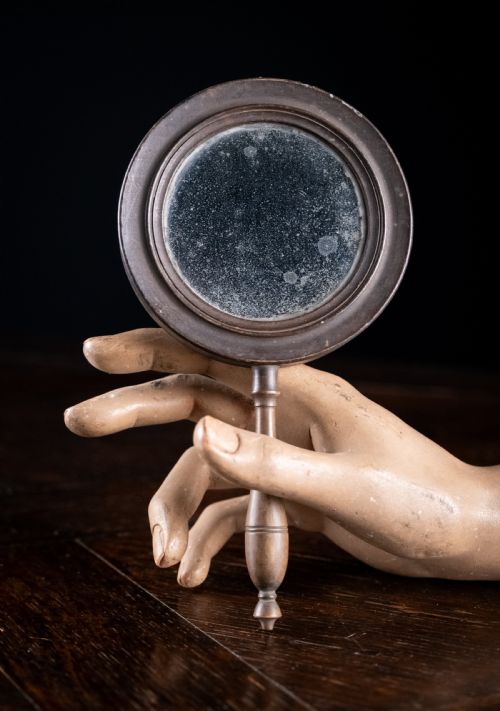
When you search for a period dressing table mirror, you encounter tabletop glasses, toilet mirrors, and vanity mirrors spanning the Georgian, Regency, and Victorian eras. These objects range from small hand-held glasses to substantial box-base toilet mirrors designed to tilt on vertical supports.
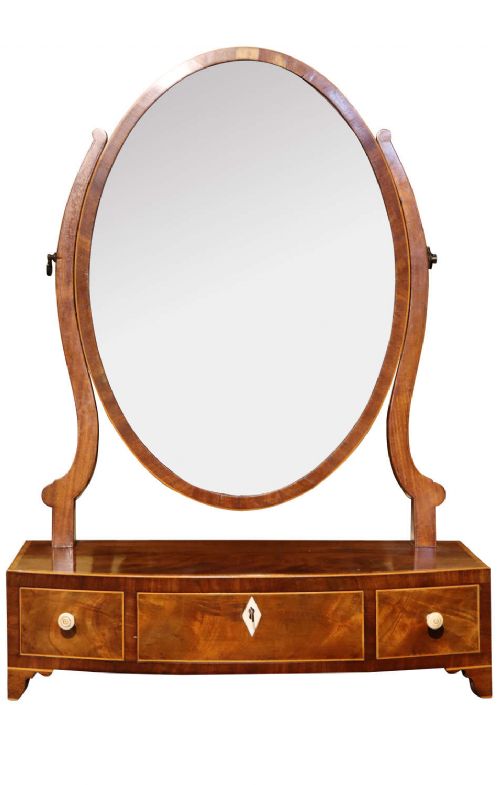
The versions most commonly met on this page are mahogany toilet mirrors from the Georgian and Regency periods, often featuring rectangular or oval glass plates mounted on shaped uprights above small drawer bases.
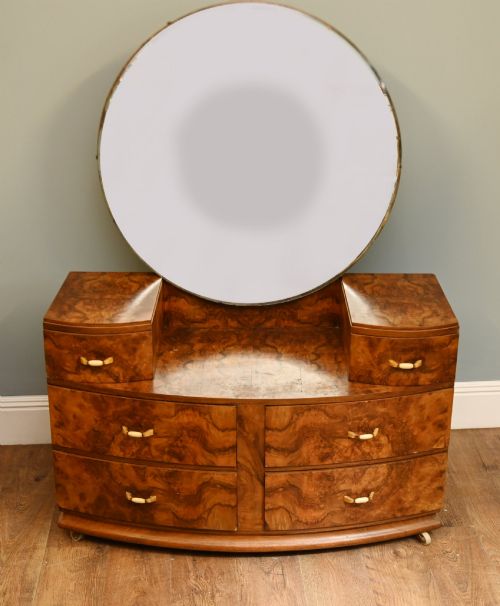
Makers and craftsmen also produced examples in walnut, bronze, and burr walnut, extending from eighteenth-century George II designs through to 1930s Art Deco interpretations.
How they were made
Cabinetmakers constructed the frames and stands of these mirrors using dense timbers such as mahogany and walnut, frequently applying crossbanding and bone inlay to enhance the primary surfaces.
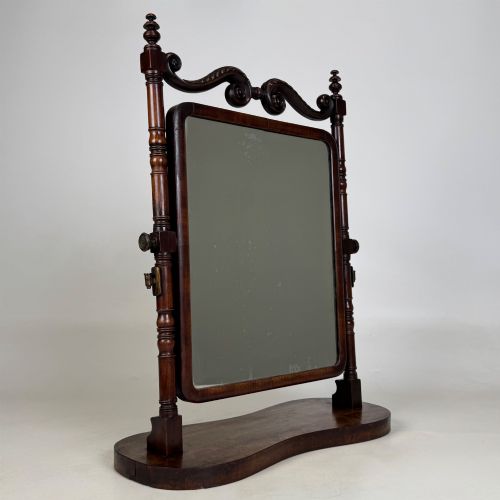
The mirror plates themselves consist of glass secured within pivoting frames of brass, bronze, or polished wood, supported by upright arms that allow the glass to tilt at various angles.
Period Dressing Table Mirror Retail Price Guide 2026
Typical asking prices for period dressing table mirror among the pieces listed under this phrase on Sellingantiques today, from the lower quarter to the upper quarter. They describe what is for sale here now, not the wider market.
Listings feature examples from the 18th Century, Georgian, Regency, and Victorian periods, constructed in mahogany, walnut, brass, and bronze.
What varies in quality
The distinction between standard and superior examples rests on the selection of timber veneers, such as figured mahogany or burr walnut, and the crispness of carved details on the upright supports.
Construction methods also dictate quality, particularly the use of dovetailed joints in the small box bases and the original survival of the mirror plate and brass hardware.
The Period Dressing Table Mirror Glossary
- Toilet mirror
- A small mirror designed to stand on a dressing table or chest of drawers, popular from the eighteenth century onward. These typically incorporate a small box base with one or more drawers.
- Crossbanding
- A decorative border technique where thin strips of veneer are laid across the grain of the primary wood. This method frames the central panel of a mirror base.
- Box base
- The lower drawer section that supports the upright arms and pivoting glass plate. It provides stability and storage for small personal items.
- Ormolu
- Gilded bronze ornamentation applied to French Empire and nineteenth-century pieces. It adds metallic contrast to mahogany and marble structures.
Period Dressing Table Mirror: Frequently Asked Questions
What is a toilet mirror?
A toilet mirror is a tabletop looking glass mounted on a small drawer base, designed for personal grooming.
These pieces were placed upon dressing tables or chests in bedrooms during the Georgian and Regency periods.
How do I date a mirror?
Dating relies on identifying the primary wood species, construction techniques like dovetailing, and the overall stylistic period.
Georgian and Regency examples often feature mahogany or walnut, whereas later nineteenth-century pieces show Victorian influences.
Where should I place one?
These mirrors sit comfortably on top of chests of drawers, sideboards, or dedicated dressing tables in a bedroom or hallway.
Their compact footprints allow them to function effectively on most flat wooden surfaces.
Can the mirror tilt?
Most period table and toilet mirrors use pivoting side screws attached to upright arms, allowing the glass to angle forward or backward.
This adjustable mechanism enables the user to alter the reflection as needed.