





Period Drawer Base
A period drawer base brings centuries of joinery straight into a room, offering robust storage built from timber that only deepens with age.
Period Drawer Base
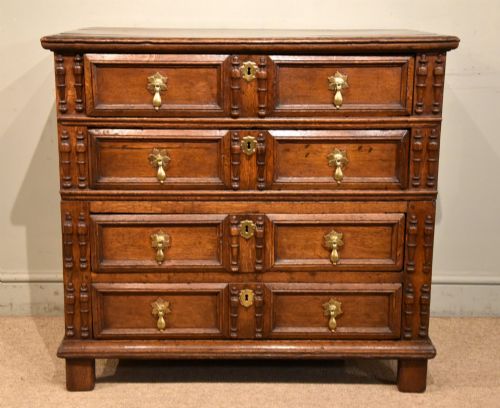
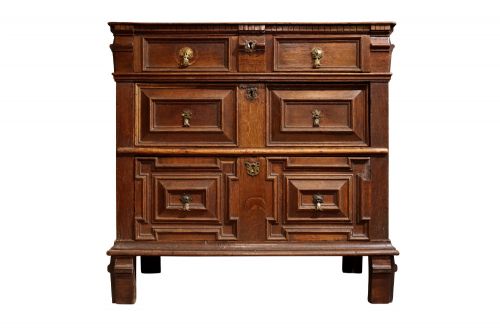
A period drawer base typically manifests as a chest of drawers, dresser, or side table rooted in seventeenth-century or eighteenth-century joinery. These utilitarian forms rely on substantial timber construction to provide functional storage and display surfaces within domestic interiors.
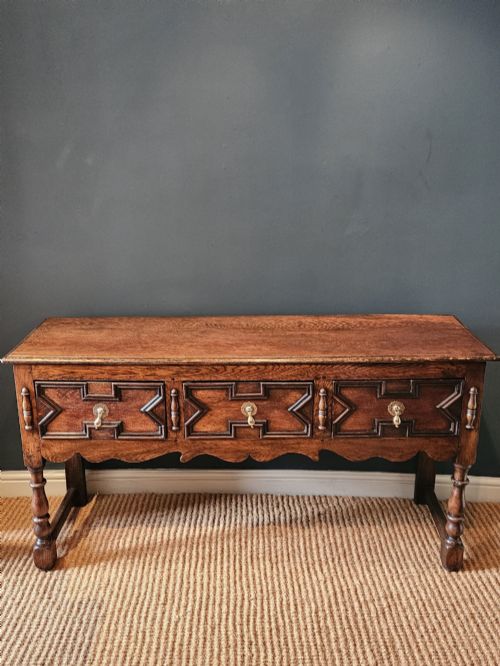
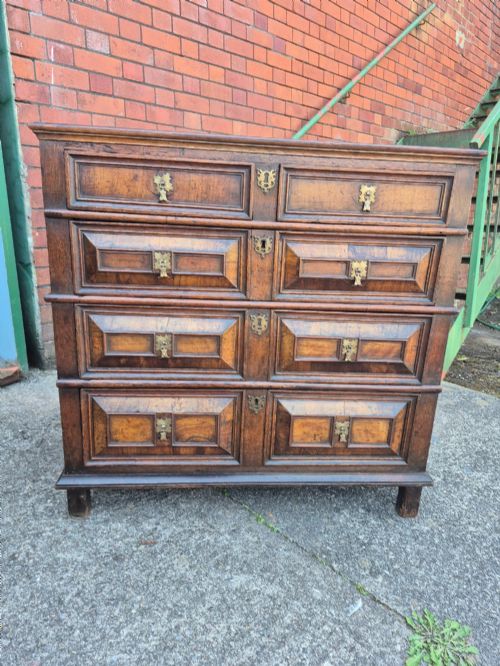
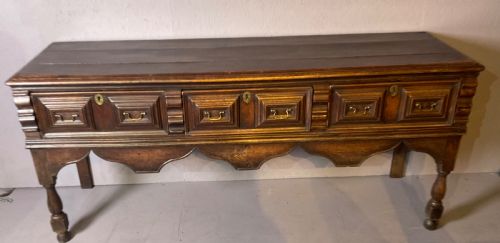
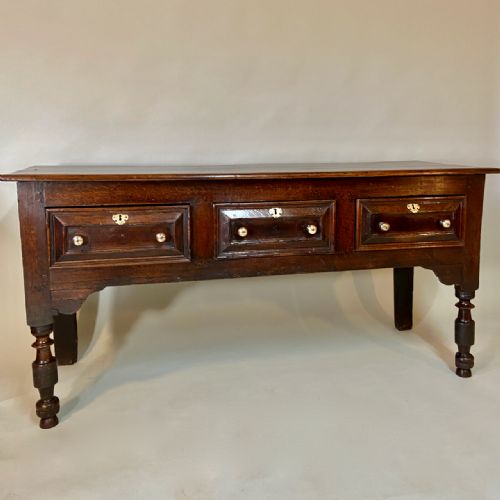
Most examples encountered here date from the seventeenth century and the Georgian era, utilising woods like oak and walnut. Buyers frequently find low dressers, geometric moulded chests, and serving tables that display the sturdy proportions typical of early English cabinet-making.
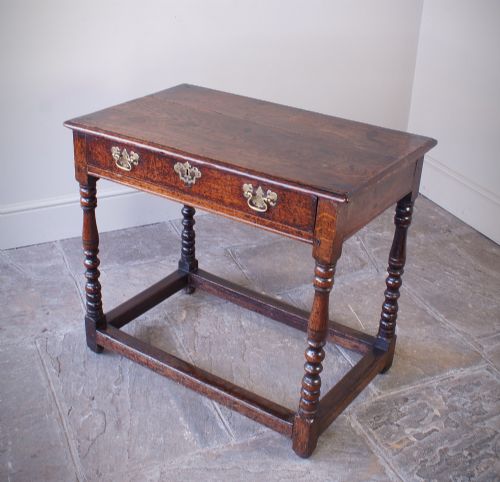
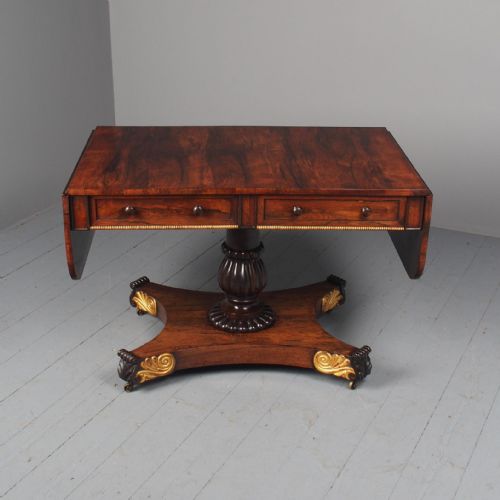
Side tables and sofa tables also appear among these listings, expanding the definition beyond traditional deep-chested storage units. Each piece demonstrates the heavy timber framing and straightforward utility characteristic of period base furniture.
Construction and materials
The construction of these pieces relies heavily on solid oak and walnut, fashioned with pegged mortise and tenon joints by early craftsmen. Timber was selected for durability, resulting in heavy frames designed to withstand generations of daily use.
Surface detailing often includes geometric mouldings applied to drawer fronts, creating depth through carpentry rather than applied veneer. Secondary woods and brass hardware complete the fabrication, anchoring the structural integrity of each piece.
Period Drawer Base Retail Price Guide 2026
Typical asking prices for period drawer base among the pieces listed under this phrase on Sellingantiques today, from the lower quarter to the upper quarter. They describe what is for sale here now, not the wider market.
Object forms span chests of drawers, dressers, side tables, and sofa tables across multiple historic styles.
Assessing quality in early furniture
Quality rests in the integrity of the timber selection and the precision of the early joinery. Pieces displaying crisp geometric mouldings and undisturbed structural framing sit at the higher end of the range.
The condition of the original surfaces and the retention of period brassware significantly influence desirability. Subtle differences in proportion and the harmonious ageing of the wood separate standard utility pieces from finer examples.
The Period Drawer Base Glossary
- Geometric Moulding
- Applied wooden strips forming raised patterns on drawer fronts. This technique created visual texture on seventeenth-century furniture.
- Dresser Base
- The lower section of a kitchen or dining dresser, fitted with drawers and cupboards. It served as a heavy work surface in historic homes.
- Mortise and Tenon
- A primary woodworking joint where a peg fits tightly into a corresponding hole. This method locked timber frames together securely without modern adhesives.
- Pedestal
- A single support column beneath a table top. It allows maximum legroom while maintaining structural stability.
- Serving Dresser
- A long, low table with drawers utilised for food preparation and service. These pieces predated modern sideboards in great houses.
Period Drawer Base: Frequently Asked Questions
What is a period drawer base?
A period drawer base refers to sturdy historic furniture like chests, dressers, and side tables featuring functional storage drawers. These pieces date predominantly from the seventeenth and eighteenth centuries.
Built primarily from oak and walnut, they represent the foundational storage units of historic English homes. Their robust construction makes them practical for modern use.
How do I date an early oak chest?
Dating relies on examining the construction methods, such as hand-cut dovetails, pegged joints, and the profile of any geometric mouldings. Wood patination and tool marks offer further clues to the century of manufacture.
Stylistic markers like William and Mary or Charles II characteristics help narrow down the decade. Examining the drawer linings and backboards provides additional chronological evidence.
Where were these pieces used originally?
Early drawer bases functioned in kitchens, halls, and parlours as utilitarian surfaces for storage and food preparation. Dresser bases held serving platters, while chests secured textiles and valuables.
Over time, these heavy items moved into principal living spaces as domestic habits changed. Today, their generous proportions suit hallways and dining rooms equally well.
How should I care for historic timber furniture?
Maintain stable humidity levels in the room to prevent the ancient oak or walnut from drying out and splitting. Avoid placing the furniture near direct heat sources or in strong sunlight.
Feed the wood periodically with appropriate wax to preserve the finish and nourish the grain. Gentle dusting with a dry cloth keeps the surface safe.