




Period Display Furniture
Period display furniture gathers the timber cabinets, tiered etageres and open shelving that showcase treasured objects with timeless architectural precision.
Period Display Furniture
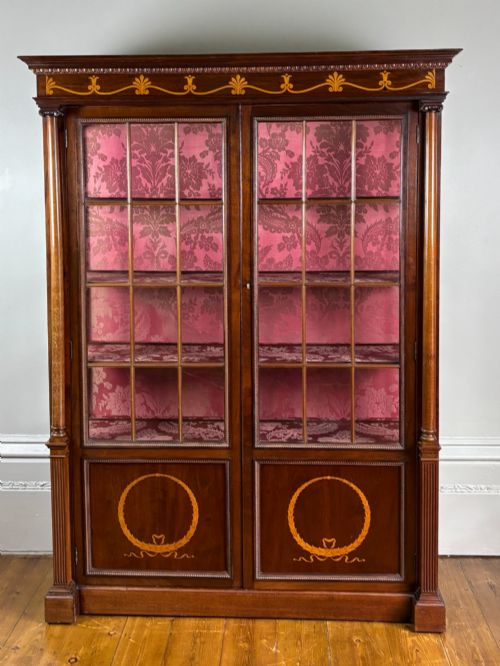
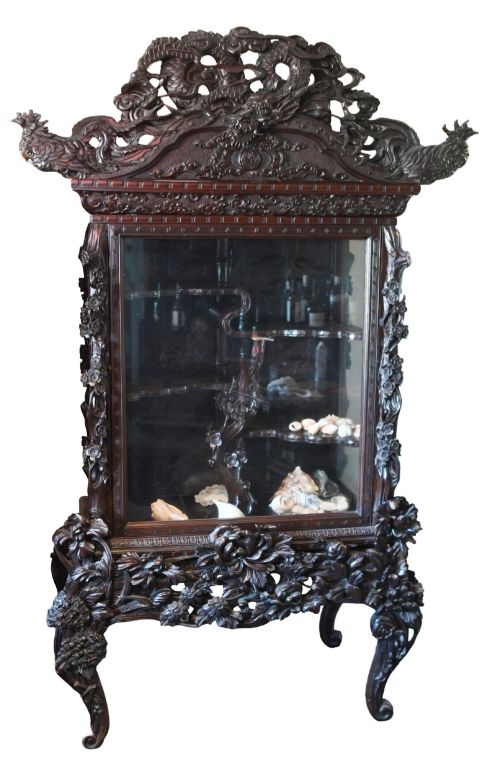
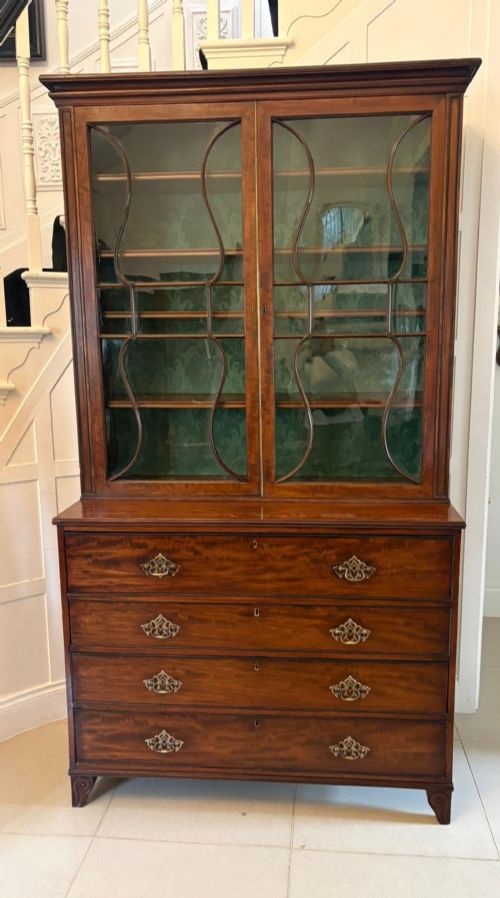
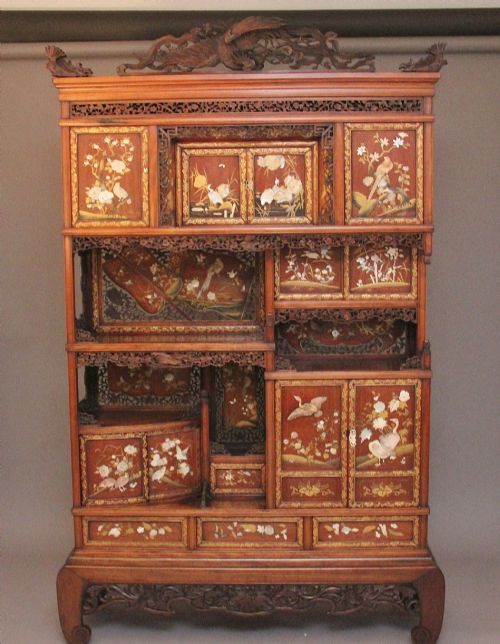
Period display furniture encompasses freestanding cabinets, corner cupboards, bookcases, and multi-tiered etageres designed to present collections within domestic interiors. These pieces span Georgian, Regency, and Victorian eras, alongside Japanese Meiji period examples that introduce distinct regional craftsmanship.
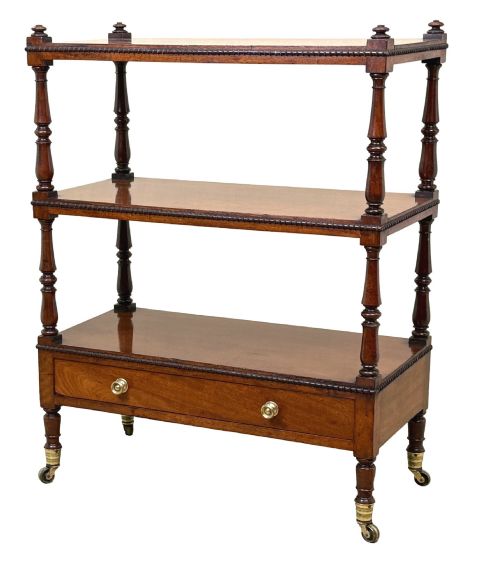
The common form met on this page is the tiered whatnot or open bookcase in rich timber, designed specifically to lift objects into view. Buyers select these items to organise ceramics, books, and small artefacts while adding structural presence to a room.
Origins stretch from English workshops to continental Europe and Meiji Japan, bringing together British mahogany and oak with exotic hardwoods and lacquered finishes. Each format serves a distinct spatial function, from corner units utilising dead space to breakfront bookcases anchoring a library wall.
Assessing quality
Quality rests in the precision of the timber selection and the restraint of the decorative elements, where figured grains and matched veneers elevate a standard carcass into something distinguished. Cabinetmakers who took extra care ensured that mouldings align seamlessly and doors hang true without sagging.
The integration of secondary materials, such as finely chased brass mounts or meticulous marquetry and inlay, separates standard utilitarian pieces from exceptional ones. Finer items display proportion and lightness of touch even in robust forms like breakfront bookcases or large shodana cabinets.
Period Display Furniture Retail Price Guide 2026
Typical asking prices for period display furniture among the pieces listed under this phrase on Sellingantiques today, from the lower quarter to the upper quarter. They describe what is for sale here now, not the wider market.
Listings feature brass-mounted rosewood side cabinets, oak floor-standing corner cupboards, and multi-tiered mahogany etageres.
Gillows·Liberty & Co.
The Period Display Furniture Glossary
- Whatnot
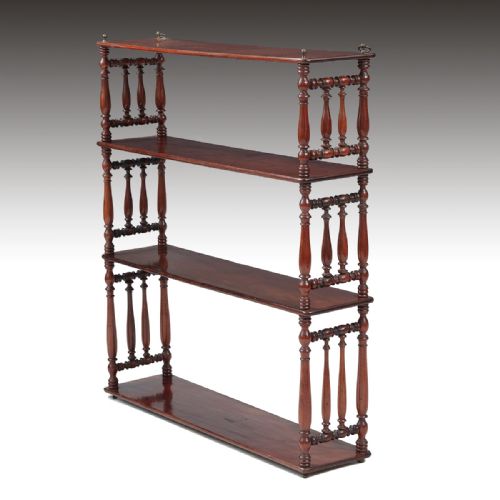
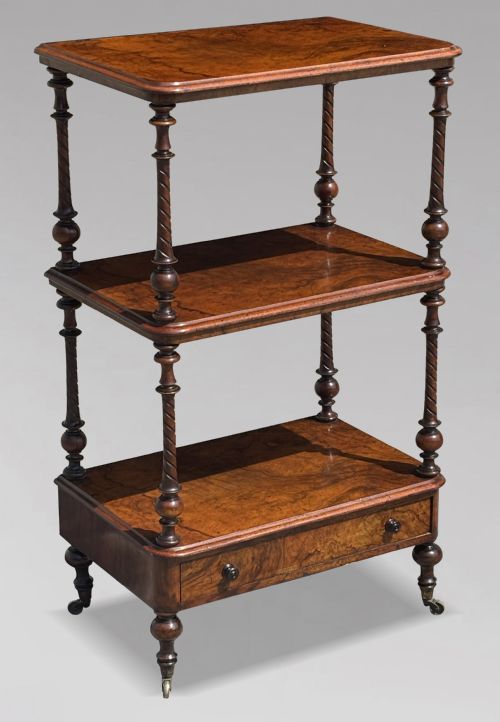
- A moveable set of open shelves, typically with three or more tiers, used for displaying ornaments and small objects. It originated in the late 18th century and gained popularity through the Regency and Victorian periods.
- Shodana
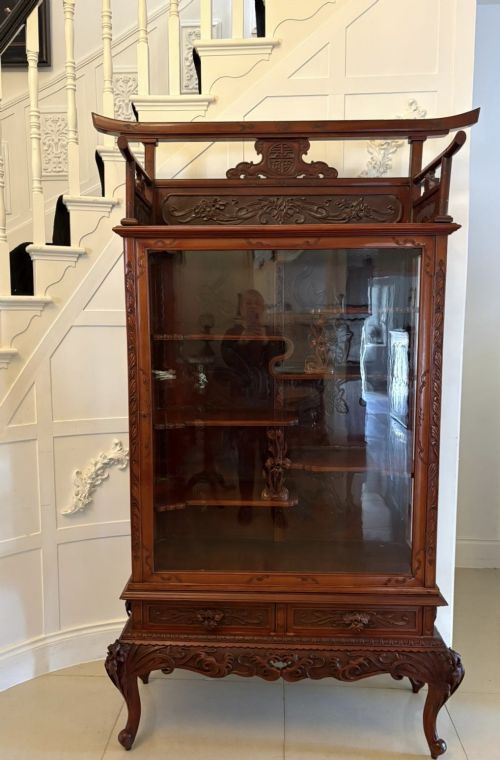
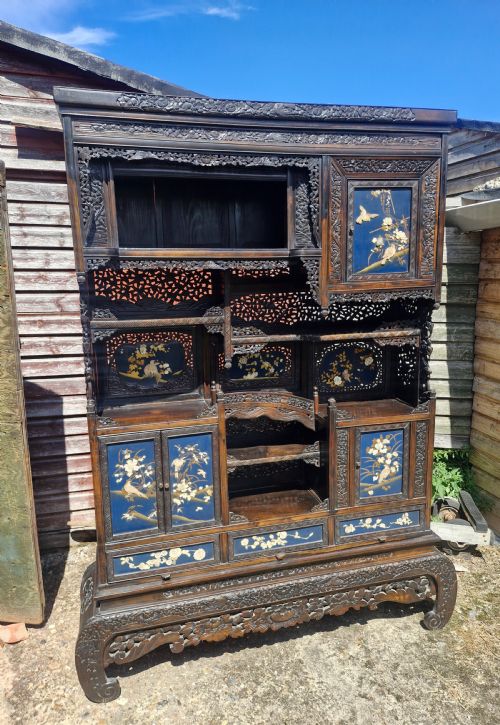
- A Japanese multi-tiered display cabinet featuring staggered shelving, cupboards, and sliding doors. These pieces showcase intricate woodwork and lacquer techniques associated with the Meiji period.
- Breakfront
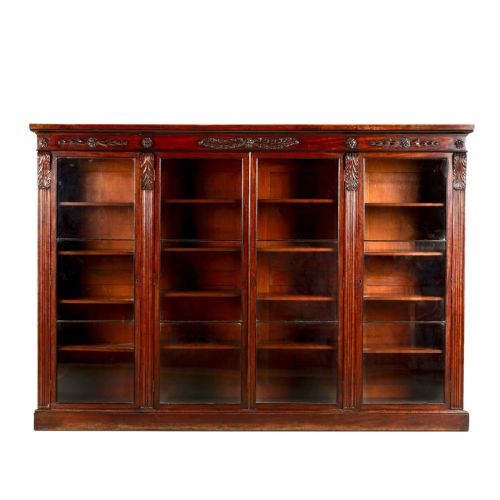
- A large cabinet or bookcase whose central section projects forward from the flanking wings. This architectural arrangement creates depth and breaks up the horizontal mass of the furniture.
- Pier cabinet
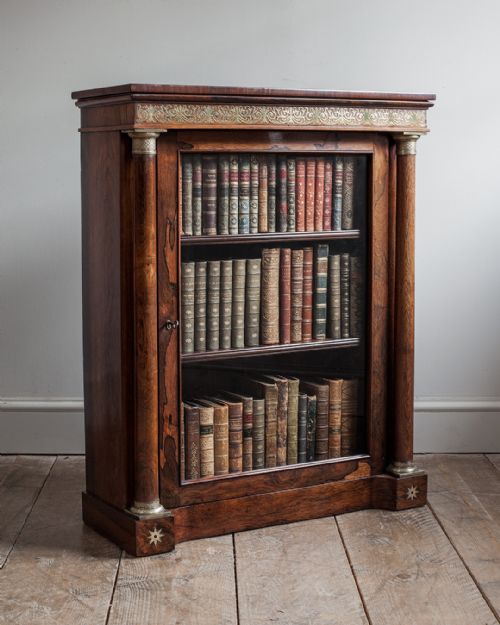
- A low cabinet designed specifically to fit the wall space between windows, frequently incorporating glazed doors for the display of porcelain and collectables.
Period Display Furniture: Frequently Asked Questions
What is the difference between a whatnot and an etagere?
A whatnot typically refers to English tiered shelving units with straightforward upright supports designed for domestic display.
An etagere is often lighter in construction with continental or French stylistic roots, though both terms describe multi-level display furniture.
Where should I place a corner cabinet?
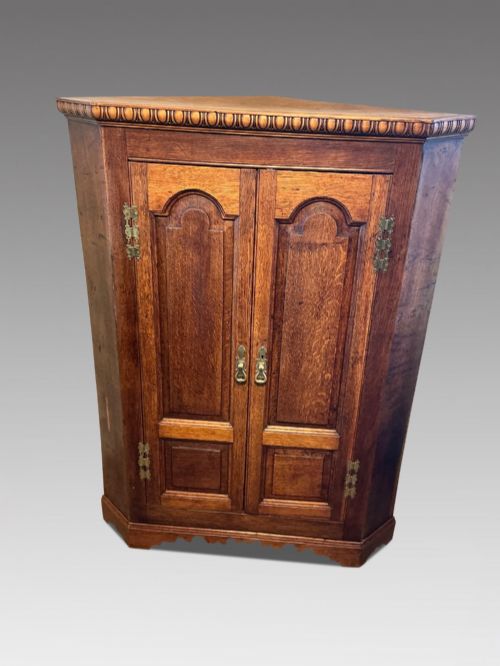
Corner cabinets and cupboards suit unused room angles, turning dead space into functional display areas for ceramics and glassware.
They anchor dining rooms and drawing rooms effectively without dominating the main floor area.
How do I care for rosewood and mahogany furniture?
Maintain these timbers by keeping them away from direct sunlight and sudden temperature shifts that dry out the grain.
Apply a traditional beeswax polish occasionally to nourish the surface and preserve the depth of the wood.
What items are best displayed in a shodana cabinet?
Shodana cabinets suit small Japanese ceramics, bronze figures, netsuke, and delicate decorative objects.
Their asymmetrical shelving allows for varied arrangements that highlight individual pieces against lacquer and carved hardwood.