





Period Dining Room Table
These period dining room table selections and related furnishings bring solid mahogany timber and classic Regency proportions straight to the dining space.
Period Dining Room Table
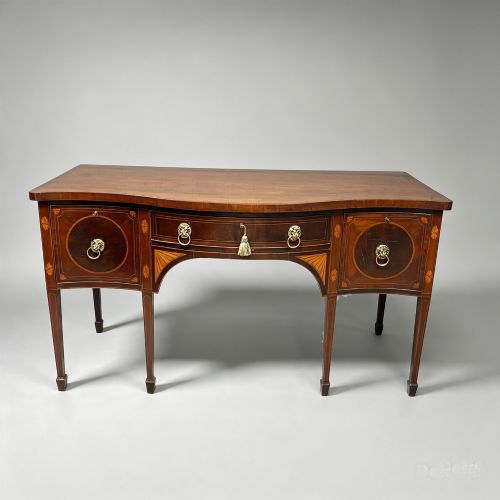
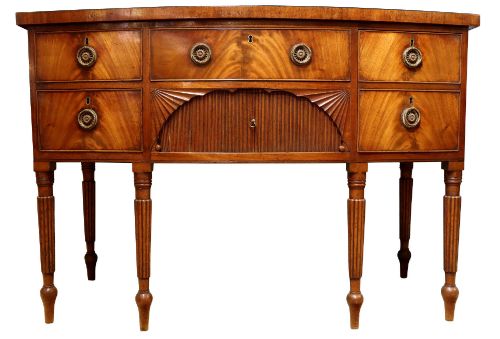
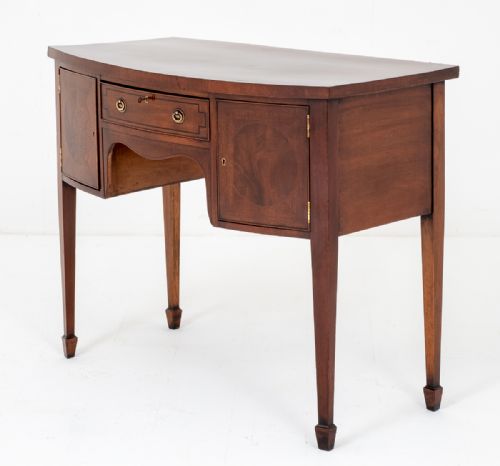
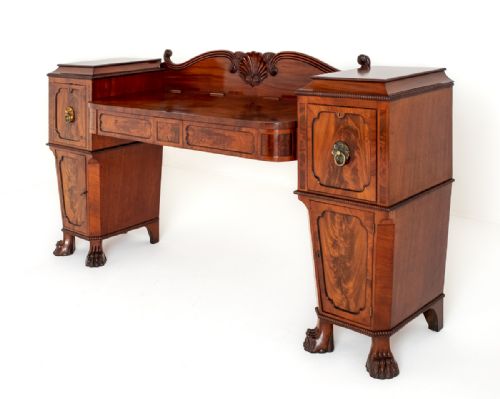
A period dining room table search reveals a selection dominated by mahogany dining tables alongside supporting pieces like sideboards, serving tables, and dresser bases. The examples span the Georgian, Regency, and Edwardian eras, reflecting centuries of dining traditions.
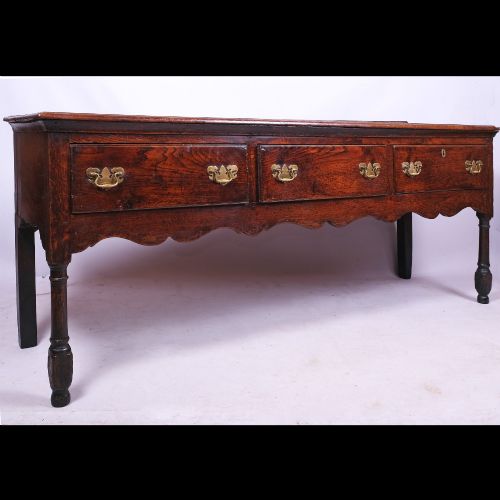
Buyers will most frequently encounter nineteenth-century and Regency mahogany serving tables and sideboards on this page, alongside twin pedestal dining tables from around eighteen twenty. Oak pieces from the eighteenth century also appear, offering alternative forms for period interiors.
The objects serve practical dining functions, from surface space for food service to storage for wine and tableware. Each piece carries stylistic markers from specific periods, such as Sheraton revival designs or George III proportions.
Materials and construction
Construction relies heavily on solid mahogany and flame mahogany veneer, often enhanced by contrasting timbers such as satinwood, ebony, boxwood, and oak. Cabinetmakers applied these materials across large surfaces to highlight natural grain patterns.
Decorative detailing incorporates precise stringing and satinwood inlay, particularly on pieces influenced by Sheraton designs. Brass fixtures provide functional hardware and subtle contrast against the dark timber.
Period Dining Room Table Retail Price Guide 2026
Typical asking prices for period dining room table among the pieces listed under this phrase on Sellingantiques today, from the lower quarter to the upper quarter. They describe what is for sale here now, not the wider market.
Wine coolers kept bottles chilled in transit from the cellar, doubling as heavy decorative objects that ensured guests stayed well-watered.
Assessing craftsmanship
Quality separates through the crispness of inlaid details and the selection of timber veneers. Flame mahogany with deep, active figuring sits at the upper end, supported by precise boxwood and ebony banding.
Proportion and cabinetmaking execution dictate overall success. Superior pieces demonstrate balanced alignment in serpentine or bow front forms, clean structural joins, and consistent patination across secondary timbers.
Gillows·Mack Williams And Gibton
The Period Dining Room Table Glossary
- Regency
- A British design period spanning the early nineteenth century characterised by classical revival motifs and refined proportion. It draws heavily on ancient Roman, Greek, and Egyptian decorative themes.
- Sheraton
- A late eighteenth-century neoclassical style associated with designer Thomas Sheraton. It favours straight lines, satinwood veneer, and delicate inlaid decoration.
- Dumb waiter
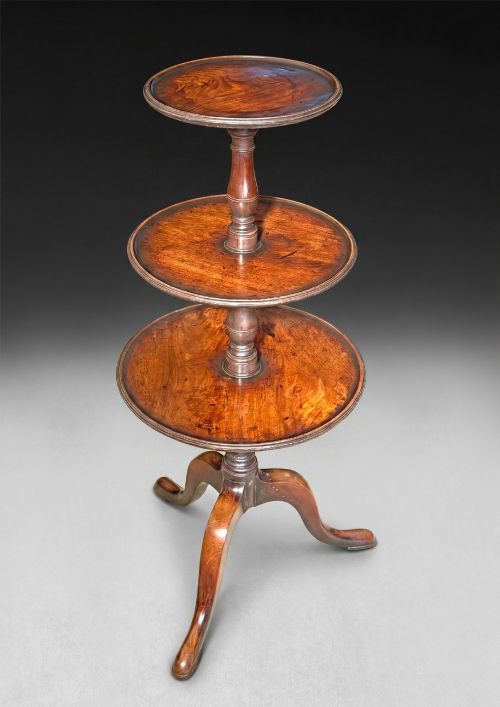
- A freestanding tiered shelving unit designed to hold dishes near the dining table. It allowed diners to serve themselves without servants present.
- Dresser base
- A low wooden sideboard or table featuring drawers and cupboards, traditionally used in kitchens and dining rooms for storage and preparation.
- Veneer
- A thin layer of finely figured wood applied to a secondary timber base. This technique allowed cabinetmakers to display decorative grain patterns economically.
Period Dining Room Table: Frequently Asked Questions
What defines a Regency dining table?
Regency dining tables typically feature mahogany timber, pedestal bases with brass paw feet, and clean classical lines. They often utilise twin pedestals to support extended dining surfaces.
These tables date from the early nineteenth century and reflect the influence of ancient architectural forms adapted for domestic dining rooms.
How do I identify a George III sideboard?
George III sideboards usually present mahogany construction with straight, bow-front, or serpentine shapes. They incorporate deep drawers and delicate brass hardware.
Cabinetmakers of this era frequently embellished the surfaces with contrasting stringing and fine inlay work, creating elegant focal points for formal dining spaces.
Where were serving tables used?
Serving tables stood against dining room walls to hold dishes, wine coolers, and silver during large meals. They provided supplementary surface area when the main dining table lacked room.
Unlike standard sideboards, traditional serving tables lacked built-in drawers or cupboards, relying entirely on an open frame construction.
What is satinwood cross-banding?
Satinwood cross-banding is a decorative technique where a border of satinwood veneer is applied around the edges of a mahogany tabletop or drawer front. The grain runs perpendicular to the main panel.
This method created visual contrast and framed the primary timber, appearing frequently on Sheraton revival and late nineteenth-century pieces.