



Period Country House Chairs
Period country house chairs are robust seating designed for domestic comfort, offering an authentic glimpse into historic English interiors.
Period Country House Chairs
When you search for period country house chairs, you are looking at utilitarian and formal seating created across the eighteenth, nineteenth, and early twentieth centuries. These forms include single dining chairs and substantial armchairs used throughout large estates and provincial homes.
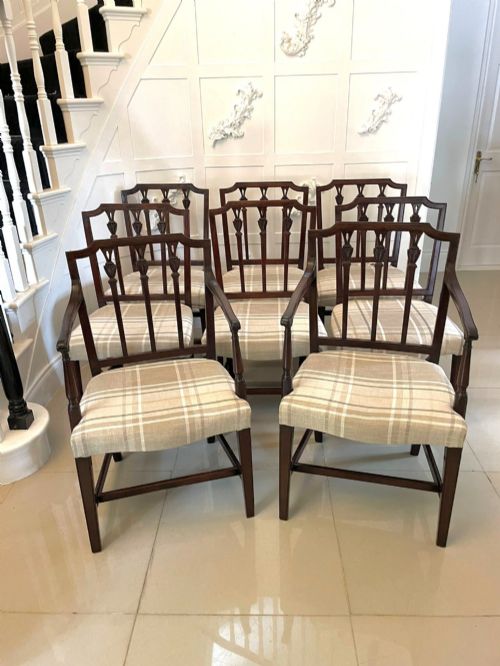
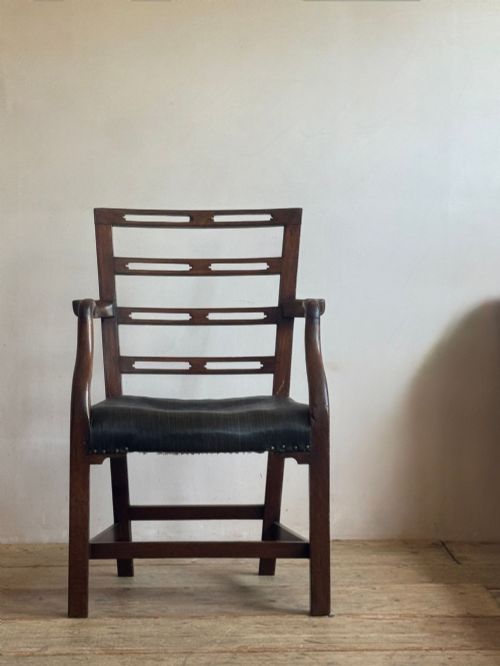
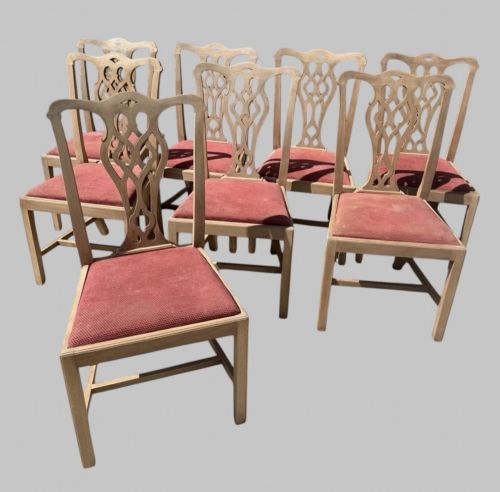
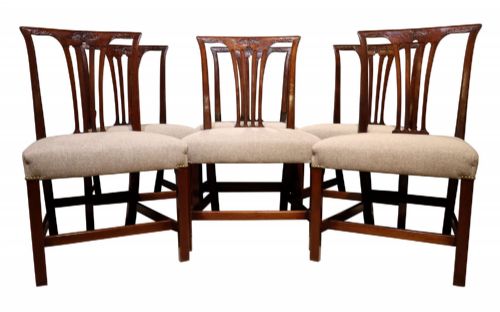
The versions most likely to meet you on this page span the Georgian era up to the Edwardian period, often constructed in robust regional timbers. They range from rustic vernacular ladder-backs to finely carved George III dining sets intended for principal reception rooms.
Makers utilised local woods alongside imported hardwoods to construct furniture that balanced everyday durability with contemporary fashion. You will encounter dining chairs set in matching groups alongside individual armchairs designed for firesides or studies.
How they were made
Makers relied primarily on native and imported timbers such as mahogany, oak, and elm, selecting each for its structural integrity and grain. Joinery techniques involved traditional mortise and tenon construction to ensure chairs could withstand generations of domestic use.
Surface decoration varied from simple painted and distressed finishes to intricate hand-carving along splats and crest rails. Upholstery materials included durable fabrics, leather, and webbing supported by brass fixings.
Some pieces utilised faux bird's eye maple decoration to mimic more costly exotic veneers, demonstrating considerable ingenuity in regional workshops.
Period Country House Chairs Retail Price Guide 2026
Typical asking prices for period country house chairs among the pieces listed under this phrase on Sellingantiques today, from the lower quarter to the upper quarter. They describe what is for sale here now, not the wider market.
Listings here feature items spanning the eighteenth century to the nineteen-twenties, incorporating oak, mahogany, elm, and fabric.
What varies in quality
The standard of a piece rests heavily on the selection of timber and the crispness of its hand-carved details. Chairs featuring well-figured mahogany or dense, mature oak exhibit a superior presence compared to plain utility builds.
Structural harmony and proportion dictate the value of a set, particularly when matching chairs retain their original unified form without later alterations. Subtle refinements in the curve of a crest rail or the taper of a leg distinguish sophisticated workshop output from simpler vernacular items.
The Period Country House Chairs Glossary
- Ladder-back
- A chair back featuring multiple horizontal wooden slats resembling the rungs of a ladder. This style is frequently found in vernacular country seating.
- Chippendale
- A style of eighteenth-century furniture named after the London cabinet-maker Thomas Chippendale, characterised by elaborate interlaced splats and carved cabriole legs.
- Hepplewhite
- A neoclassical furniture style associated with lighter proportions, shield-back chair designs, and tapered legs.
- Wingback
- An armchair featuring protective side panels designed to shield the sitter from draughts near a fireplace.
- Vernacular
- Furniture made by local craftsmen for everyday regional use, often employing native woods and traditional methods rather than strict metropolitan style.
Period Country House Chairs: Frequently Asked Questions
What defines a country house chair?
These pieces are practical seating solutions originating from large English estates, combining domestic utility with regional stylistic choices.
They reflect the tastes of provincial homes where durability mattered as much as contemporary fashion.
How do I date a wooden armchair?
Dating relies on identifying timber choices, tool marks, joinery methods, and the overarching stylistic period of the carving.
Changes in stretcher placement and leg profiles also help narrow down the decade of production.
Were these chairs used for dining?
Many examples on this page formed part of larger dining sets intended for formal estate meals.
Others served specific roles as desk chairs, fireside seats, or hallway furniture.
How should I care for antique timber?
Maintaining antique wood requires stable room temperatures and protection from direct sunlight to prevent timber splitting.
Regular dusting with a dry cloth preserves the finish without building up heavy wax residues.