



Period Clothing Press
A period clothing press provides deep storage for garments and linens, built to last generations in solid timber.
Period Clothing Press
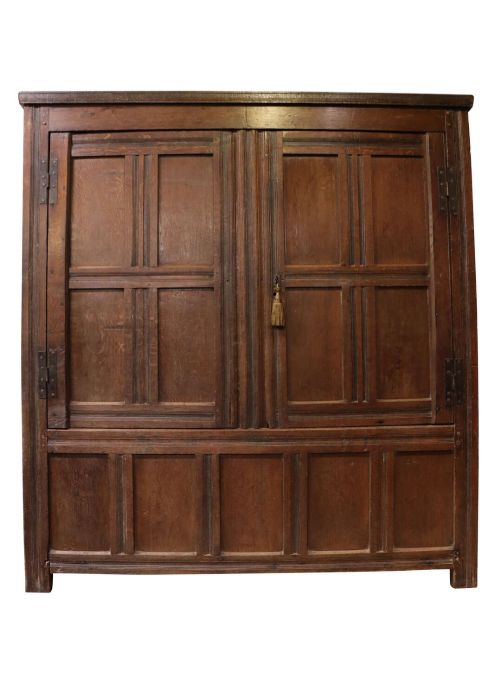
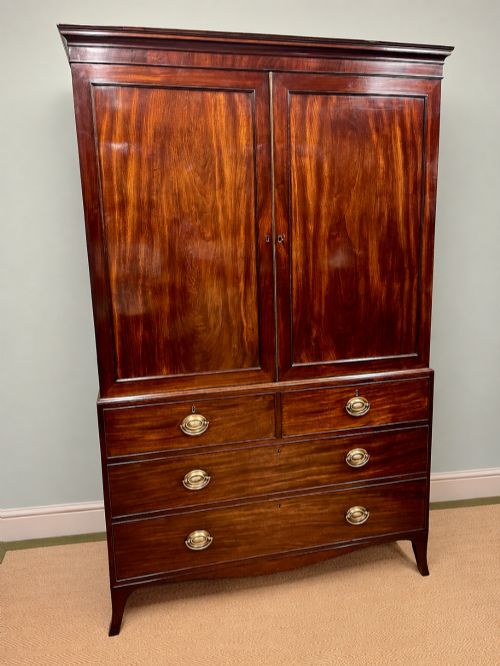
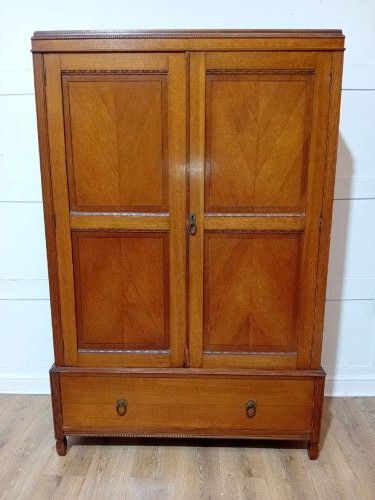
A period clothing press combines large upper storage sections, often originally intended for household linen, with lower drawer arrangements or hanging space. When you examine a period clothing press on this page, you encounter sturdy architectural forms designed to house textiles securely.
The pieces appearing here span centuries of British cabinet-making, originating from the late seventeenth century through the Georgian and Regency eras up to the early twentieth century. These large items served as the primary wardrobe storage in grand country houses and domestic dwellings alike.
Most examples found on this site take the form of substantial timber linen presses or wardrobes, constructed in woods such as mahogany, oak, and pine. Buyers seeking a period clothing press will notice forms ranging from plain country oak cupboards to highly figured flame mahogany cabinet designs.
Materials and construction
Cabinet-makers relied heavily on dense hardwoods, selecting figured timbers like flame mahogany and Cuban mahogany for prominent exterior surfaces, whilst utilising secondary woods such as pine for internal framing and drawer linings.
Construction techniques involve robust joinery, panelled doors, and hand-cut dovetails on drawer boxes, complemented by fitted brass hardware such as drop handles, escutcheons, and working locks.
Surface finish was achieved through traditional polishing methods that brought out the natural grain and deep colour of the mahogany and oak without masking the organic character of the wood.
Period Clothing Press Retail Price Guide 2026
Typical asking prices for period clothing press among the pieces listed under this phrase on Sellingantiques today, from the lower quarter to the upper quarter. They describe what is for sale here now, not the wider market.
The furniture forms on this page include gentlemen's hanging wardrobes, compactums, and traditional linen presses with sliding trays.
Factors of quality
Quality in these large timber items rests upon the choice of timber veneer, the crispness of architectural mouldings like swan-neck pediments, and the integrity of the original internal construction.
The skill of the cabinet-maker shows in how smoothly heavy doors hang, how drawers run within their apertures, and whether figured grain patterns on cupboard doors are properly matched.
Subtle details such as original brass fittings, undisturbed patination on the wood surfaces, and precise edge joinery separate standard utility pieces from high-status examples.
Harris Lebus
The Period Clothing Press Glossary
- Linen Press
- A tall piece of case furniture featuring upper sliding trays or shelves enclosed by doors, positioned above a base section fitted with drawers. It was traditionally used to store folded table linen and bed sheets.
- Flame Mahogany
- A veneer cut from mahogany timber where the grain creates a distinctive undulating, flame-like pattern. Cabinet-makers used this timber on prominent door fronts to create visual drama.
- Swan-Neck Pediment
- A decorative architectural top feature composed of two opposing curved mouldings ending in scroll terminals. It frequently crowns the cornice of eighteenth and nineteenth century tall cabinetry.
- Livery Cupboard
- An early form of ventilated storage cabinet, often panelled in oak and associated with the storage of food, clothing, or household provisions. These date to the seventeenth and eighteenth centuries.
- Compactum
- A multi-functional wardrobe or cabinet combining hanging space, linen slides, and drawers within a single unified piece of furniture. This form became prevalent around the turn of the twentieth century.
Period Clothing Press: Frequently Asked Questions
What is a period clothing press used for today?
These large timber cabinets provide substantial storage for modern bedrooms, accommodating folded garments, bed linen, or hanging clothes depending on the internal layout of the specific piece.
The deep lower drawers and upper compartments offer practical capacity that rivals modern wardrobes while adding traditional presence to a room.
How do I identify a Georgian clothing press?
Georgian examples typically feature rich mahogany timbers, understated classical proportions, and clean architectural lines such as dentil cornices or bracket feet.
Cabinetry from this period emphasises structural balance and refined timber selection rather than heavy surface ornamentation.
Are these pieces difficult to transport?
Most of these large items were designed to dismantle into manageable sections, usually separating into a cornice top, upper cabinet, and lower chest base for movement.
Careful dismantling and reassembly are required due to the heavy solid timber and historical joinery involved in their original construction.
What is the difference between an 18th and 19th century press?
Eighteenth-century pieces often display understated oak or figured mahogany surfaces with hand-cut construction details, reflecting earlier cabinet-making traditions.
Nineteenth-century Regency and William IV versions frequently incorporate bolder grain patterns like flame mahogany, larger proportions, and classical revival styling inspired by ancient architecture.