



Period Clothes Wardrobe
A period clothes wardrobe is a substantial piece of historic furniture designed for storage, prized for rich timber grains and traditional craftsmanship.
Period Clothes Wardrobe
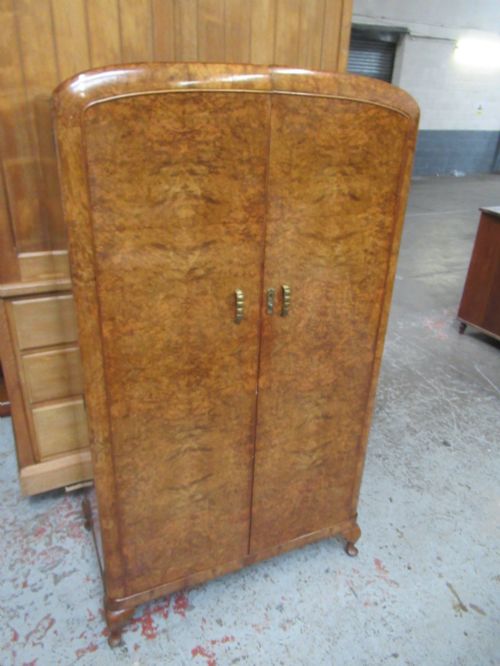
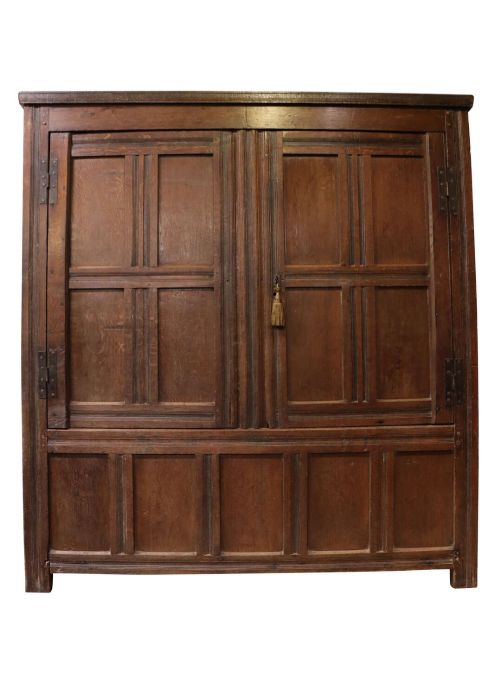
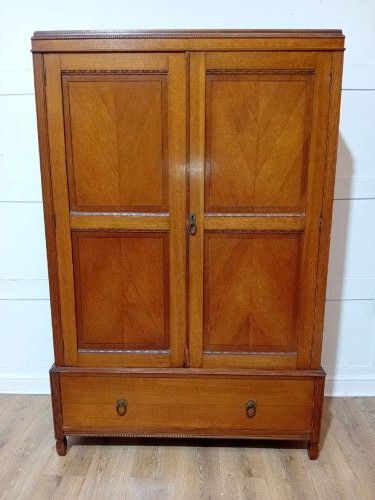
A period clothes wardrobe encompasses grand hanging spaces, gentlemen's cabinets on chests, and linen presses originating from the seventeenth century through to the Edwardian era. These pieces serve as functional bedroom storage while anchoring a room with historic presence.
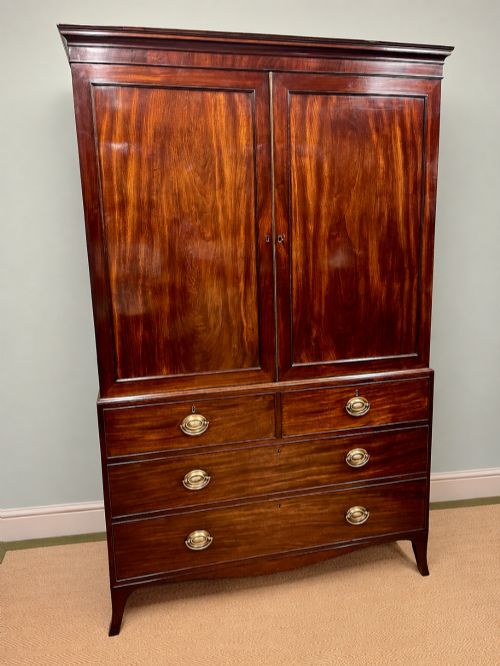
The selections available here lean heavily toward Regency and George III mahogany examples, alongside substantial oak country pieces. Buyers frequently encounter linen presses featuring sliding trays in the upper section and drawer banks below, reflecting domestic storage needs of past centuries.
How they were made
Cabinet makers relied primarily on solid oak and figured mahogany, often selecting flame mahogany veneers to create striking visual patterns on the main doors. Secondary timbers such as pine frequently appear inside drawer construction and internal shelving.
Joinery techniques involve traditional pegged mortise and tenon frames, hand-cut dovetails on drawer boxes, and brass hardware securing the doors. Surface finishes rely on traditional polish and wax applied directly to the timber rather than modern synthetic coatings.
Period Clothes Wardrobe Retail Price Guide 2026
Typical asking prices for period clothes wardrobe among the pieces listed under this phrase on Sellingantiques today, from the lower quarter to the upper quarter. They describe what is for sale here now, not the wider market.
Gentlemen's cabinets often conceal tiny compartments within their upper sections, designed specifically for storing stocks and cravats.
What varies in quality
The distinction between standard utility items and superior examples rests upon the selection of timber figures and the crispness of architectural mouldings such as swan-neck pediments. Master cabinet makers utilised highly figured Cuban mahogany and matched veneer grains across entire facades.
Proportion and structural integrity dictate the standing of a piece, where original brass fittings, undisturbed patination, and well-executed internal configurations elevate the stature of the wardrobe significantly.
HARRIS LEBUS
The Period Clothes Wardrobe Glossary
- Linen press
- A large storage cabinet featuring sliding internal trays enclosed by upper doors, sitting above a chest of base drawers. This form evolved to store household textiles flat before hanging garments became standard practice.
- Flame mahogany
- A decorative wood veneer harvested from the fork of the mahogany tree where branches join the trunk. It creates a distinctive, fiery flame-like pattern across large surface areas.
- Compactum
- A multi-functional wardrobe combining hanging space, shelves, and drawers within a single unified carcass. These pieces emerged around the turn of the twentieth century to maximise bedroom storage.
- Livery cupboard
- An early freestanding oak cabinet used for storing provisions or garments, typically featuring panelled doors and ventilation piercings. These heavy items represent the domestic furniture of the seventeenth and eighteenth centuries.
- Pediment
- The decorative architectural crowning element situated at the top of a tall cabinet or wardrobe. Common variants include swan-neck and straight cornice designs.
Period Clothes Wardrobe: Frequently Asked Questions
What is a period clothes wardrobe?
A period clothes wardrobe is a historic freestanding piece of furniture designed for storing garments and linens, built primarily from solid hardwoods during past centuries.
These pieces range from tall oak livery cupboards to refined mahogany linen presses and gentleman's cabinets.
How do I date a wooden wardrobe?
Dating relies on examining construction methods, timber species, hardware, and stylistic details such as cornices and panel configurations. Eighteenth-century pieces often utilise oak or mahogany with hand-dovetailed drawer boxes.
Later Victorian and Edwardian examples introduce different internal layouts and machine-sawn components while referencing earlier stylistic periods.
Will a historic wardrobe fit modern clothes?
Many older wardrobes were built with shallower internal depths or sliding trays rather than full-length hanging rails. Linen presses in particular require careful measurement if used primarily for modern coat hangers.
Buyers often adapt internal spaces by inserting contemporary hanging rails while preserving the historic exterior structure.
How do I care for antique mahogany?
Antique mahogany benefits from consistent indoor humidity levels away from direct heat sources and strong sunlight. Regular application of traditional beeswax helps maintain the timber's natural lustre.
Avoid using silicone-based sprays or modern polishes that can penetrate the historic finish and damage the patination.