



Period Clothes Armoire
A period clothes armoire brings stately architecture and substantial storage to a room, offering grand Georgian and Regency timber work.
Period Clothes Armoire
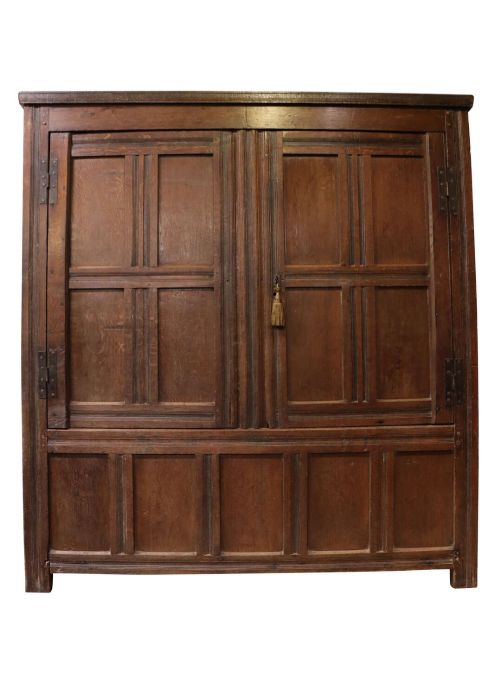
When you search for a period clothes armoire, you encounter substantial timber storage furniture spanning several centuries of British cabinetmaking. The pieces available here range from austere seventeenth-century oak cupboards to elaborate nineteenth-century mahogany linen presses and wardrobes.
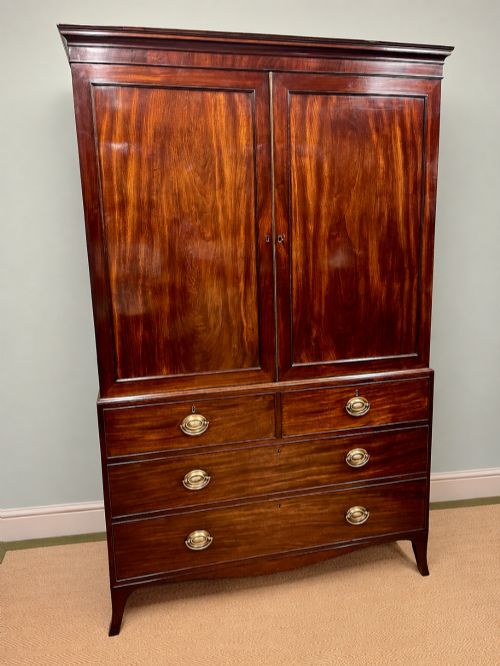
The most common forms on this page are linen presses and double wardrobes originating from the Georgian and Regency periods. These architectural pieces often combine hanging space with linen sliding trays behind panelled or veneered doors.
Origins represented in the evidence lean towards English and Irish workshops, utilising native oak and imported mahogany. Buyers meet everything from provincial country pieces to grand townhouse armoires carrying distinctive period pediments.
Materials and construction methods
Makers constructed these armoires primarily using solid oak for earlier seventeenth and eighteenth-century examples, shifting towards rich mahogany and flame mahogany veneers during the Regency and Georgian eras. Brass hardware, iron components, and occasional satinwood inlay complete the structural material palette.
Joinery techniques relied on sturdy panelled construction for oak pieces, whilst later mahogany armoires employed sophisticated veneering over secondary woods like pine. Cabinetmakers incorporated architectural details such as swan-neck pediments and fielded panels using hand tools and traditional peg or glue joints.
Period Clothes Armoire Retail Price Guide 2026
Typical asking prices for period clothes armoire among the pieces listed under this phrase on Sellingantiques today, from the lower quarter to the upper quarter. They describe what is for sale here now, not the wider market.
Some Georgian flat-pack wardrobes prove that disassembly for moving houses is an old idea.
Distinctions in quality and execution
Quality in these armoires rests upon the selection of timber and the ambition of the cabinetmaker's design. The upper tier utilises striking flame mahogany veneer or well-figured Cuban mahogany, displaying a cohesive grain across large double doors.
Construction refinement separates standard provincial items from high-status pieces. Superior examples exhibit crisply carved pediments, original brass fittings, and intact internal linen slides, whereas utilitarian pieces maintain simpler panelled facades.
Harris Lebus
The Period Clothes Armoire Glossary
- Linen Press
- A large tall cupboard containing sliding trays or shelves in the upper section for storing textiles, often with drawers below.
- Flame Mahogany
- A wood veneer cut from the branch junction of the mahogany tree, producing a distinctive flickering flame pattern.
- Pediment
- The decorative architectural crowning element situated at the very top of a tall cabinet or wardrobe.
- Compactum
- A multi-functional wardrobe combining hanging space, drawers, and shelving within a single unified piece of furniture.
- Panelled
- A method of construction where flat boards are fitted within a surrounding wooden frame to allow for natural wood movement.
Period Clothes Armoire: Frequently Asked Questions
What is a period clothes armoire used for?
These large wooden pieces provide substantial storage for clothing, linens, and garments within a bedroom or dressing room.
Many incorporate dedicated hanging space alongside internal sliding trays or deep drawers for folded items.
How do I date a wooden armoire?
Dating relies upon observing the primary timber species, construction joinery, and stylistic details like pediments and bracket feet.
Earlier seventeenth-century pieces utilise solid oak with pegged panels, whereas nineteenth-century examples frequently feature mahogany veneers and brass handles.
Are linen presses different from wardrobes?
Linen presses traditionally house sliding shelves or trays in the upper cabinet section specifically designed for folded textiles.
Wardrobes focus primarily on vertical hanging space for full-length garments, though many listed pieces combine both functions.
How do I fit a large armoire into a modern room?
Measuring ceiling height and doorway clearance is essential because these substantial nineteenth-century pieces arrive as single heavy units or modular sections.
Placement should avoid direct sunlight and intense radiator heat to protect the antique mahogany or oak timber.