



Period Children Furniture
Period children furniture brings diminutive craftsmanship into full-scale interiors, offering historic domestic seating and tables scaled down for young inhabitants.
Period Children Furniture
Period children furniture comprises scaled-down domestic pieces made for younger household members across several centuries. Items on this page span the seventeenth century through to the early twentieth century, taking forms such as high chairs, armchairs, rocking chairs, and dressing tables.
How these pieces were made
Cabinet-makers and vernacular joiners utilised native and imported hardwoods including mahogany, oak, fruitwood, walnut, ash, and elm. Frames were constructed using traditional joinery, turning, and carving techniques suited to each respective era.
Surface treatments and upholstery incorporated cane, fabric, brass, and leather, alongside structural elements like stands and rocking mechanisms. Makers utilised ebonising and bird's-eye maple veneers for decorative effect on specific nineteenth-century examples.
Period Children Furniture Retail Price Guide 2026
Typical asking prices for period children furniture among the pieces listed under this phrase on Sellingantiques today, from the lower quarter to the upper quarter. They describe what is for sale here now, not the wider market.
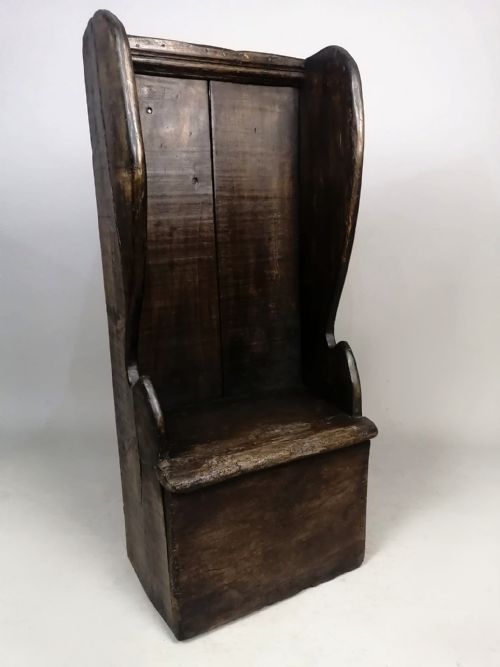
Even seventeenth-century toddlers required proper wind protection, as proved by the miniature fruitwood lambing chair.
What varies in quality
Quality separates robust vernacular construction from sophisticated urban cabinet-making. Superior pieces display refined timber selection, such as figured mahogany or walnut, alongside intricate turning and carving rather than plain utility framing.
The integrity of original upholstery materials, surface patination, and intact structural elements like stands or rocking bases dictate the standing of an individual piece within its period.
The Period Children Furniture Glossary
- Lambing chair
- An enclosed wooden seat designed to keep out drafts, scaled down here in fruitwood for a child during the seventeenth century.
- High chair
- An elevated seat designed to bring a child up to table height, appearing in various Georgian and eighteenth-century forms.
- Faux bamboo
- A decorative technique where hardwood is turned and painted to imitate natural bamboo, seen on Regency pieces.
- Aesthetic Movement
- A late nineteenth-century design style focusing on visual beauty, represented here by ebonised child chairs.
Period Children Furniture: Frequently Asked Questions
What periods do these pieces span?
The inventory covers items from the seventeenth century, through the Georgian, Regency, and Victorian eras, up to the early twentieth century. This range encompasses diverse regional styles and formal cabinet-maker designs.
Each period introduced distinct materials and construction methods, moving from vernacular oak and fruitwood to polished mahogany, rosewood, and walnut.
Were these items used by children?
These furnishings were produced specifically for the young members of affluent or substantial households. High chairs and dressing tables served practical domestic functions in nursery settings.
Many examples mirror full-scale adult furniture of their respective decades, scaled down to accommodate smaller occupants comfortably.
How do I identify a Georgian high chair?
Georgian high chairs typically feature solid mahogany or oak construction with upright backs and sturdy lower stands. They often incorporate traditional joinery and straightforward rectilinear or slightly curved lines.
Makers of this era focused on structural stability to support an elevated seating position while maintaining the aesthetic standards of eighteenth-century design.
How should I live with these items?
Placing smaller historic items in modern interiors allows them to function as sculptural accent pieces or decorative display elements. They integrate well into living rooms, hallways, or specialised collections.
Routine care involves dusting wooden surfaces gently and protecting delicate upholstery or cane work from direct sunlight and heavy daily wear.