



Period Child Seating
Period child seating brings centuries of domestic history into a room, offering miniature chairs and high chairs crafted for young occupants long ago.
Period Child Seating
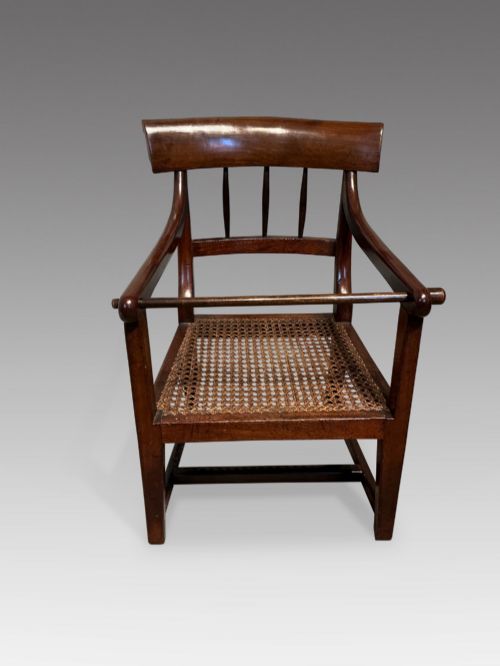
Period child seating encompasses a diverse range of historic chairs designed specifically for children, spanning several centuries from the seventeenth to the twentieth. When searching for period child seating, buyers encounter various forms including high chairs, armchairs, rocking chairs, and standard child chairs.
The pieces on this page reflect traditional domestic furnishings made in regional vernacular and formal styles. Buyers are most likely to meet nineteenth-century Victorian and Georgian examples, alongside earlier seventeenth-century vernacular pieces and Regency designs.
How they were made
Cabinetmakers and regional craftsmen utilised solid timbers such as mahogany, oak, fruitwood, ash, and elm to construct sturdy frames for daily use. Turning and carving techniques shaped the wooden supports, armrests, and legs.
Seating areas incorporated woven cane, rushes, or solid wood, while finer examples featured upholstery in fabric, leather, or buttoned hide. Additional elements like brass fixtures and separate wooden stands appeared on specific high chair variants.
Period Child Seating Retail Price Guide 2026
Typical asking prices for period child seating among the pieces listed under this phrase on Sellingantiques today, from the lower quarter to the upper quarter. They describe what is for sale here now, not the wider market.
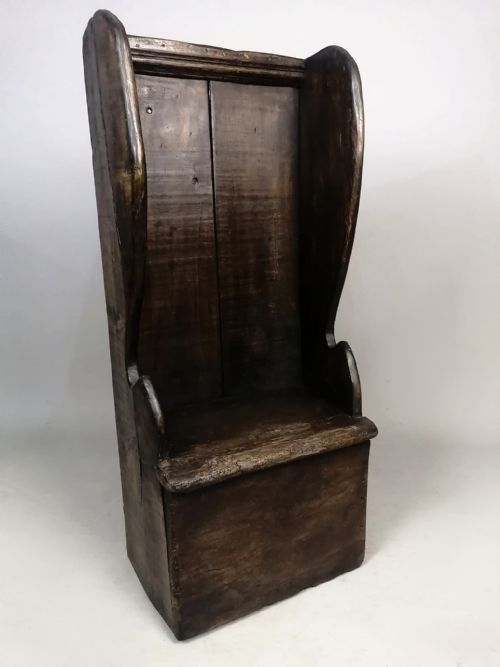
One seventeenth-century child found comfort in a miniature lambing chair designed to block cold draughts.
What varies in quality
Quality in these diminutive pieces rests on the grade of timber selected and the competence of the joinery. Finer proportions and considered carving distinguish workshop pieces from simpler country vernacular work.
The integrity of original surfaces, frames, and integrated elements such as stands or buttoned leather upholstery dictates the standing of an individual piece.
The Period Child Seating Glossary
- Vernacular
- Regional furniture made by local craftsmen following traditional local styles rather than metropolitan fashions. These pieces often utilise native woods like ash, elm, and fruitwood.
- Ladderback
- A chair back featuring horizontal slats resembling the rungs of a ladder. This construction method was common in traditional seating.
- Lambing chair
- An enclosed wooden armchair designed to keep out draughts, scaled down in these instances for children. They typically feature solid lower panels.
- Aesthetic Period
- A late nineteenth-century design movement focused on art for art's sake, incorporating ebonised finishes. It rejected heavy Victorian ornamentation in favour of lighter, often Japanese-inspired lines.
- High chair
- Elevated seating designed to allow a child to reach table height safely. Historic examples frequently included footrests and protective front barriers.
Period Child Seating: Frequently Asked Questions
What periods do these chairs come from?
The available pieces span from the seventeenth century through the Georgian and Regency eras into the Victorian period and twentieth-century examples.
Craftsmanship and materials shifted across these eras, moving from early vernacular fruitwood and oak to formal mahogany and rosewood in later decades.
Were these miniature chairs actually used by children?
Yes, these items were built as functional furniture for domestic life, designed to seat young family members at tables or by firesides.
Their sturdy construction in timbers like ash, elm, and oak reflects a need to withstand everyday childhood use.
How do I identify a high chair?
High chairs are distinguished by their elevated stature, often built with integrated footrests, deep frames, and enclosed seating areas to keep young children secure.
Some period examples also feature detachable wooden stands that raised the seat further from the floor.
What woods were commonly used?
Makers utilised a wide array of timbers depending on the period and the regional workshop traditions. Common hardwoods include mahogany, oak, rosewood, and fruitwood alongside resilient woods like ash and elm.
Softer or more flexible materials like cane and rushes were frequently employed for woven seat bases.