



Period Ceramic Bedside Lamps
Period ceramic bedside lamps bring hand-painted porcelain and earthenware into the bedroom, offering soft ambient light through silk or fabric shades.
Period Ceramic Bedside Lamps
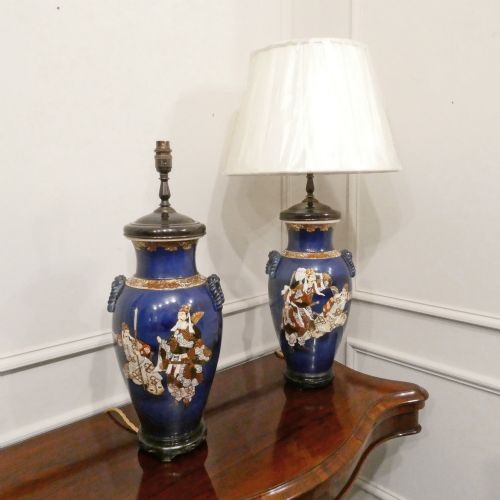
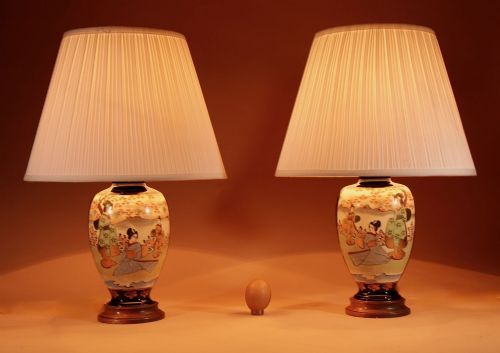
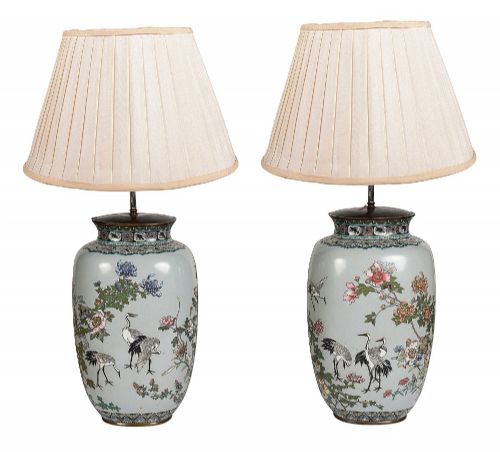
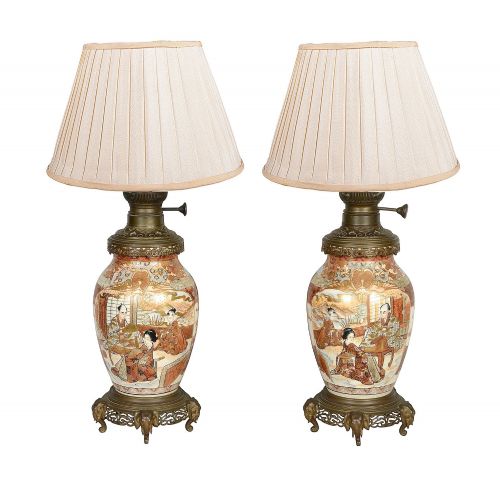
When you search for period ceramic bedside lamps, you encounter nineteenth-century and early twentieth-century Japanese vases and vessels converted into lighting. The evidence on this page consists entirely of pairs, ranging from Meiji period Satsuma and Kutani porcelain to blue and white wares and cloisonné enamel.
These pieces originate primarily from Japanese workshops of the 1890s, 1910, and 1920, often utilising Satsuma, Kutani, or Fukagawa porcelain bodies. Table lamps of this form function as both practical bedside illumination and decorative objects displaying traditional hand-painted motifs.
How they were made
The makers formed these bodies from porcelain and earthenware, applying detailed hand-painted designs or cloisonné enamel work directly onto the ceramic surface. Many examples incorporate brass components alongside the ceramic vessels to secure the electrical fittings and support fabric or silk shades.
Wood elements also appear in the construction of these lamps, providing stable bases or mounts for the heavier ceramic vases. Artisans adapted these imported Japanese vessels, combining traditional ceramic production with functional nineteenth-century lighting hardware.
Period Ceramic Bedside Lamps Retail Price Guide 2026
Typical asking prices for period ceramic bedside lamps among the pieces listed under this phrase on Sellingantiques today, from the lower quarter to the upper quarter. They describe what is for sale here now, not the wider market.
These bedside lamps began life as Japanese vases before nineteenth-century electricians gave them a glowing second career.
What varies in quality
The refinement of the hand-painted decoration separates standard production from finer examples, with intricate detailing on Satsuma and Kutani porcelain marking superior pieces. The complexity of the ceramic form, such as twin-handled vases or elaborate cloisonné enamel work, also distinguishes the top of the range.
The preservation of the original ceramic body and the integration of brass fittings influence the overall standard. Pairs that retain matching proportions and consistent glazing demonstrate the care taken during their conversion into table lamps.
The Period Ceramic Bedside Lamps Glossary
- Satsuma
- A type of Japanese earthenware featuring a crackle ivory glaze decorated with polychrome enamels and gilt. It originates from the Satsuma Province and appears frequently in nineteenth-century decorative pieces.
- Kutani
- Japanese porcelain and pottery known for bold enamel colours, particularly reds and greens, depicting figural scenes and natural motifs. Kutani wares were widely exported during the Meiji period.
- Cloisonne enamel
- A technique where metal wire is soldered onto a base to form compartments, which are then filled with enamel paste and fired. This method creates intricate patterns across vases and lamp bodies.
- Meiji Period
- The era in Japanese history spanning from 1868 to 1912, characterised by extensive export of decorative arts to Western markets. Pieces from this time often combine traditional craftsmanship with adapted Western forms.
Period Ceramic Bedside Lamps: Frequently Asked Questions
Are these lamps sold as pairs?
The listings on this page consist exclusively of pairs, offering matched sets for bedside placement.
Matching pairs provide symmetrical lighting options for twin bedside tables.
What materials make up these lamps?
The primary materials are porcelain and earthenware, supplemented by brass, wood, fabric, and silk.
Cloisonné enamel also appears on select vase-converted lighting.
Which periods do the pieces date from?
The selection spans the nineteenth century through to the early decades of the twentieth century.
Dates recorded include the 1890s, 1910, and 1920, largely falling within the Japanese Meiji era.
How do I identify Kutani porcelain?
Kutani pieces are recognised by their distinctive porcelain bodies and vibrant enamel palettes, often featuring reds and greens.
These ceramics frequently depict traditional Japanese scenes and flora.