

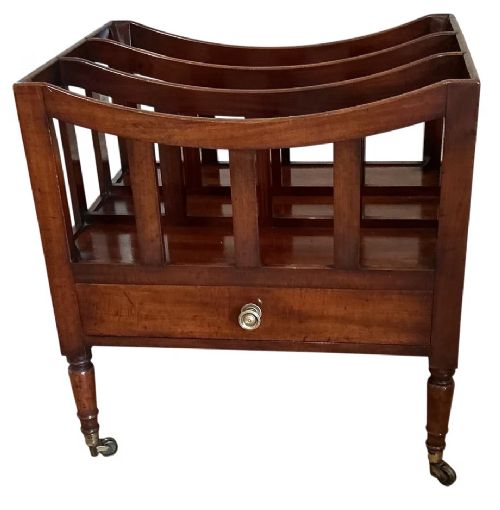
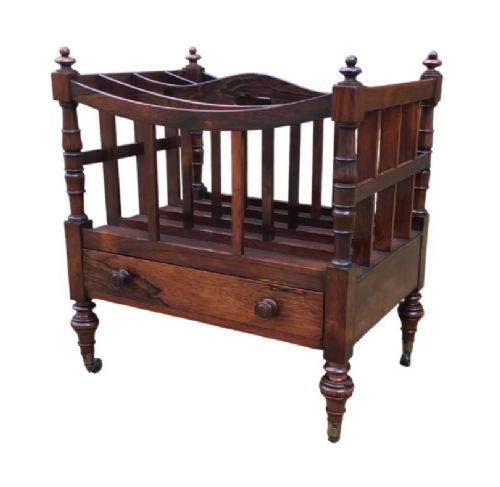
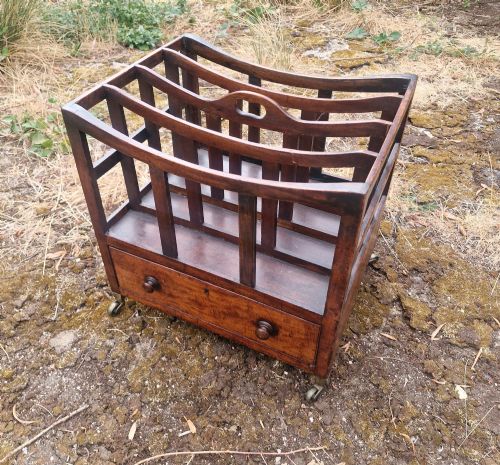
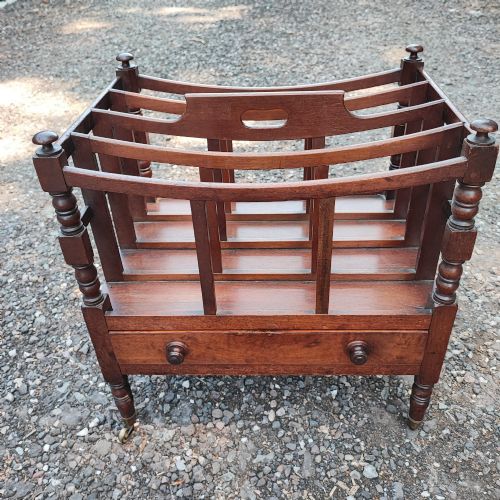


Period Canterbury Rack
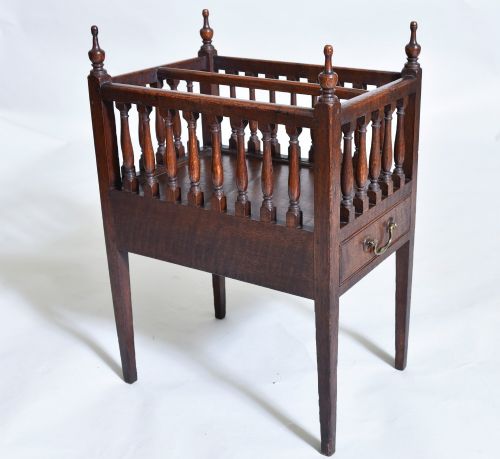
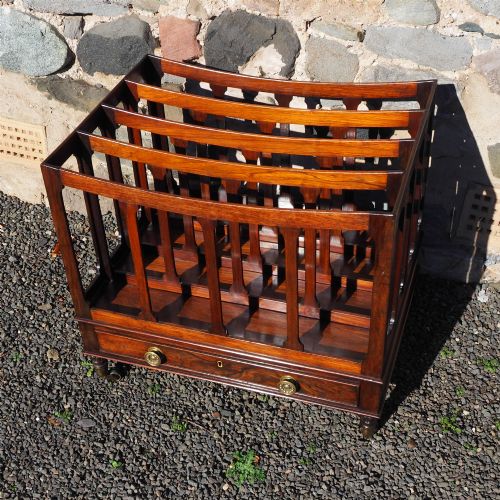
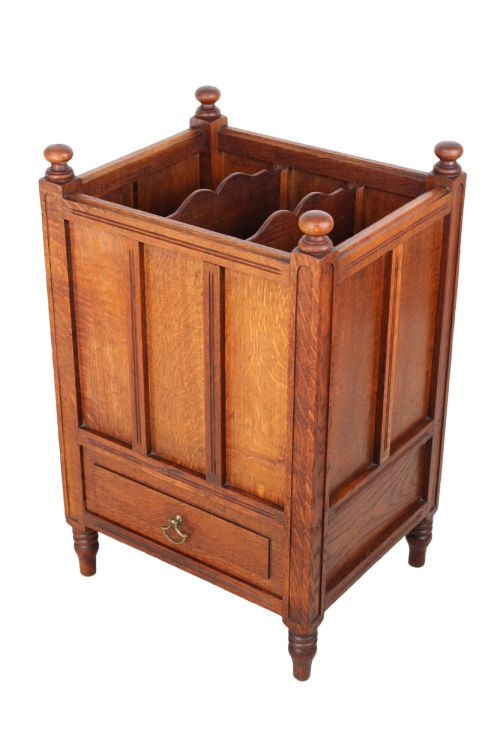
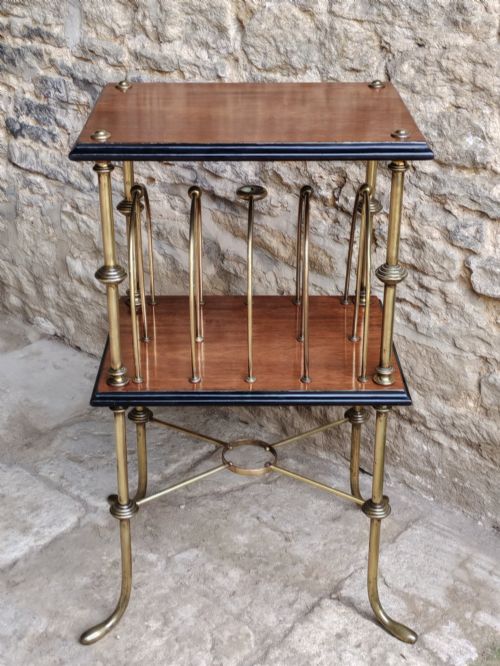
A period canterbury rack organises sheet music and journals with tiered divisions and slatted compartments.
Period Canterbury Rack
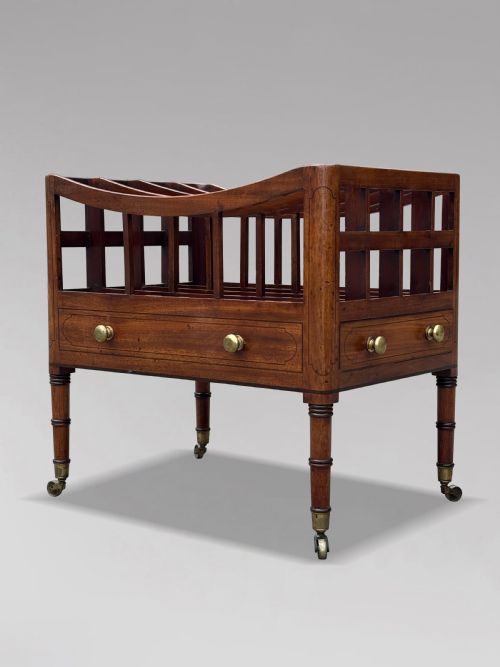
A period canterbury rack serves as a low stand fitted with upright partitions designed originally for holding musical scores and loose sheets. The selection spans distinct eras from the late eighteenth century through the Edwardian years and the nineteen-twenties.
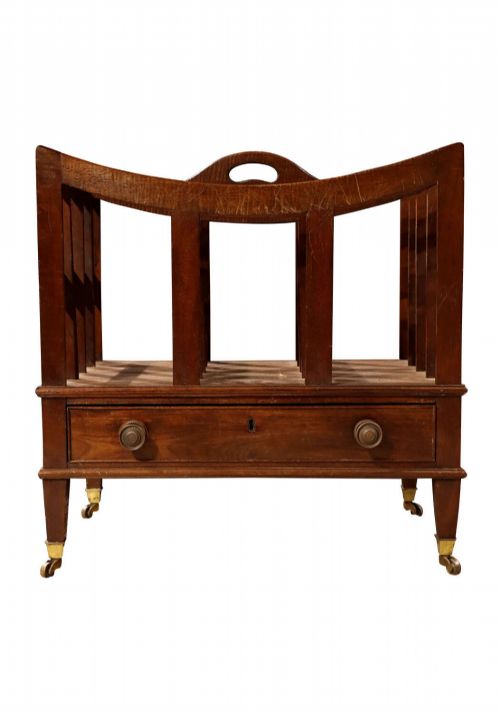
Mahogany and rosewood examples from the Regency and George III periods appear frequently alongside later Victorian walnut and Edwardian oak designs. Makers constructed these stands as multi-functional pieces, often combining the slatted rack with a small drawer or lower shelf.
Gradations in Quality
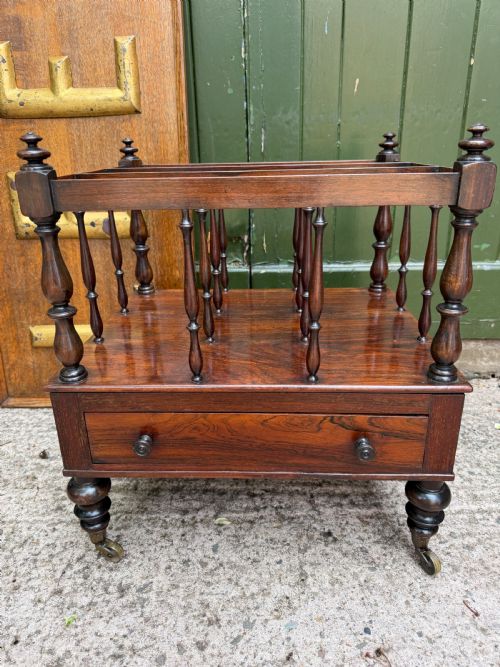
Finely figured rosewood veneers and crisp carved details distinguish superior specimens from plain utility pieces. The choice of timber grain and the precision of the slatted partitions dictate the standing of an individual stand.
The integration of functional drawers, decorative brass mounts, and robust leg turnings elevates the construction standard. Pieces demonstrating refined proportions and cohesive styling command greater interest among collectors.
Period Canterbury Rack Retail Price Guide 2026
Typical asking prices for period canterbury rack among the pieces listed under this phrase on Sellingantiques today, from the lower quarter to the upper quarter. They describe what is for sale here now, not the wider market.
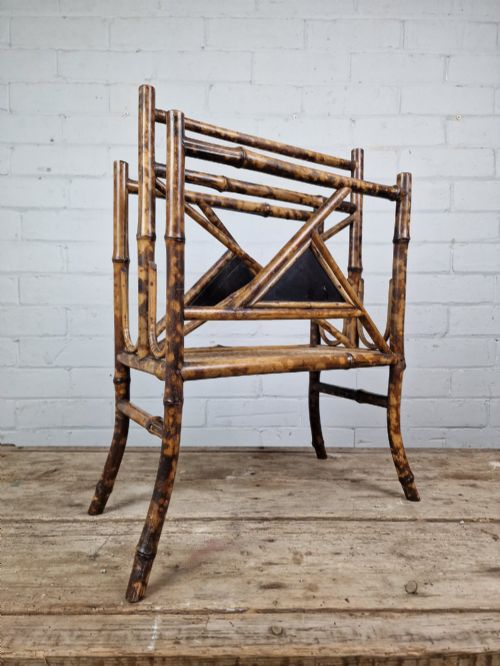
The inventory encompasses styles from George III and Regency up to the Aesthetic Movement and Edwardian eras.
Gillows
The Period Canterbury Rack Glossary
- Canterbury
- A low stand featuring upright divisions used for holding sheet music, books, and periodicals. Thomas Sheraton recorded the name after the Archbishop of Canterbury commissioned the first such piece.
- Whatnot
- A piece of open shelving standing on legs, utilised for displaying ornaments or holding books. Several listings combine this open format with the lower slatted sections of a rack.
- Boat-shaped
- A descriptor for a canterbury whose compartments curve outward at the ends in the manner of a hull. This silhouette occurs predominantly among Regency examples in mahogany and rosewood.
- Aesthetic Movement
- A late nineteenth-century design style emphasising visual beauty over narrative content. Pieces from this period often incorporate unconventional materials like bamboo.
- Etagere
- A set of ornamental open shelves designed for display. These occasionally integrate magazine storage compartments within the lower tiers.
Period Canterbury Rack: Frequently Asked Questions
What was a canterbury rack used for?
These stands held sheet music, scores, and unbound journals near a piano or seating area. Musicians utilised the vertical compartments to keep scores organised and accessible during practice.
Later editions adapted the partitioned format for newspapers and general reading materials in the drawing room. The addition of a small drawer provided storage for smaller accessories.
How do I identify a Regency canterbury?
Regency pieces often display rich rosewood or mahogany timbers, sometimes shaped with curved boat-like profiles. Fine turned supports and brass castors are common attributes of this era.
Proportions tend to be compact and balanced, reflecting the neoclassical design influences of the early nineteenth century. Many incorporate delicate spindle galleries above the main divisions.
What is the difference between an Edwardian and a Georgian rack?
Georgian and Regency stands rely heavily on dark solid hardwoods like mahogany with minimal ornamentation and clean lines. They reflect the cabinetmaking standards of the late eighteenth and early nineteenth centuries.
Edwardian models, produced around nineteen-hundred, frequently utilise lighter oak or mahogany and sometimes feature simplified construction. They align with the domestic requirements of the early twentieth century.
Can I use an antique rack for modern magazines?
The slatted divisions accommodate contemporary periodicals, journals, and modern sheet music without difficulty. Their original dimensions suit standard publications effectively.
Placing them beside a sofa or desk allows them to function in a modern room just as they did in a nineteenth-century interior. The sturdy timber construction supports everyday handling.