





Period Bronze Lamps
Period bronze lamps bring heavy character and warm metal tones into a room, drawing on centuries of European and Japanese metalwork.
Period Bronze Lamps
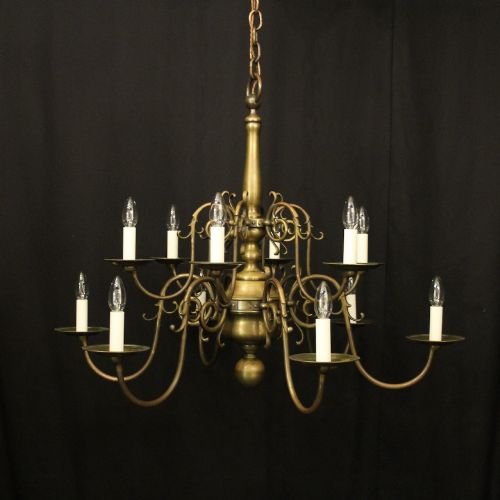
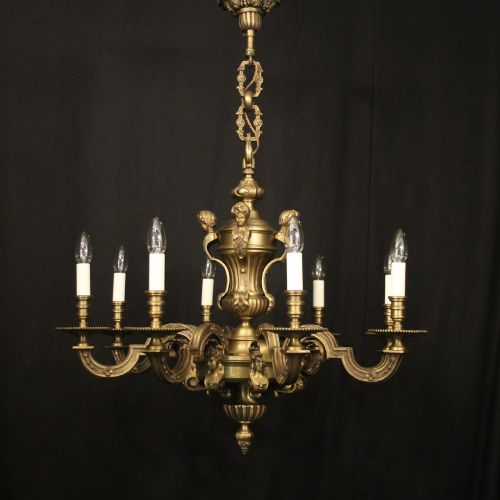
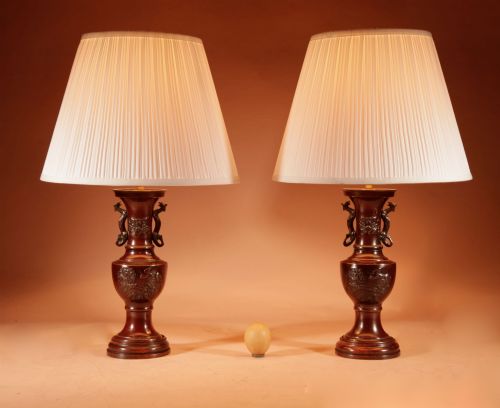
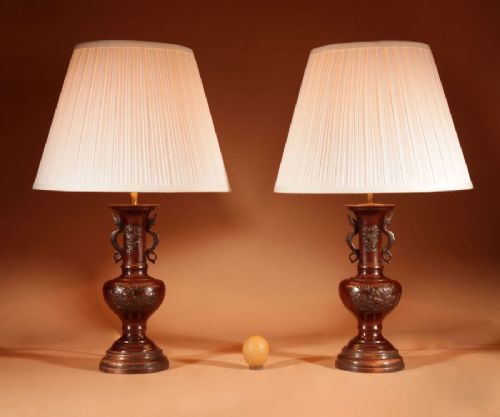
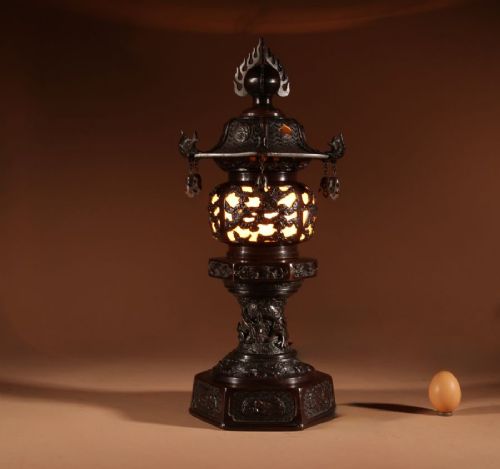
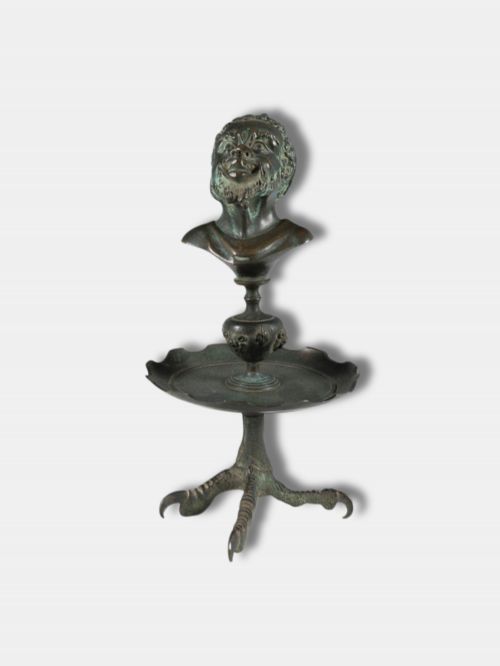
When searching for period bronze lamps, buyers encounter a diverse selection of lighting fixtures sourced from nineteenth-century Europe and the Japanese Meiji period. Table lamps, floor lamps, and chandeliers dominate the offerings, often adapted from earlier oil lamps, vases, and urns.
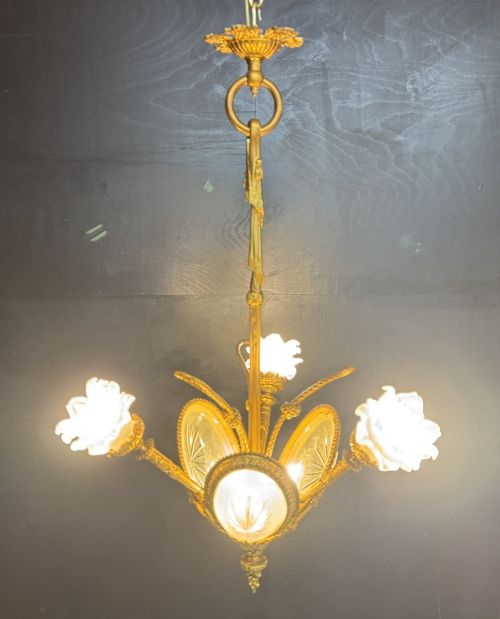
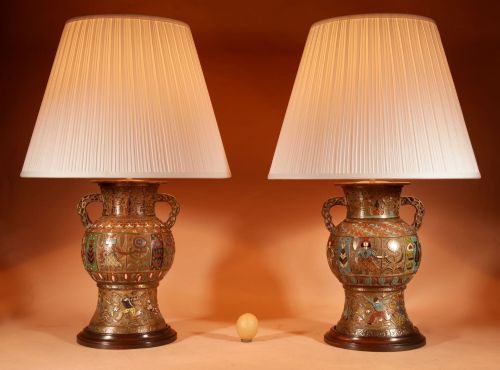
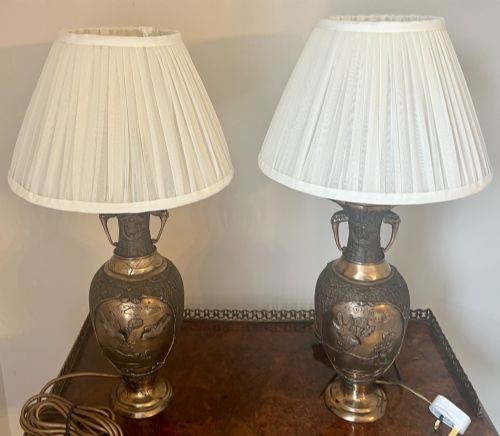
The most common pieces on this page are Japanese bronze table lamps originating from the Meiji period, frequently decorated with champleve or cloisonne enamel. Alongside these, French ormolu, Italian classical designs, and British Edwardian fixtures form the core of the selection.
Many of these items began as functional oil lamps, vases, or candlesticks before undergoing conversion for electrical use in later decades. This adaptation allows historic metalwork to serve modern domestic lighting needs without losing its original decorative form.
How they were made
Foundry work relied on traditional sand casting and lost-wax methods, producing solid bronze or brass bodies that could be finished with intricate chased details. Makers frequently combined bronze with ormolu, gilt bronze, and cut glass to create contrasting textures and light reflections.
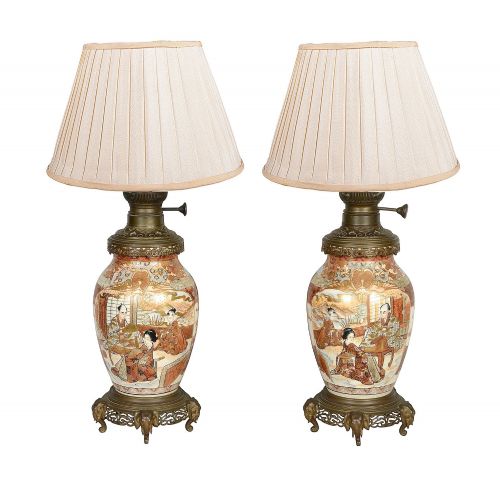
Surface decoration often involved applied enamel work, such as champleve and cloisonne, alongside hand-applied gilding or patination. Converted ceramic bodies, including Satsuma vases and French porcelain, were mounted in cast bronze or brass collars and bases.
Period Bronze Lamps Retail Price Guide 2026
Typical asking prices for period bronze lamps among the pieces listed under this phrase on Sellingantiques today, from the lower quarter to the upper quarter. They describe what is for sale here now, not the wider market.
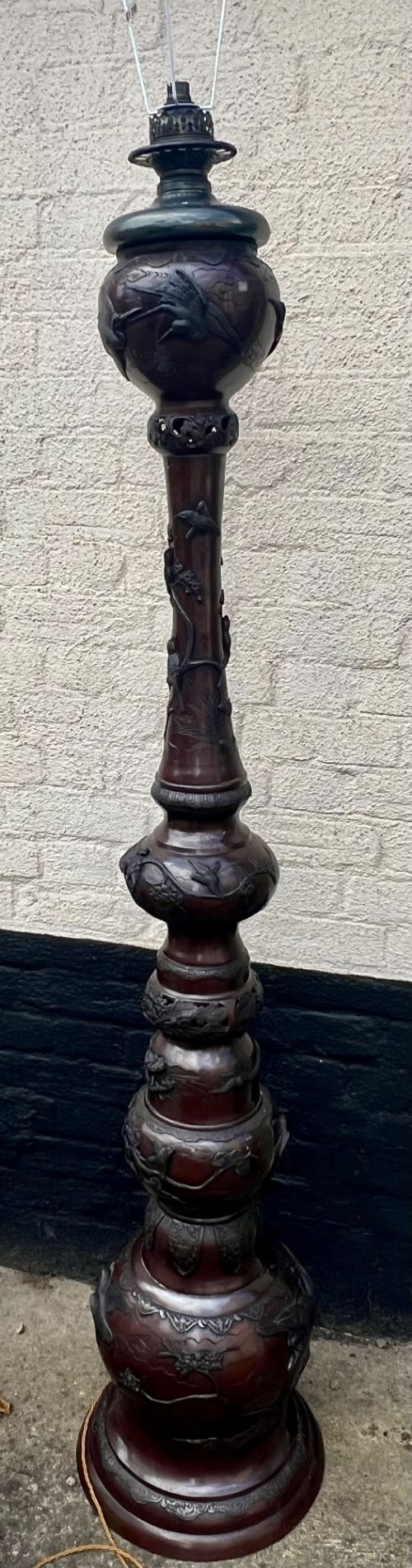
Listings feature nineteenth-century and Edwardian lighting, including French ormolu chandeliers, Italian brass oil lamps, and Japanese Meiji bronze floor lamps.
What varies in quality
The distinction between standard production and top-tier pieces lies in the crispness of the casting and the depth of the hand-finishing. Superior items display sharply chased relief work and substantial metal weight, whereas simpler examples rely on basic cast forms with minimal surface detail.
Integrity of materials also separates the range, with finer examples retaining original fire gilding, complex cloisonne patterns, and harmonious mounts. Pieces that show careful conversion work preserving the antique vessel without compromising its structural balance command greater appreciation.
G.E.C
The Period Bronze Lamps Glossary
- Ormolu
- Gilded bronze, usually referring to finely finished decorative mounts applied to furniture or lighting fixtures. The technique involves coating metal in a gold amalgam and heating it to leave a rich, durable layer.
- Champleve
- An enamelling technique where troughs are dug into the bronze surface and filled with coloured vitreous enamel before firing. This creates bold, patterned colour cells across the metal body.
- Meiji Period
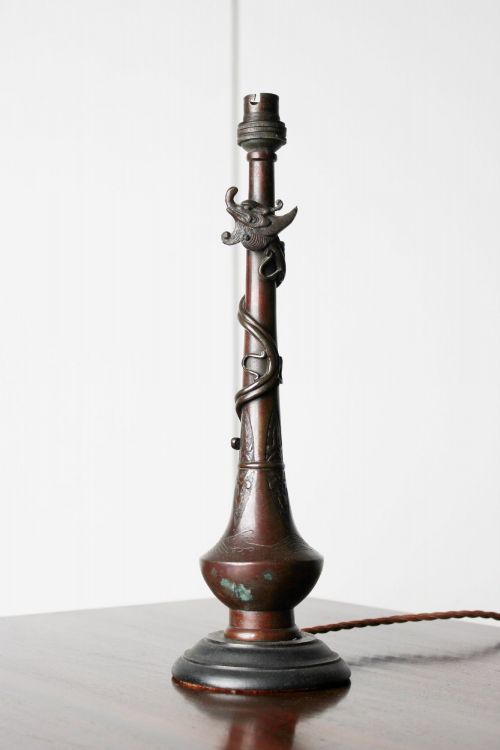
- The era in Japanese history spanning from 1868 to 1912, characterised by opening trade with the West and exceptional decorative metalwork. Pieces from this time often feature dragons, birds, and floral motifs.
- Lucerna
- An Italian oil lamp design featuring multiple spouts and a central hanging pick, typically cast in bronze or brass. Originating in earlier centuries, these forms were frequently reproduced or adapted during the nineteenth century.
Period Bronze Lamps: Frequently Asked Questions
What is a period bronze lamp?
A period bronze lamp is a lighting fixture or converted antique vessel made primarily of bronze during the nineteenth or early twentieth century. These items include table lamps, floor standards, and chandeliers originating from European foundries or Japanese Meiji workshops.
Many started life as oil lamps, vases, or candlesticks before being wired for electricity. Their enduring appeal lies in the heavy cast metal, patinated surfaces, and distinct historic styles.
How do I identify a Meiji period bronze lamp?
Meiji period bronze lamps typically date between 1868 and 1912 and often feature distinct Japanese motifs such as dragons, flora, or geometric panels. Many incorporate champleve or cloisonne enamel work directly into the bronze body.
These pieces frequently utilise traditional vase or urn forms adapted for illumination. The quality of the casting and the specific style of the enamel decoration help confirm their Japanese origin.
Were these lamps always electric?
Most of these lamps were not originally electric and began as oil lamps, candlesticks, decorative vases, or wall sconces. During the twentieth century, many historic metal objects were professionally converted to take electrical fittings.
This conversion process allowed antique bronzes, Satsuma vases, and classical urns to serve as functional table lights and chandeliers. Collectors value both the original antique vessel and the quality of its later adaptation.
How do I style a bronze antique lamp?
Bronze antique lamps add weight and historic character to a room, working well on occasional tables, desks, or as central ceiling fixtures. Their dark metal tones and patinated surfaces pair effectively with both traditional wooden furniture and modern interiors.
Choosing the right shade, such as silk or fabric, softens the light output and complements the lamp's base. Placing them where the metal can catch natural light highlights the chasing and casting details.