



Period Bronze Candelabra
Period bronze candelabra combine dark patination with bright gilding, bringing sculptural weight and classical proportion to a mantelpiece.
Period Bronze Candelabra
When you search for period bronze candelabra, you encounter monumental lighting pieces designed to hold multiple candles in formal interiors. The examples available here span the eighteenth and nineteenth centuries, taking the form of pairs or matched sets.
Most pieces date from the Regency and French Empire eras, showcasing architectural bases and figural standards. Alongside standard candelabra, you will find related lighting forms such as candlesticks, table lamps, and clock garniture components.
Continental workshops dominate these listings, particularly French makers producing neoclassical designs for elite domestic settings. The forms range from simple two-light branches to elaborate four-light configurations with adjustable arms.
How they were made
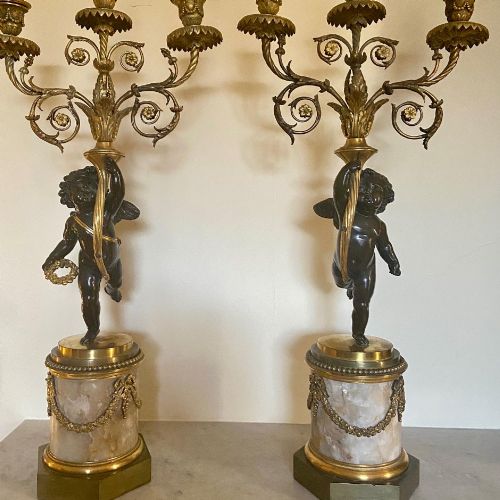
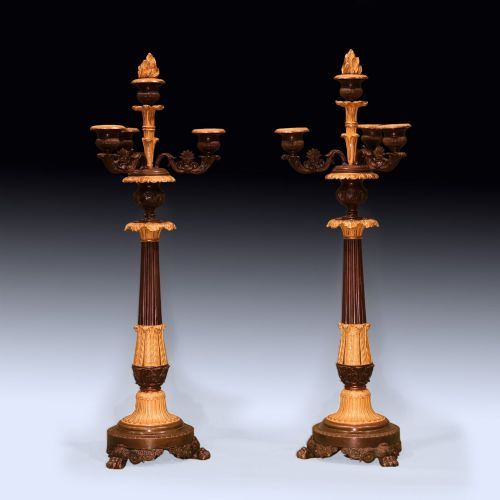
Foundry workers cast the primary structure in bronze, employing both patinated dark finishes and fire-gilded ormolu highlights. This dual treatment creates contrast between deep brown or black metallic surfaces and bright, reflective gilding.
Craftsmen integrated decorative elements such as cut glass, slate, siena marble, and fluorspar into the bases and columns. Individual components were cast, chased by hand, and assembled with threaded bronze pins.
Period Bronze Candelabra Retail Price Guide 2026
Typical asking prices for period bronze candelabra among the pieces listed under this phrase on Sellingantiques today, from the lower quarter to the upper quarter. They describe what is for sale here now, not the wider market.
Putti figures occasionally balance heavy stone bowls while holding candle branches above their heads.
What varies in quality
The richness and durability of the mercury gilding determine visual impact across the piece. Heavier gauge bronze castings provide stability and proper weight distribution for multi-light branches.
Francois Redmond·Rabiat
The Period Bronze Candelabra Glossary
- Ormolu
- Gilt bronze produced by applying an amalgam of gold and mercury to a bronze base and heating it. This technique creates a durable, warm metallic lustre characteristic of nineteenth-century French metalwork.
- Patinated Bronze
- Bronze treated with chemical solutions to produce a dark brown or black surface finish. It provides a subdued background that highlights adjacent ormolu mounts and marble bases.
- Clock Garniture
- A set comprising a mantel clock flanked by matching decorative objects such as candelabras or urns. These matched suites unified the decorative scheme of a formal room.
- Fluorspar
- A halide mineral prized for its variegated purple and blue banding, sometimes used as a decorative base material. It adds geological colour and pattern beneath bronze figures.
Period Bronze Candelabra: Frequently Asked Questions
How do I clean period bronze candelabra?
Dust surfaces gently with a soft dry brush to protect fragile patinated areas and fire gilding. Avoid using liquid metal polishes that strip historical finishes.
Water and commercial cleaners damage both the bronze patina and the underlying metal composition. Professional restoration is recommended for heavy grime accumulation.
Were these converted to electricity?
Many surviving examples retain their original socket configurations designed strictly for wax candles. Some pieces underwent adaptation during the twentieth century to accept internal wiring.
Inspect the base and candle nozzles for modifications made to accommodate electrical cords. Retaining original drip pans indicates an unconverted lighting piece.
What is the difference between French Empire and Regency styles?
French Empire pieces often feature militaristic motifs, classical deities, and bold ormolu contrasts against dark patinated bronze bodies. Workshops in Paris produced these items under strict neoclassical design codes.
Regency examples share similar classical proportions but incorporate British interpretations of continental taste. These designs frequently appear in bronze paired with cut glass lustres.
How are pairs and sets matched?
Mismatched heights or differing casting details suggest pieces were assembled together at a later date. True pairs share identical foundry marks, base dimensions, and chasing styles.
Examine the underside of the bases for matching assembly numbers scratched by the maker. Subtle variations in the bronze alloy often reveal if a pair was cast from separate production runs.