







Period Bedside Commode
A period bedside commode offers discreet historical utility, bringing Georgian and Regency craftsmanship directly beside the bed.
Period Bedside Commode
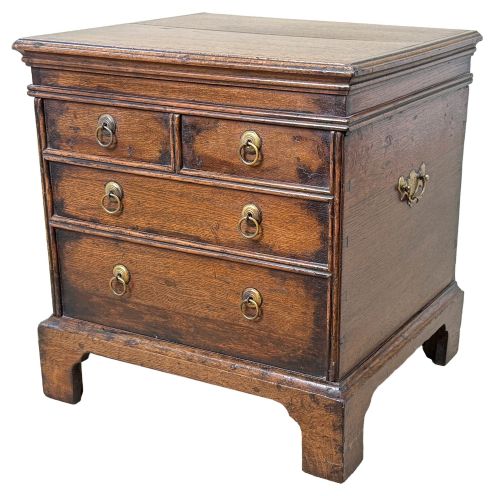
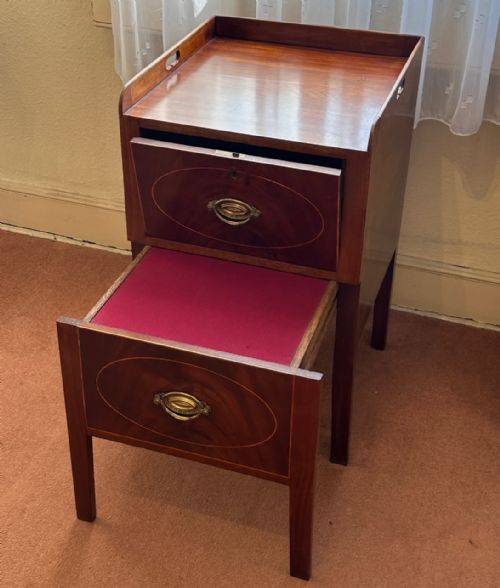
When you search for a period bedside commode, you encounter a selection of Georgian and Regency pieces designed for practical bedroom use. The inventory spans from the eighteenth century up to eighteen hundred, taking forms such as close stools, tray-top cabinets, and cylindrical cupboards.
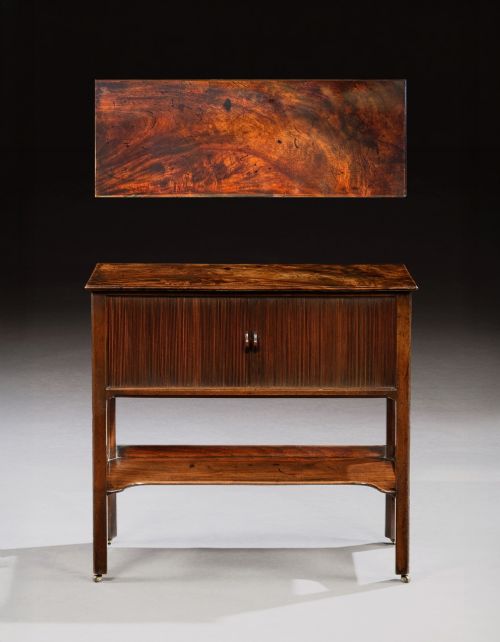
The most common versions on this page are mahogany bedside cabinets and tray-top commodes reflecting Georgian and Chippendale styles. Alongside these traditional forms, you find Regency flame-mahogany cylindrical cupboards and ebony-inlaid concave fronted commodes.
Makers of this era also produced small serpentine chests and washstand cabinets serving similar bedside functions. Each piece links domestic history with functional storage, matching the specific spatial needs of historical chambers.
How they were made
Cabinetmakers constructed these pieces primarily from solid mahogany and flame mahogany, occasionally utilising oak for internal elements or earlier carcass work. Surfaces often featured delicate satinwood and ebony line inlay to accentuate the grain and structural contours.
Hardware typically included brass handles and fittings suited to the specific demands of close stools and cabinets. Carpenters shaped tray tops with raised edges to contain items safely on the upper surface during daily use.
Period Bedside Commode Retail Price Guide 2026
Typical asking prices for period bedside commode among the pieces listed under this phrase on Sellingantiques today, from the lower quarter to the upper quarter. They describe what is for sale here now, not the wider market.
One listed Regency cabinet hides a pull-out step, proving that historical morning routines occasionally required a small architectural boost.
What varies in quality
The division between standard examples and superior pieces rests on the choice of timber figure, particularly the richness of flame mahogany and the precision of satinwood or ebony stringing. Finer cabinets display thoughtful proportions and harmonious alignment across serpentine or concave fronts.
Integration of specialised internal components, such as pull-out steps or fitted close stool interiors, demonstrates the ambition of the original workshop. Construction integrity in the joints and the preservation of original brass hardware elevate the standing of any individual cabinet.
The Period Bedside Commode Glossary
- Close stool
- A piece of furniture designed to enclose a chamber pot, often disguised as a small chest or cabinet to maintain bedroom decorum. These items represent an essential domestic utility of the eighteenth century.
- Tray top
- A tabletop finished with a raised moulded border or gallery designed to prevent objects from rolling off the edge. This feature appears frequently on Georgian bedside commodes.
- Flame mahogany
- A decorative veneer cut from timber where the branches join the main trunk, producing a rippling, flame-like pattern. Regency cabinetmakers favored this timber for prominent cupboard doors and drawer fronts.
- Serpentine
- A front outline that curves outward in the centre and inward at the sides, creating a gentle wave effect. This contour demands advanced woodworking skill to execute properly.
- Line inlay
- Thin strips of contrasting wood set flush into the primary surface to create decorative geometric borders. Ebony and satinwood were common choices for these linear details.
Period Bedside Commode: Frequently Asked Questions
What is a period bedside commode?
A period bedside commode is a historical cabinet or close stool dating from the eighteenth or early nineteenth century. These pieces served functional roles in bedrooms before modern plumbing.
Today, they function as decorative bedside tables with enclosed storage space. Their compact forms make them practical for contemporary homes.
How were they used historically?
Originally, many of these cabinets concealed chamber pots or served as washing stands for morning hygiene routines. Their enclosed designs kept bedrooms tidy and contained odours.
Over time, owners adapted the internal spaces for general bedside storage. They now hold books, lamps, and personal items.
How do I distinguish Georgian from Regency pieces?
Georgian pieces often feature mahogany solids, Chippendale influences, and tray tops designed for practical utility. Their lines tend to be robust and functional.
Regency examples frequently showcase flame-mahogany veneers, cylindrical bodies, and contrasting ebony line inlay. These design elements reflect changing aesthetic preferences around eighteen hundred.
Are all these commodes fitted for chamber pots?
Not every piece retains its original close stool interior or internal ceramic vessel. Many survivors were constructed purely as bedside cupboards or washstand cabinets from the outset.
Those designed as close stools often feature converted interiors adapted for modern storage. The exterior appearance remains true to its historical function.