





Period Bedroom Seating
Period bedroom seating brings together chairs and stools from the Georgian, Regency and Victorian eras designed for private rooms.
Period Bedroom Seating
Period bedroom seating encompasses various chairs and stools designed for domestic private spaces across the eighteenth, nineteenth and early twentieth centuries. The selection on this page centres on nursing chairs, side chairs, armchairs, stools and small sofas originating from Georgian, Regency, Victorian and Edwardian workshops.
Buyers most frequently encounter Victorian walnut and mahogany examples alongside Regency painted or ebonised chairs and Edwardian inlaid mahogany pieces. These encompass low seaters intended for dressing, scroll-backed bedroom chairs, and small occasional seats suited to corners or dressing tables.
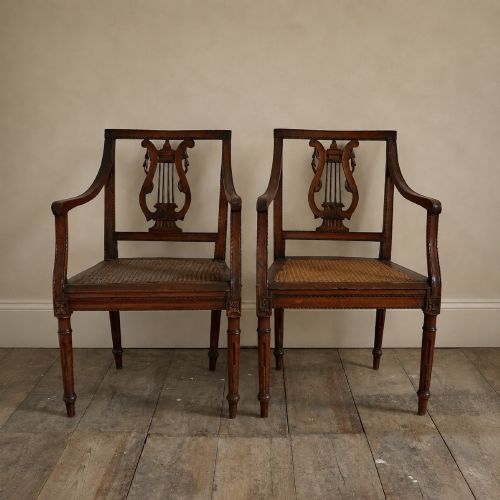
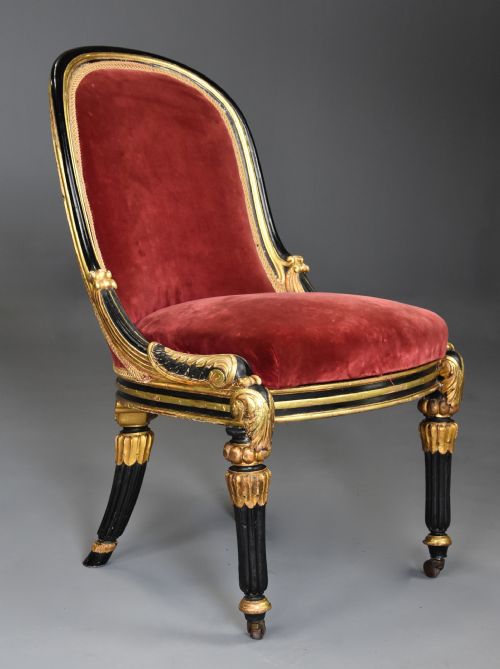
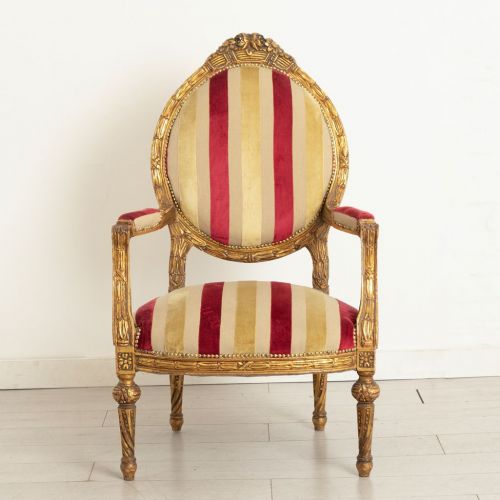
The assortment draws on diverse regional influences, including English cabinet work and French provincial styles like Louis XVI and Napoleon III gilt seating. Pieces range from simple cane-seated side chairs to elaborately carved armchairs upholstered in velvet, fabric or needlepoint.
Materials and construction
Cabinet makers utilised dense hardwoods such as mahogany and walnut for structural frames, alongside painted wood, ebonised finishes and giltwood for decorative effect. Brass inlay, string inlay and carved details added refinement to surfaces on many Regency and Edwardian pieces.
Seating surfaces combined traditional techniques including cane work, solid wood panels and upholstered padding covered in velvet, fabric or needlepoint. Many nineteenth-century chairs incorporated turned legs fitted with castors for ease of movement across bedroom carpets.
Period Bedroom Seating Retail Price Guide 2026
Typical asking prices for period bedroom seating among the pieces listed under this phrase on Sellingantiques today, from the lower quarter to the upper quarter. They describe what is for sale here now, not the wider market.
Listings feature mahogany, walnut, painted wood, cane, brass and giltwood across eighteenth, nineteenth and early twentieth-century periods.
Distinctions in quality
Quality depends upon the crispness of timber carving, the integrity of structural joinery in frames, and the survival of original decorative elements such as giltwood, painted motifs or brass inlay. Superior examples display balanced proportions and refined turning or inlay work rather than heavy or plain execution.
The condition and authenticity of materials heavily influence standing, particularly where original cane work, early fabric or period upholstery methods remain intact alongside sound timber frames.
Blaise Maucuy
The Period Bedroom Seating Glossary
- Nursing chair
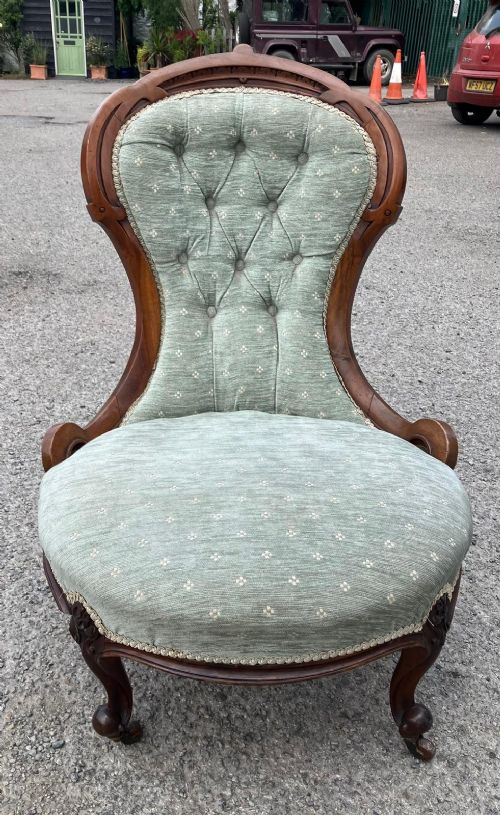
- A low-seated armchair designed in the Victorian era for comfort while nursing infants or during personal dressing. These pieces often feature spoon backs or scroll-carved frames.
- Bergere
- An enclosed upholstered armchair with wooden frames and cane sides or backs. French influences frequently shaped these designs.
- Fauteuil
- An open-arm armchair with an exposed wooden frame, typically associated with French eighteenth-century and nineteenth-century revival styles. The arms usually feature padded elbow rests.
- Trafalgar
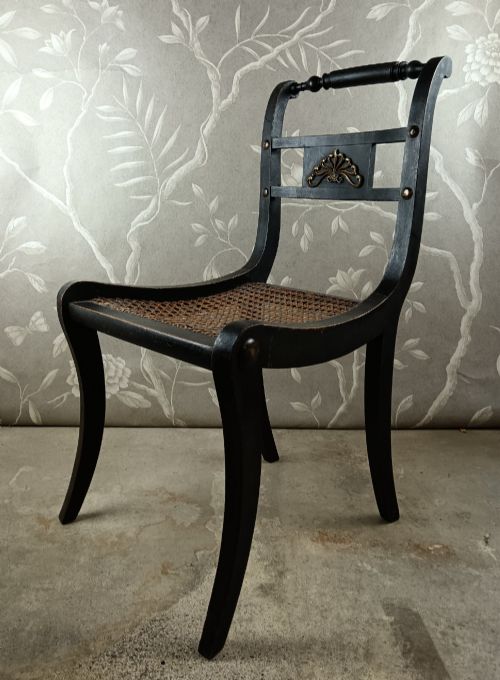
- A style of Regency chair characterised by sabre legs and distinctive back rails, popular during the early nineteenth century. Ebonised and gilt finishes often accompanied this form.
- Balloon-back
- A Victorian chair design featuring an oval, closed backrest resembling the shape of a balloon. This form appeared frequently in walnut and mahogany bedroom seating.
Period Bedroom Seating: Frequently Asked Questions
How do I identify a nursing chair?
Nursing chairs are distinguished by their notably low seats, which allowed women to tend to infants or sit comfortably at low dressing tables in the nineteenth century.
They frequently feature padded spoon backs, upholstered frames and sometimes small castors on the legs for mobility across carpeted bedrooms.
Are cane seats original on Regency chairs?
Many Regency side chairs and armchairs were manufactured with woven cane seats, often paired with painted, ebonised or mahogany frames.
Original cane work shows appropriate age and wear compared to modern replacements, though many pieces survived through careful re-weaving over the decades.
How did Edwardian bedroom chairs differ from Victorian ones?
Edwardian chairs generally lighter in proportion, favouring inlaid mahogany, string banding and crisp satinwood details over the heavy carved walnut and dark finishes of the Victorian era.
Upholstery fabrics from the Edwardian period often embraced brighter stripes and lighter textiles suited to airier bedroom schemes.