

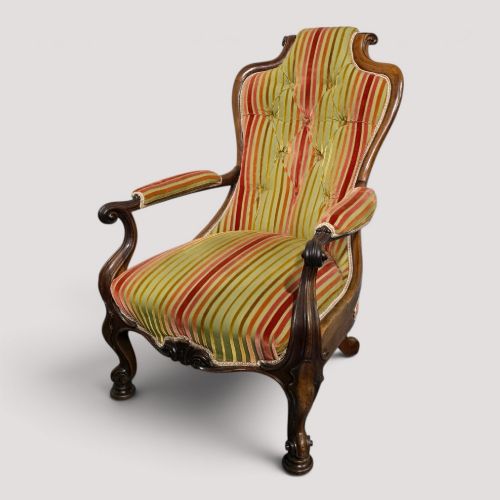
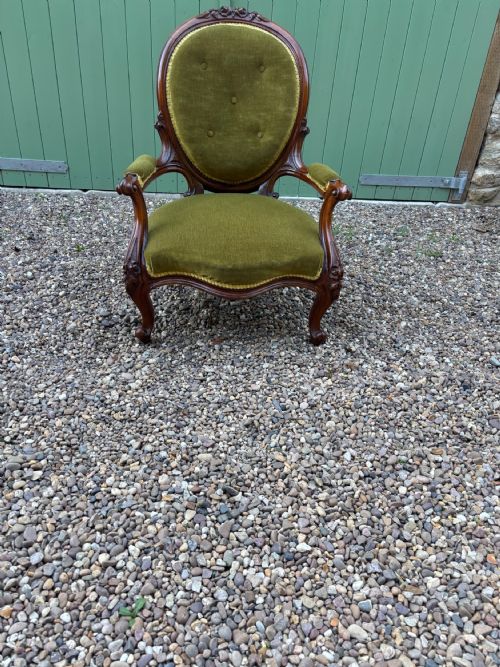
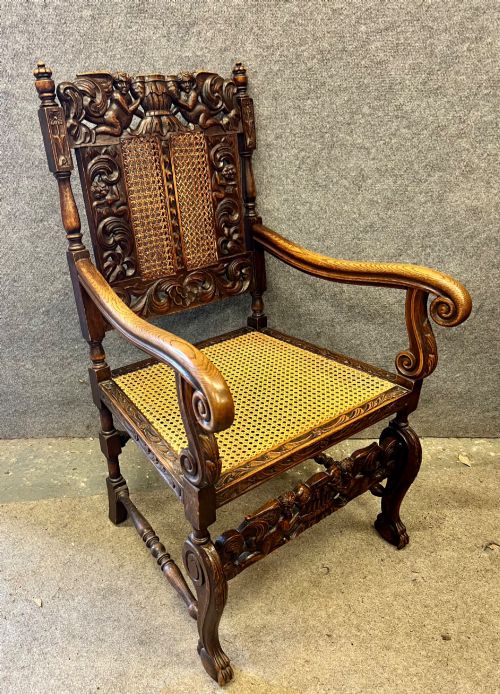
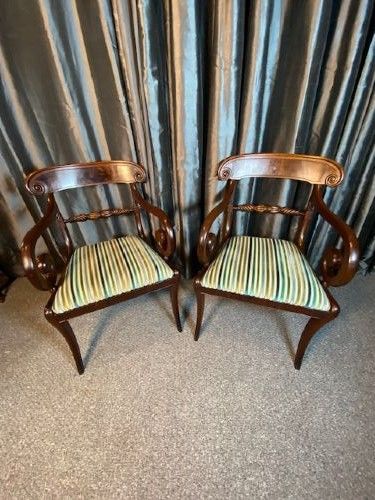

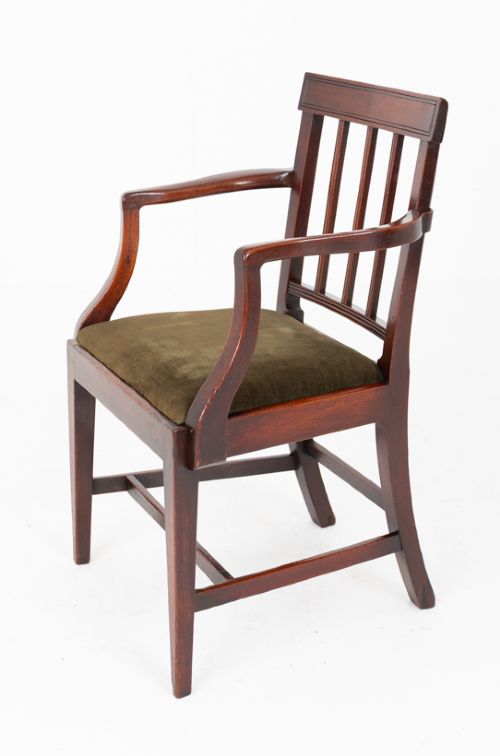
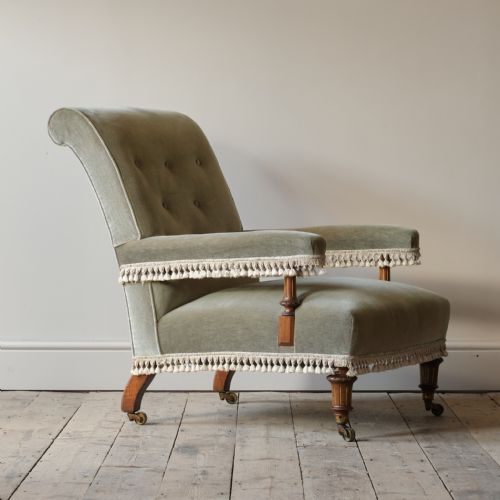
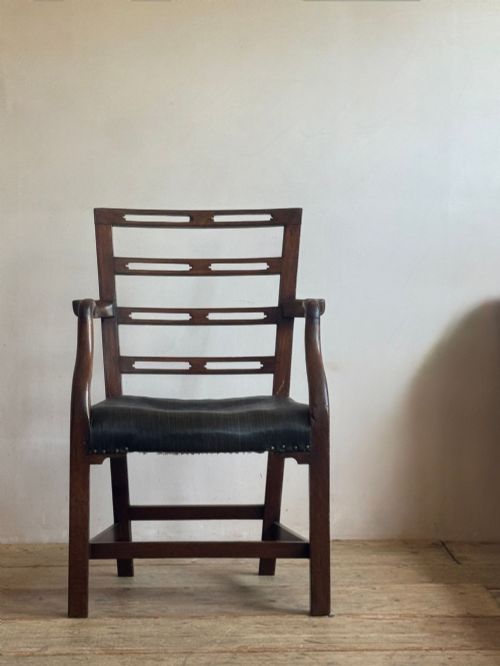
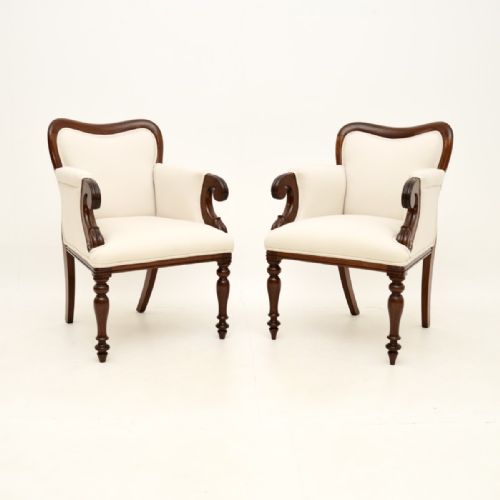
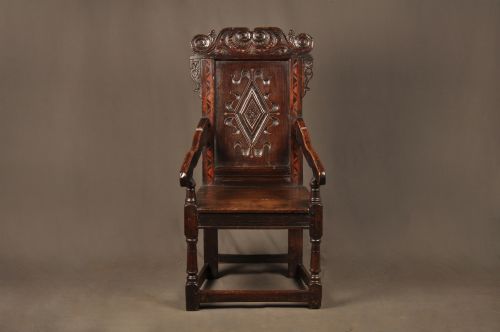
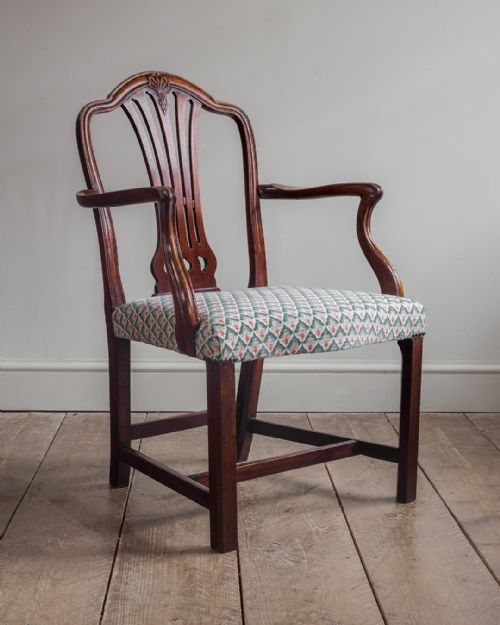
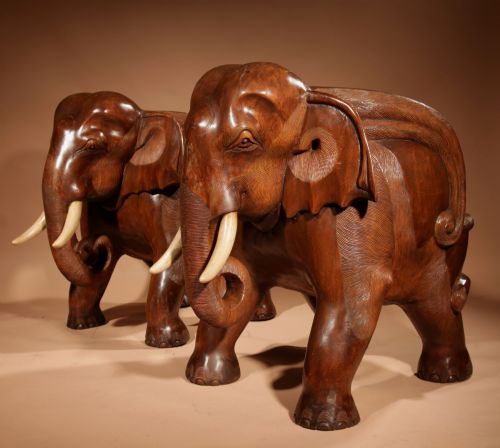
Period Armchairs with Arms
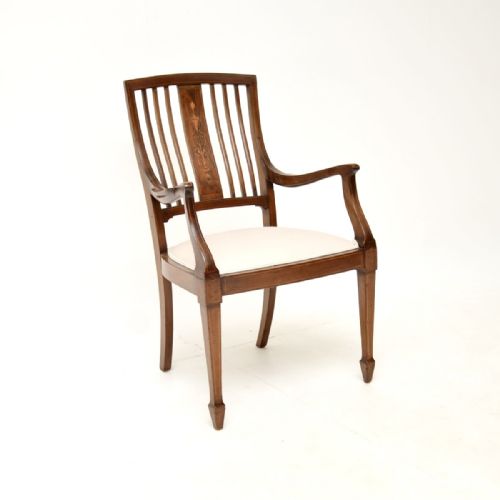
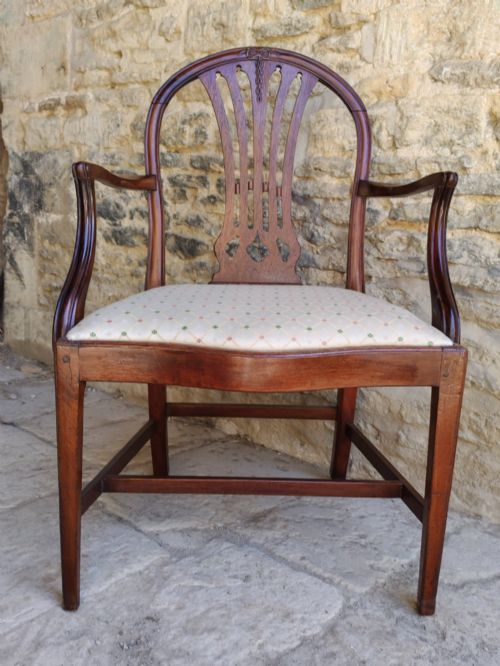
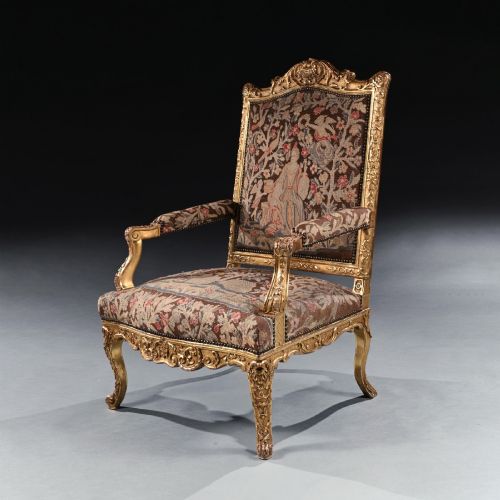
These period armchairs with arms bring substantial timber frames and deep seating into a room, offering both practical support and traditional presence.
Period Armchairs with Arms
When you search for period armchairs with arms, you encounter solid timber seating spanning the eighteenth, nineteenth, and early twentieth centuries. These pieces encompass both library carvers and formal dining armchairs designed with structural elbow rests.
Mahogany forms the dominant structural timber across the selection, appearing in Regency, Victorian, and Georgian styles. Many examples incorporate upholstered pads or drop-in seats covered in velvet, leather, tapestry, or damask fabric.
The pieces on this page lean heavily toward nineteenth-century production alongside Regency and eighteenth-century carver chairs. You frequently meet carvers designed to match larger dining sets or function independently as gentleman's armchairs.
Construction and Materials
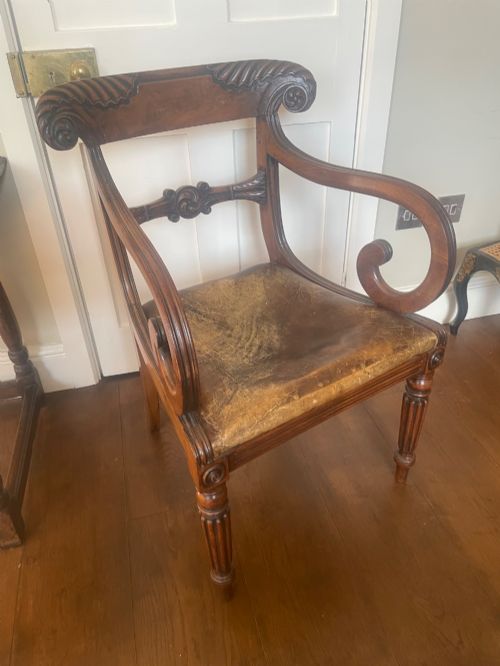
Makers utilised solid mahogany for the primary frames, turning or carving the wood to create scroll arms, curved supports, and upright backrests. Brass details occasionally appear as castors or structural fittings on library armchairs.
Upholstery techniques combined traditional webbing and stuffing with diverse textile coverings such as hand-dyed green leather, patterned damask, and woven tapestry. Woodcarving and applied mouldings added decorative depth to the structural rails and arm terminals.
Period Armchairs with Arms Retail Price Guide 2026
Typical asking prices for period armchairs with arms among the pieces listed under this phrase on Sellingantiques today, from the lower quarter to the upper quarter. They describe what is for sale here now, not the wider market.
The listings span seven distinct periods, ranging from the eighteenth century to the Edwardian era.
Judging Quality
The distinction between standard examples and superior pieces rests in the sharpness of the timber carving and the architectural balance of the arm supports. Crisp execution on scroll arms and accurately proportioned frames mark out the better productions.
Original material integrity on both the mahogany framework and the upholstery finish elevates a piece above later adaptations or marriages of components. Cohesion between the timber frame and its period style determines the overall standing of the armchair.
The Period Armchairs with Arms Glossary
- Carver
- An armchair designed with elbow rests, traditionally placed at the heads of dining tables or utilised as a substantial parlour seat.
- Regency
- A style period spanning the early nineteenth century defined by classical restraint, influence from antiquity, and dark mahogany timbers.
- Scroll arm
- An armrest shaped into a spiral or curved scroll profile, commonly carved from the solid wood of the frame.
- Damask fabric
- A reversible figured textile woven on a jacquard loom, frequently used for traditional upholstery.
Period Armchairs with Arms: Frequently Asked Questions
What is a carver chair?
A carver chair is an armchair traditionally made to match a set of dining chairs and placed at the head of a table. These pieces feature integrated armrests to accommodate the person presiding over the meal.
Over time, many carver chairs found independent use in libraries, halls, and parlours as comfortable writing or reading seats.
How do I date a mahogany armchair?
Dating relies on examining the timber grain, construction joints, tool marks, and stylistic indicators such as leg profiles and arm shapes. Regency pieces display classical influence, while Victorian examples often show heavier proportions and darker finishes.
Comparing the stylistic details of the woodwork against known period patterns helps narrow down the decade of manufacture.
Where should I place a library armchair?
Library armchairs suit studies, living rooms, and reading corners where their substantial mahogany frames and upholstered seats provide practical support. Sliding library armchairs offer mobility for navigating large book collections.
Positioning them away from direct sunlight and heat sources protects the timber finish and the fabric upholstery from fading.
How do I care for leather upholstery?
Leather upholstery requires gentle dusting with a soft, dry cloth and occasional treatment with appropriate conditioning balms to prevent drying. Avoid using harsh chemical cleaners or excessive moisture on hand-dyed leather seats.
Maintaining stable room humidity protects both the leather surface and the underlying mahogany frame from environmental stress.