





Percussion Cap Firearm
A percussion cap firearm brings the mid-nineteenth century lock mechanism into your hand, valued for its mechanical history and engineering.
Percussion Cap Firearm
When you search for a percussion cap firearm, you encounter nineteenth-century military and civilian pieces spanning pocket pistols, revolvers, belt pistols, and rifles. These arms trace the technological shift from flintlocks to percussion systems during the mid-nineteenth century.
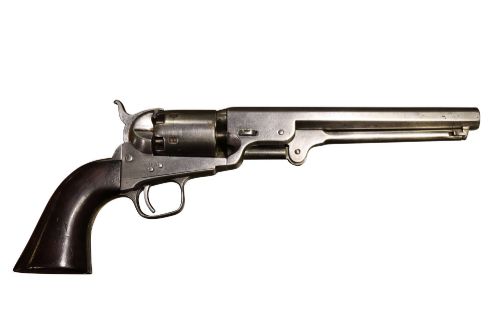
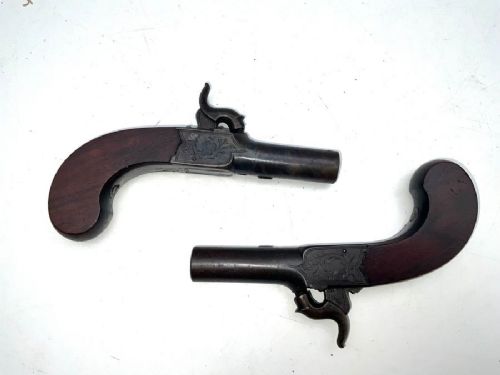
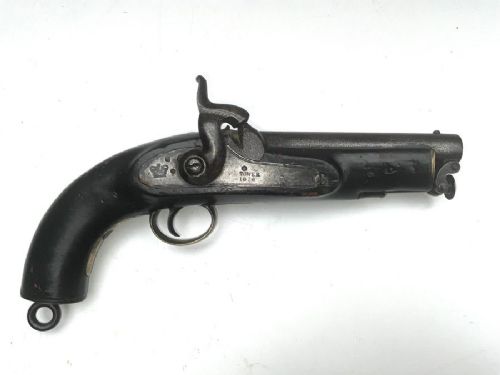
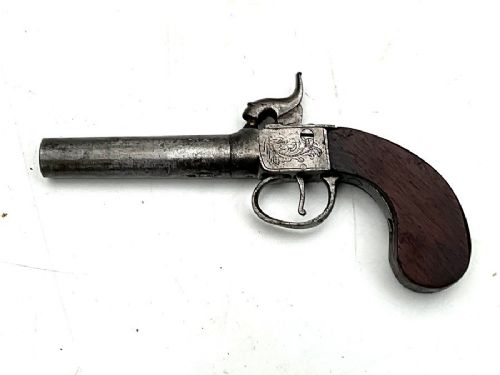
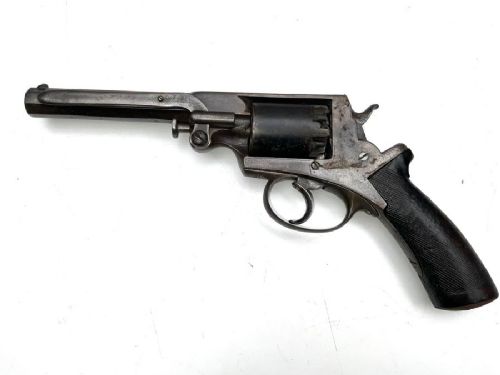
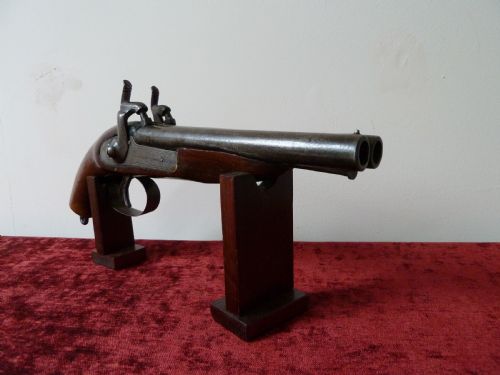
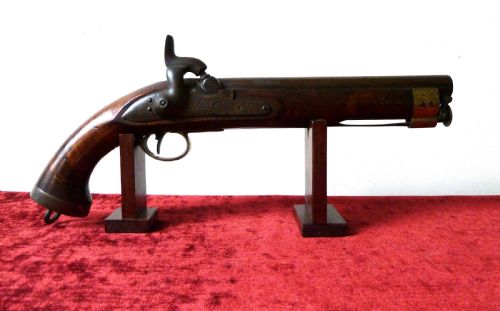
You are most likely to meet single and double-barrel pocket pistols, British military belt pistols, and American revolvers bearing mid-nineteenth-century dates. The forms range from compact pocket variants to substantial cavalry and sea service arms.
The origins span British, American, and French workshops, encompassing military contracts and civilian pieces. Each item reflects the specific demands of army officers, naval personnel, or civilian travellers of the period.
Materials and construction
Makers constructed these arms primarily using steel and iron for barrels, locks, and mechanisms, paired with stocks formed from walnut, oak, mahogany, and other dense woods. Brass fittings appear on select military and civilian models for trigger guards, butt caps, and ramrod pipes.
The fabrication relied on forged metals and shaped timbers, integrated with percussion ignition systems that utilised small detonating caps placed upon nipples. Boxed sets incorporated fitted compartments lined with velvet to house accessories alongside the arm.
Some pocket pistols hid their triggers inside the frame until the hammer was cocked, preventing them from snagging on waistcoat linings.
The markers of quality
Quality reveals itself in the crispness of the lock action, the legibility of maker stamps or military broad arrows, and the precise matching of serial numbers across components. Superior examples retain original finish on the metal and sharp checkering or grain on the wooden stocks.
The presence of complete original accessories within fitted wooden boxes distinguishes higher-tier civilian and military presentation pieces from standard issued arms. The integration of specialised mechanisms, such as sliding rear sights or hidden triggers, marks superior craftsmanship.
Colt·Beaumont Adams·Tower·East India Company·George Sherwood of Portsmouth
The Percussion Cap Firearm Glossary
- Percussion cap
- A small copper or brass cup containing a detonating compound placed on a nipple to ignite the black powder charge when struck by the hammer. This innovation replaced the earlier flintlock system.
- Calibre
- The internal diameter of the firearm barrel, measured in fractions of an inch or specific gauge standards. It defines the size of projectile the arm fires.
- Smoothbore
- A barrel lacking internal rifling grooves, designed to fire spherical lead balls or lead shot. These barrels appear on various military and civilian pistols from the period.
- Rifle
- A firearm featuring spiral grooves cut inside the barrel to impart spin to the projectile for greater accuracy. Mid-nineteenth-century examples include military muskets and sporting pieces.
- Carbine
- A shorter and lighter version of a rifle, designed primarily for cavalry use on horseback. These arms often incorporated saddle rings or specialised mounting hardware.
Percussion Cap Firearm: Frequently Asked Questions
How does a percussion lock work?
The mechanism relies on a hammer striking a small metal cap containing fulminate of mercury placed on a hollow nipple. The resulting spark travels down the channel to ignite the main black powder charge inside the barrel.
This system proved far more reliable in wet weather than previous flintlock mechanisms, transforming personal and military weaponry during the nineteenth century.
What is the difference between a belt pistol and a pocket pistol?
Belt pistols were larger military or civilian arms designed to be carried in a holster or tucked into a belt, often featuring fitted belt hooks or loops. Pocket pistols were smaller, more compact arms intended for discreet personal concealment.
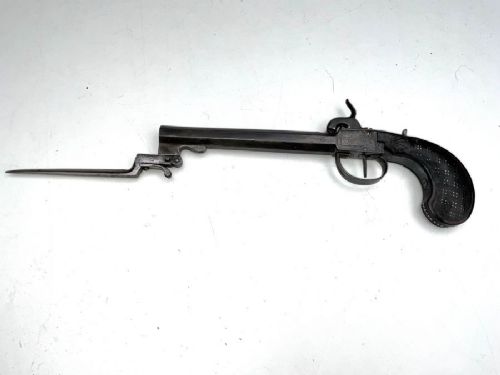
Belt pistols frequently included provisions for bayonets or larger calibres, whereas pocket pistols prioritized a snag-free profile with folding triggers or short barrels.
Were these arms used in the American Civil War?
Several models listed in nineteenth-century military categories, particularly American revolvers from Colt, saw extensive service during the American Civil War. Officers and cavalry troopers utilised these percussion arms extensively before cartridge firearms became standard.
Matched serial numbers and specific military inspector marks help identify pieces associated with this conflict period.
What accessories come in boxed sets?
Boxed percussion arms typically included powder flasks, bullet moulds, nipple wrenches, cleaning rods, and extra percussion caps housed in fitted velvet-lined compartments. These wooden cases protected the firearm and its supporting equipment during transport.
Complete accessory sets matched to the specific maker add significant interest for collectors of mid-nineteenth-century arms.