





Pediment Bureau Bookcase
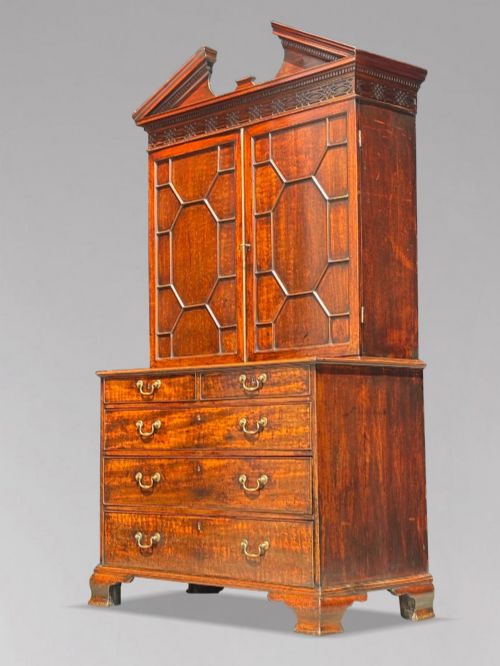
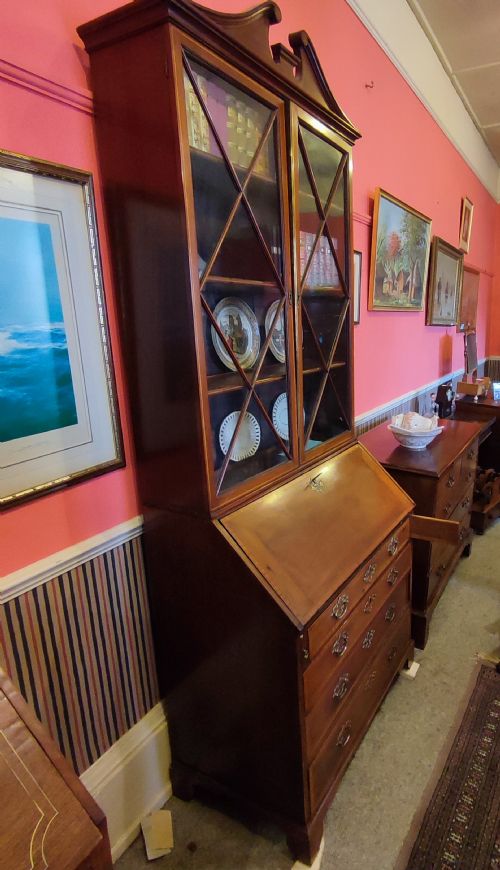
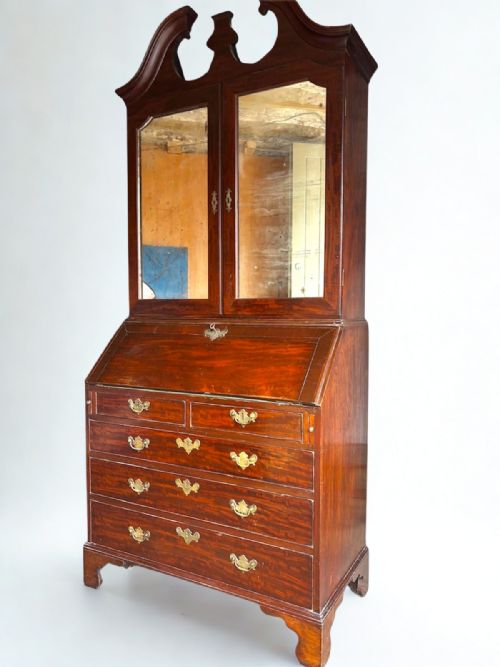
These substantial pediment bureau bookcase examples combine a fitted writing desk with upper shelving beneath a defined architectural roofline.
Pediment Bureau Bookcase
A pediment bureau bookcase is a towering piece of case furniture that merges a lower writing cabinet with an upper glazed or panelled shelving section, united by a prominent crown. These items appear primarily from the eighteenth and nineteenth centuries, spanning Georgian, Regency and Victorian eras, alongside later revival pieces.
The lower section typically provides a fall-front or drawer-contained writing surface concealing pigeonholes and small drawers, while the upper portion houses adjustable shelves behind glass doors. Mahogany remains the dominant timber across the selection, accompanied by walnut, oak, rosewood and satinwood.
Most examples originate from the eighteenth century, particularly the George II and George III periods, displaying architectural pediments such as broken arches or swan necks. Later nineteenth-century iterations bring inlaid decoration and cylinder fronts into the tradition.
How they were made
Cabinet makers built these large carcasses using dense primary timbers like mahogany, walnut and oak, frequently applying intricate crossbanding and marquetry inlay to flat surfaces. Upper doors incorporate individual glazed panes held together by wooden astragals, while internal compartments utilise smaller drawer construction with secret compartments.
The characteristic pediment relies on precise joinery to form sweeping architectural curves, occasionally centred on a carved cartouche or wooden finial. Brass hardware, including drop handles and escutcheons, secures the drawers and fall-fronts.
Listings feature mahogany, walnut, oak, rosewood and satinwood spanning the eighteenth, nineteenth and early twentieth centuries.
What varies in quality
Quality rests in the selection and figure of the timber veneer, the sharpness of carved architectural details on the pediment, and the structural integrity of the internal writing fittings. Earlier eighteenth-century pieces often demonstrate superior joinery in the pigeonhole compartments and drawer linings compared to later revival items.
The proportion between the upper bookcase and the lower bureau dictates visual balance, while original glass panes and unblemished brass hardware elevate the standing of a piece. Finer examples display meticulous marquetry inlay and well-defined swan neck or broken arch pediments.
Thomas Chippendale·Giles Grendy·Edwards and Roberts
The Pediment Bureau Bookcase Glossary
- Pediment
- The triangular or arched architectural crown topping the upper cabinet section. It defines the silhouette of the piece.
- Secretaire
- A writing drawer containing a drop-front or sliding surface with internal stationery compartments. This design conceals the writing space when closed.
- Swan Neck
- A broken pediment featuring two curving mouldings that rise to face each other, often ending in a scroll or rosette. It frequently centres on a carved wooden urn or cartouche.
- Crossbanding
- A strip of veneer applied across the grain of the primary wood around the perimeter of a drawer or door. This technique provides a neat decorative border.
- Astragal
- The narrow wooden moulding that divides individual panes of glass within the upper bookcase doors. These bars form geometric glazing patterns.
Pediment Bureau Bookcase: Frequently Asked Questions
How do I date a bureau bookcase?
Dating relies on timber choice, handle design, structural construction methods, and stylistic cues from specific design periods. Eighteenth-century versions often feature solid mahogany or walnut with hand-cut dovetails.
Later Victorian and revival pieces introduce machine-sawn elements, cylinder fronts, or distinct inlaid decoration. The shape of the pediment and internal pigeonhole arrangement also help anchor the piece to a particular era.
What is a swan neck pediment?
A swan neck pediment is an architectural top feature formed by two opposing curved mouldings that rise upward and inward. It creates an open broken arch, frequently housing a central wooden finial or carved cartouche.
This classical detail draws the eye upward and signals formal cabinet making from the Georgian period.
Where were these pieces used?
These tall cabinets served as functional stationery storage and writing desks in the principal rooms of large houses, libraries, and parlours. The upper glazed doors protected valuable bound volumes from dust while displaying library collections.
The lower bureau provided a private space for correspondence and document storage.
How should I care for mahogany and walnut?
Maintain timber furniture by placing it away from direct sunlight and heat sources to prevent the wood and veneers from drying out. Regular dusting with a soft, dry cloth preserves the polished finish.
Avoid silicone-based polishes and apply traditional beeswax sparingly when the surface requires nourishment.