


Pedestal Tier Side Table
A pedestal tier side table provides a compact, elevated surface for lamps and ornaments, bringing multi-level display to smaller spaces.
Pedestal Tier Side Table
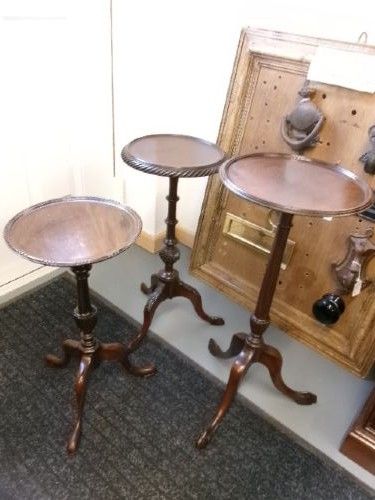
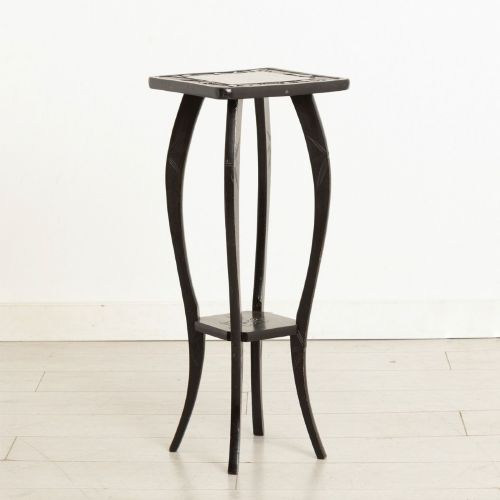
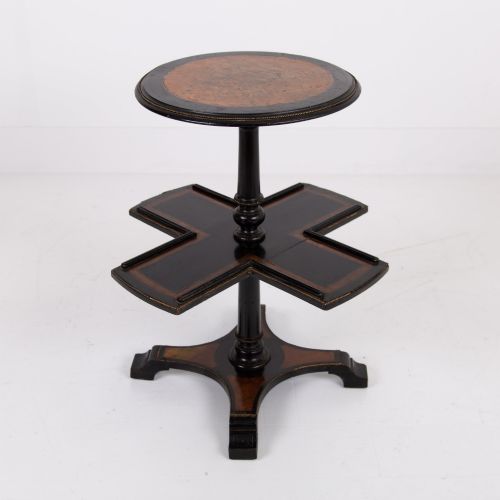
When searching for a pedestal tier side table, a buyer seeks a compact piece that uses vertical space through multiple levels or a central column. These items function as occasional tables, plant stands, lamp tables, and dumb waiters, serving as versatile surfaces in sitting rooms and hallways.
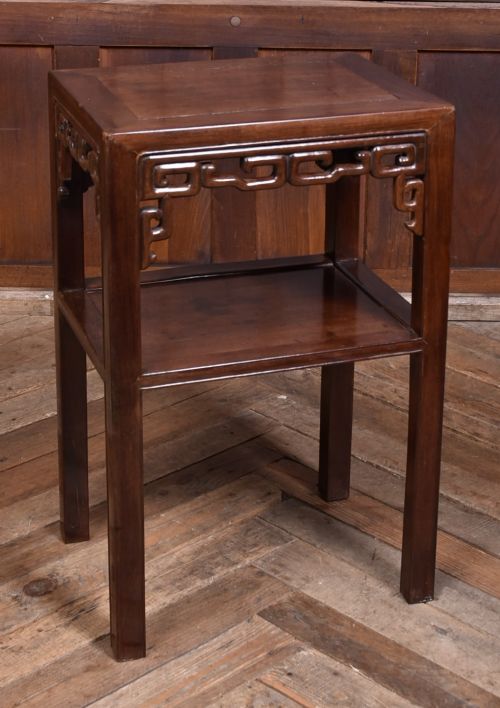
The pieces appearing on this page span the nineteenth century, the Victorian and Edwardian eras, and the early twentieth century, with styles ranging from Regency and French Empire to Arts and Crafts and Chinese designs.
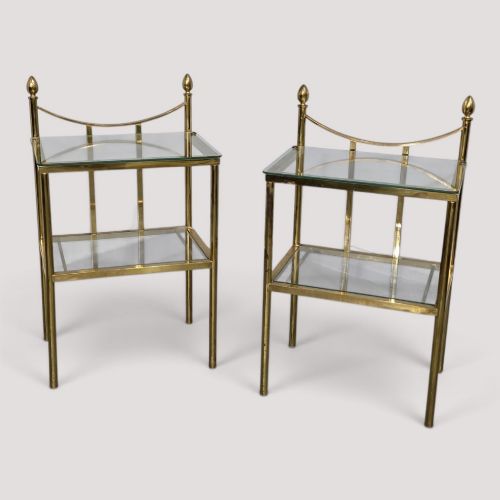
Mahogany and walnut predominate among the timbers, alongside rosewood, hardwood, and ebonised wood, frequently complemented by marble tops, brass mounts, and glass inserts.
How they were made
Cabinet makers utilised dense hardwoods such as mahogany, walnut, and rosewood, often selecting figured veneers like burr walnut or fiddleback mahogany for visible surfaces. Turnery, carving, and parquetry define the construction of the central pedestals and multi-tiered platforms.
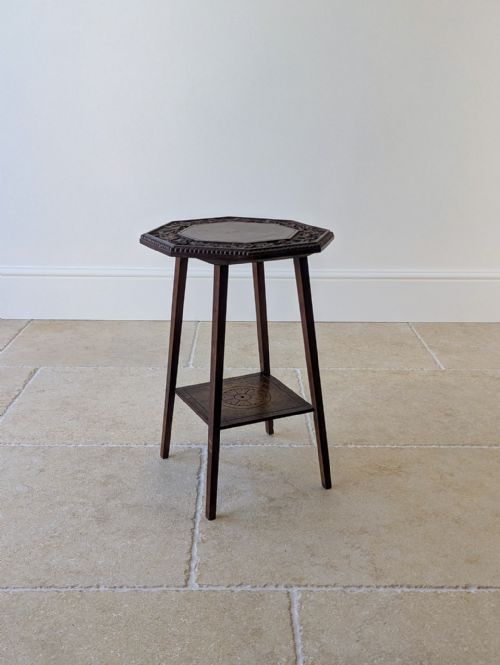
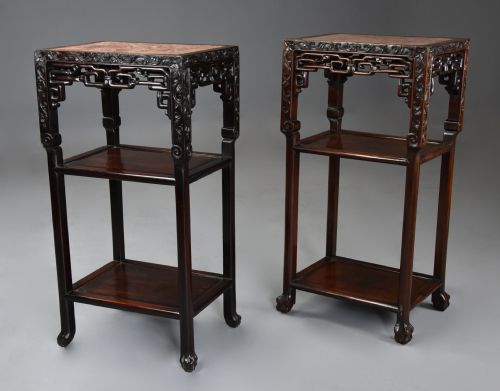
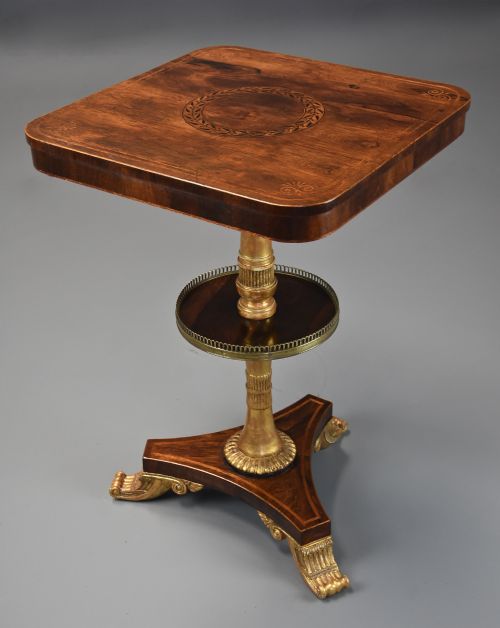
Inlaid details, brass galleries, and ormolu mounts punctuate the timber structures, while imported examples incorporate inset marble slabs and hand-carved hardwood frames.
French and English workshops employed traditional joinery techniques to secure tiers and tripod bases, ensuring stability across multi-level occasional tables and urn stands.
What varies in quality
The refinement of the timber selection dictates the distinction at the upper end of the scale, where highly figured grains, book-matched veneers, and dense hardwoods like rosewood command attention. Lesser examples rely on plain secondary timbers or simple beech without decorative graining.
Execution of carved details and metal mounts separates standard production from finer work, visible in the crispness of hand-carved foliage, the weight of cast brass fittings, and the tight fit of parquetry tiles.
Structural integrity rests on the stability of the central pedestal and the flush alignment of multiple tiers, distinguishing robustly joined pieces from those with looseness at the joints.
Liberty of London·George Bullock
The Pedestal Tier Side Table Glossary
- Pedestal table
- A table supported by a single central pillar resting on feet or a tripod base. This form reduces floor space while offering a stable surface.
- Tiered table
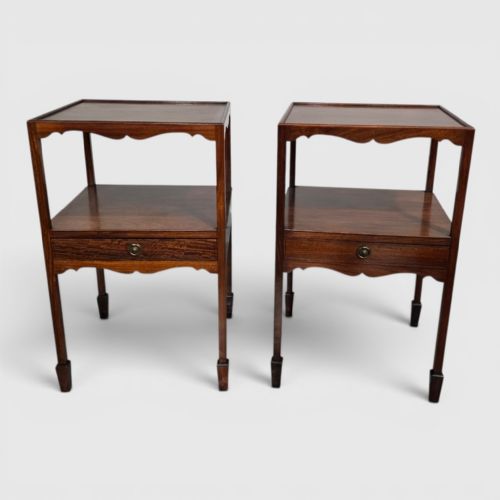
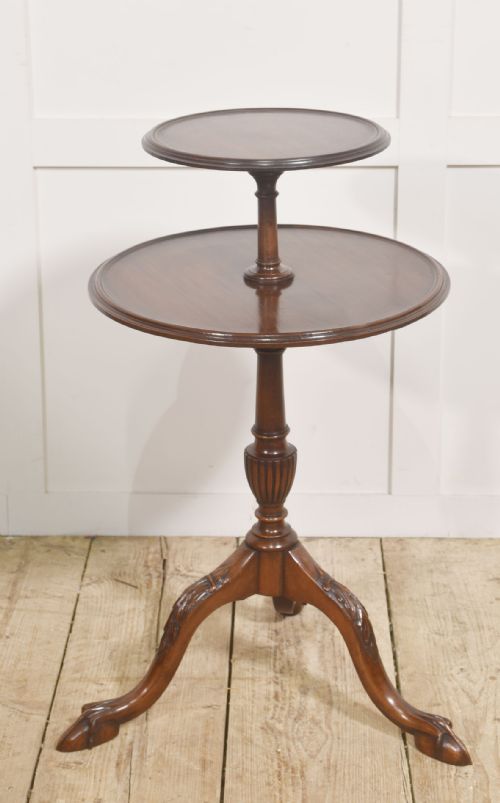
- An occasional piece featuring two or more stacked horizontal surfaces connected by columns or supports. It multiplies display space vertically.
- Dumb waiter
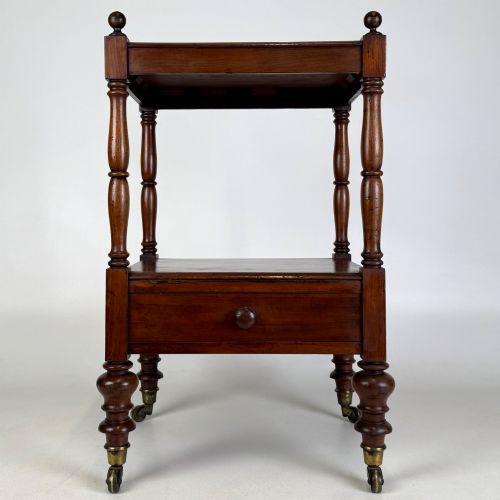
- A multi-tiered stand traditionally used for serving food or holding dishes without domestic assistance. Later versions function as display tables for lamps and plants.
- Parquetry
- Geometric wood mosaic work formed by small veneer pieces laid down in repeating patterns on a surface. It appears frequently on French occasional tables.
- Ebonised wood
- Timber treated with a dark stain or finish to imitate ebony. This technique creates a dense, black surface seen on Victorian pieces.
Pedestal Tier Side Table: Frequently Asked Questions
Where do I put a tier side table?
These compact pieces fit easily beside a sofa, in an empty corner, or next to a bed to hold lamps and books.
Their vertical design allows them to occupy minimal floor space while providing multiple surfaces for display.
Can these tables hold heavy lamps?
Most solid hardwood and mahogany examples provide sturdy support for standard table lamps and decorative objects.
Tripod bases and weighted pedestals offer reliable balance when placed on even flooring.
How do I identify a Victorian tier table?
Victorian pieces often feature dark timbers like walnut, amboyna, or ebonised wood, frequently accompanied by turned columns and carved details.
Construction from this era commonly displays rich grain patterns and traditional hand-cut joinery.
What is the difference between a plant stand and a side table?
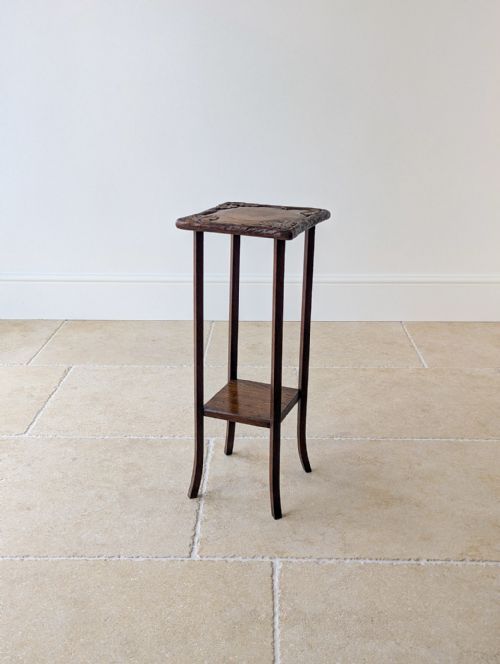
Plant stands typically present a smaller top surface elevated on a taller, slender pedestal designed for single display items.
Side tables offer broader surfaces intended for general placement of lamps, books, and decorative objects.