

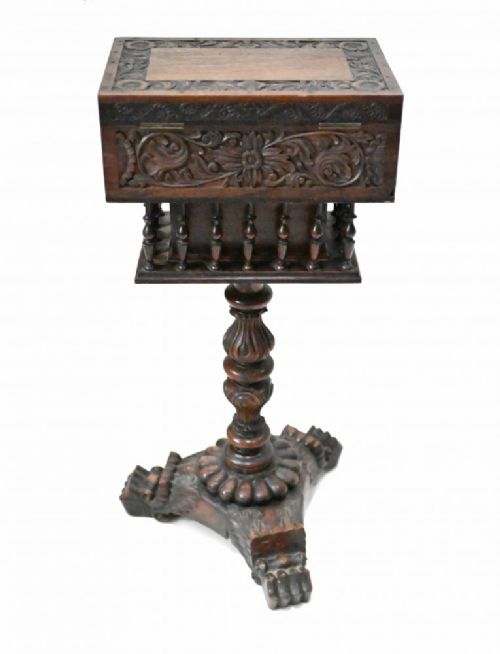


Pedestal Teapoy Table
These pedestal teapoy table examples combine tea storage and fine cabinet-making, offering a commanding centrepiece for a refined interior.
Pedestal Teapoy Table
A pedestal teapoy table is a specialised form designed to store and dispense tea leaves, standing on a central pillar rather than four legs. Buyers hunting this phrase will encounter variations ranging from classical Regency models to later Victorian interpretations.
The objects seen on this page span the nineteenth century, including Georgian, Regency, William IV, and Victorian eras. Alongside traditional teapoys, the listings include related work tables, occasional tables, and side tables that share similar pedestal construction.
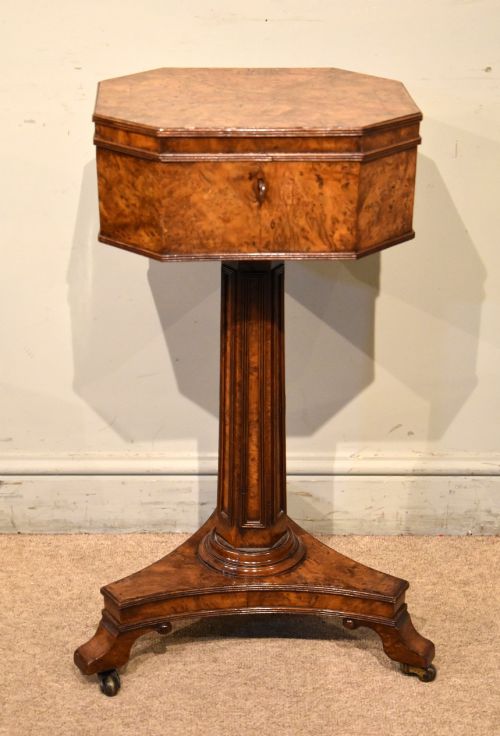
Origins stretch beyond standard English workshops to encompass Anglo-Indian colonial production and Swedish craftsmanship. Forms vary from sarcophagus-shaped boxes to carved padouk and burr maple variants.
How They Were Made
Cabinet-makers utilised dense tropical hardwoods such as mahogany and rosewood for structural stability and rich surface grain. Exotic veneers like burr walnut, burr maple, burr elm, and burr yew were applied to create highly figured geometric patterns.
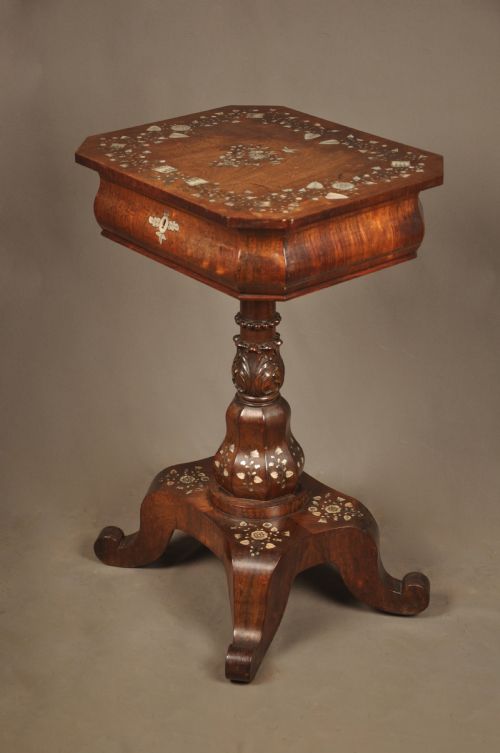
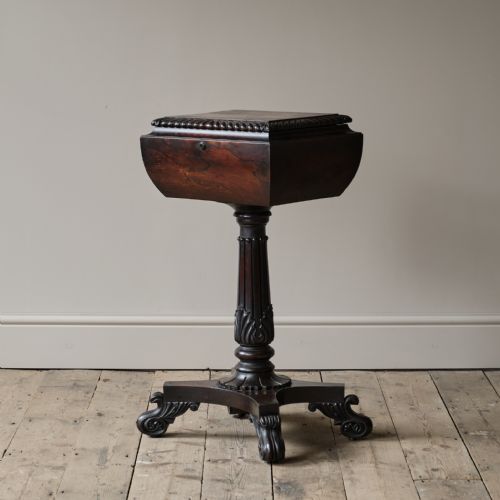
Decoration relied on precision brass inlay and intricate hand-carved details on stands and feet. Mother of pearl accents occasionally appear, adding tonal contrast to the dark timber surfaces.
Pedestal Teapoy Table Retail Price Guide 2026
Typical asking prices for pedestal teapoy table among the pieces listed under this phrase on Sellingantiques today, from the lower quarter to the upper quarter. They describe what is for sale here now, not the wider market.
Some nineteenth-century hosts kept the tea locked up tight because tea was so expensive that servants might otherwise help themselves.
What Varies in Quality
The tier of a piece depends on the choice of timber and the ambition of the veneer work, with dense burr cuts commanding greater attention. The crispness of the hand-carving on the central pillar and feet distinguishes standard workshop production from finer outputs.
Internal compartment layouts and original fitted mixing bowls or canisters elevate a piece's integrity. Structural harmony between the box and the pedestal base remains central to the overall design success.
Gillows
The Pedestal Teapoy Table Glossary
- Teapoy
- A small stand or box designed for holding tea, typically featuring internal caddies and compartments. These vessels were essential items in affluent nineteenth-century drawing rooms.
- Sarcophagus
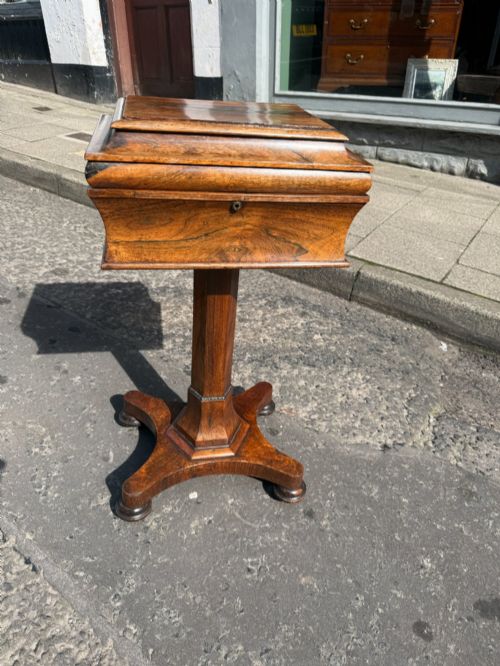
- A box shape featuring a domed or sloping lid reminiscent of ancient stone coffins. This silhouette was particularly popular during the Regency period.
- Padouk
- A heavy, durable tropical hardwood with a reddish-brown hue often found in colonial furniture. It responds exceptionally well to detailed hand carving.
- Burr
- A tree growth that produces highly figured, swirling wood grain when sliced into veneers. Cabinet-makers reserved these prized sections for primary display surfaces.
- Work Table
- A small multi-purpose table often incorporating storage bags or compartments for sewing and needlework. They share similar pedestal proportions with teapoys.
Pedestal Teapoy Table: Frequently Asked Questions
What is a pedestal teapoy table used for?
Originally, these pieces held precious loose tea leaves in locked internal caddies away from domestic servants, protecting a costly household commodity. They also functioned as small writing or work surfaces in fashionable reception rooms.
Today, collectors use them as decorative occasional tables or lamp stands in living spaces. Their lidded compartments still serve to store small personal items out of sight.
How do I identify a Regency teapoy?
Regency examples typically display classical architectural proportions, dark rosewood timbers, and occasional brass inlay. They often feature sarcophagus or rectangular box forms resting on robust pedestal columns.
Look for crisp carving and disciplined proportions rather than excessive ornamentation. The interior fittings should match the neoclassical aesthetic of the exterior.
Are all teapoys made of mahogany?
While early and standard pieces frequently utilise solid or veneered mahogany, cabinet-makers drew from a wide palette of timbers. Rosewood dominates the Regency listings on this page for its dark, polished grain.
Other examples employ exotic woods such as padouk, burr walnut, burr maple, burr elm, and burr yew. Each material dictates a slightly different visual weight and textural character.
Can I use a teapoy as a side table?
Their compact footprint and sturdy pedestal base make them practical for positioning beside armchairs or sofas. The flat top surface readily accommodates a reading lamp or decorative objects.
Care should be taken to protect polished timber surfaces from moisture and heat. The internal compartments remain accessible for discreet everyday storage.