
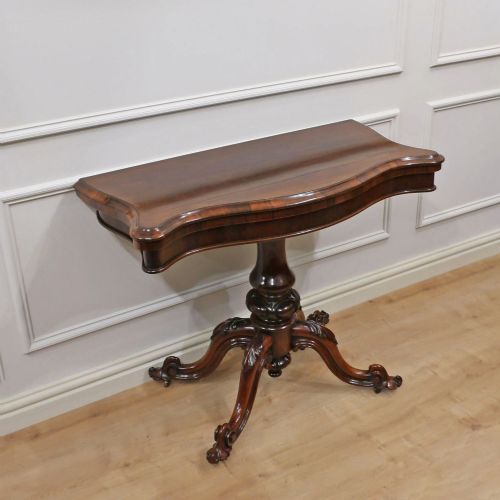
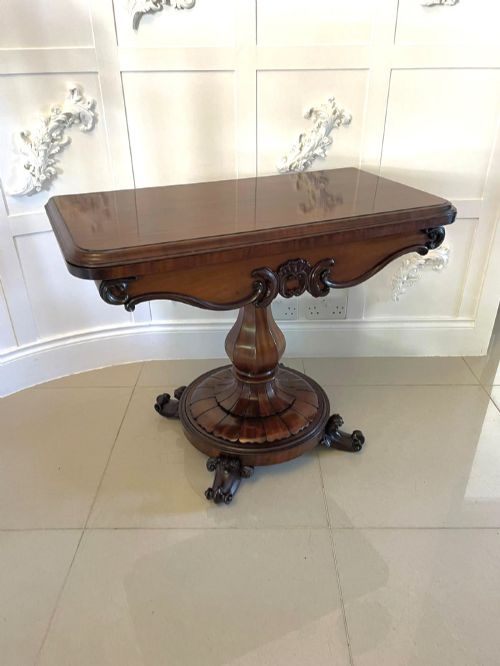
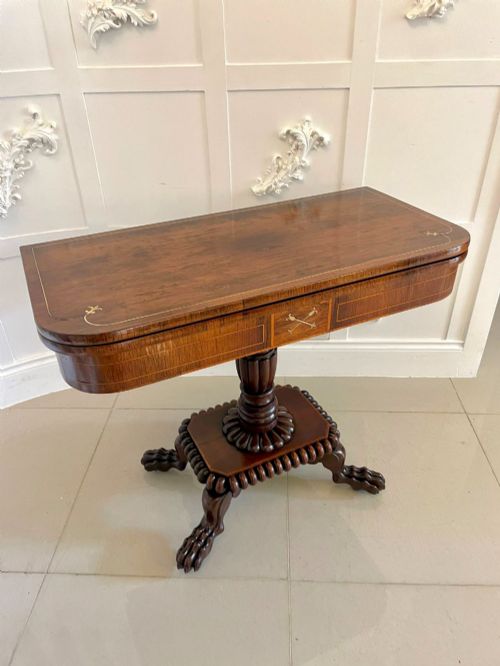
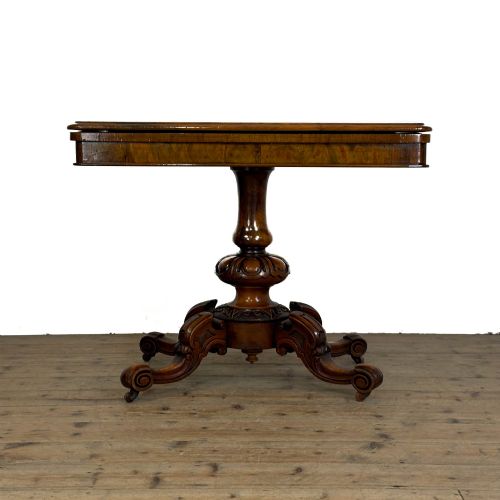
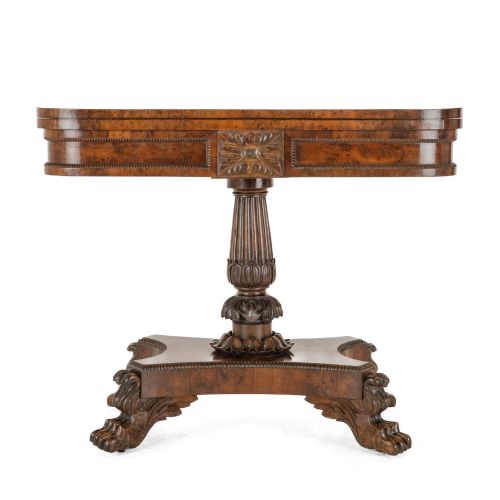

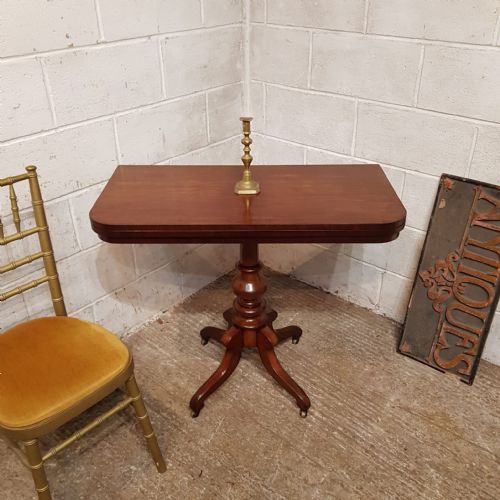

Pedestal Swivel Tea Table
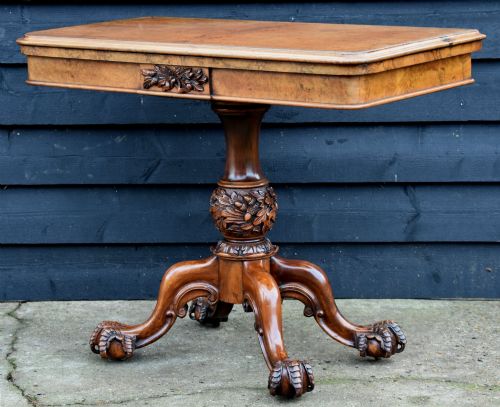
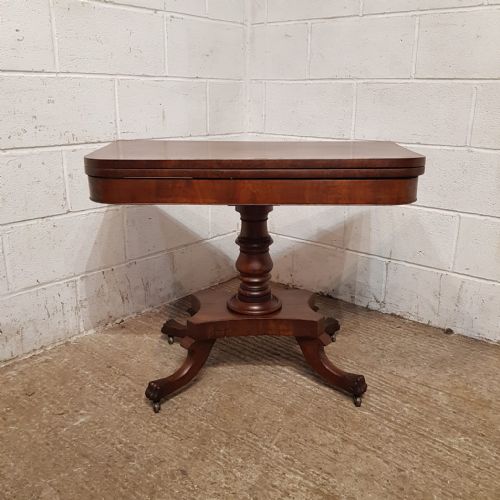
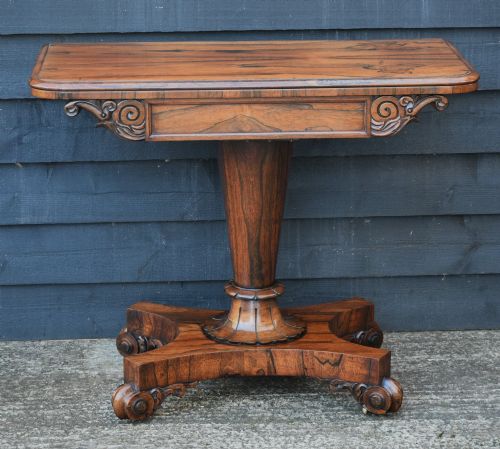
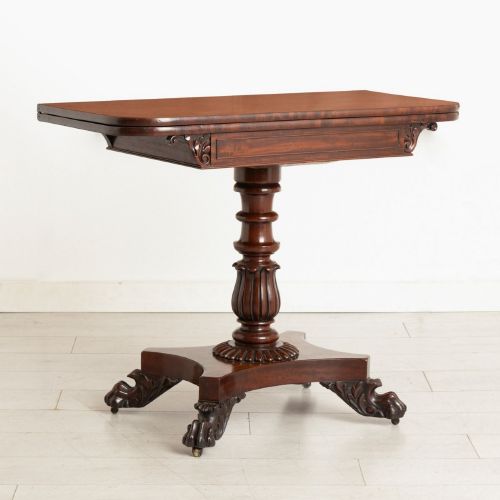
These pedestal swivel tea tables are timber fold-over pieces designed for the parlour, most frequently appearing in rosewood, mahogany, and walnut from the Regency and Victorian periods.
Pedestal Swivel Tea Table
A pedestal swivel tea table is a flexible piece of furniture designed to sit against a wall and expand when needed. The top rotates on a pivot to open out, revealing a surface originally intended for taking tea or playing cards.
You will most commonly encounter these items from the Regency, William IV, and Victorian eras. The selection spans standard tea tables, card tables, and combination games tables constructed from rich hardwoods.
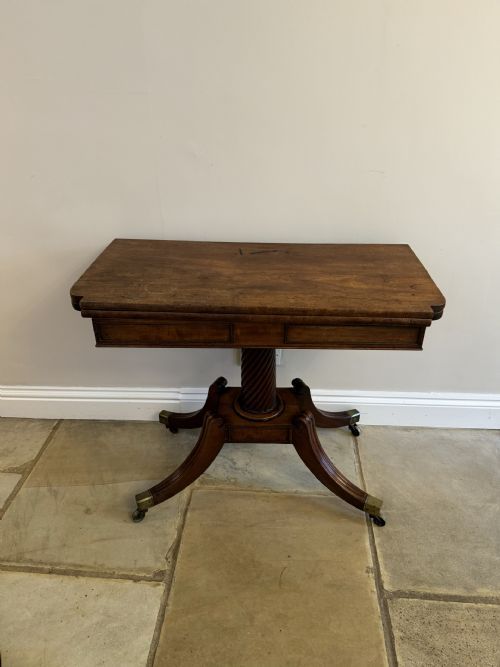
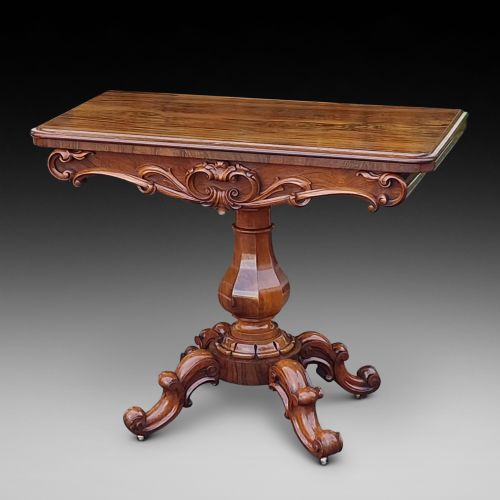
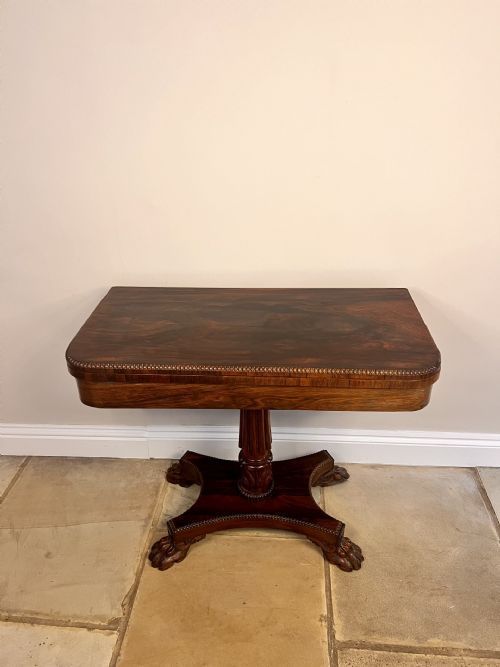
Makers of these tables utilised sturdy central pedestals supported by platform bases or carved legs, often terminating in brass castors for mobility. The folding tops frequently conceal shallow compartments or baize-lined playing surfaces.
How they were made
Cabinet makers relied heavily on solid mahogany, rosewood, and walnut for structural stability and visual depth. Fine veneers such as burr walnut and burr yew were applied to the primary surfaces to create striking grain patterns.
The swivel mechanism required precise carpentry to allow the heavy top to rotate smoothly before folding open. Brass inlay, carved mouldings, and baize lining were incorporated into finer examples to enhance both utility and appearance.
Many Victorian card tables hide secret spaces under their swivelling tops, perfect for losing your winnings.
What varies in quality
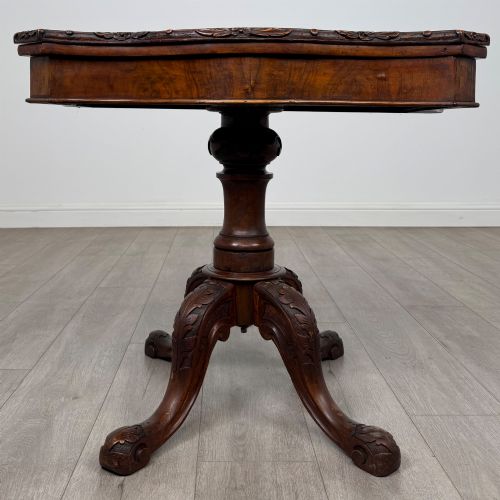
Quality rests primarily in the selection of the timber and the crispness of the carving on the pedestal and base. Heavy, well-figured rosewood and burr walnut veneers indicate a higher grade of manufacture than plain or secondary timbers.
The precision of the swivel mechanism and the alignment of the fold-over top distinguish standard workshop production from superior cabinet work. Pieces that sit firmly on their bases without wobble demonstrate enduring structural integrity.
The Pedestal Swivel Tea Table Glossary
- Swivel top
- A table top designed to pivot on a central pivot pin so the leaves can open safely. This allows the framework to support the unfolded leaf.
- Fold-over
- A hinged tabletop construction that doubles the surface area when opened out. It rests on the rotated base for support.
- Baize
- A coarse woollen material used to line the playing surfaces of card and games tables. It provides a soft, non-slip texture for handling cards.
- Figured veneer
- Thin slices of timber cut from sections with distinctive grain patterns, such as burrs or curls. These are applied to carcase woods to create decorative surfaces.
- Pedestal
- A central vertical column supporting the tabletop, frequently resting on a platform base with carved scroll feet.
Pedestal Swivel Tea Table: Frequently Asked Questions
What is a pedestal swivel tea table?
A pedestal swivel tea table is a hinged timber furniture piece from the Georgian and Victorian eras featuring a rotating top. The design allowed households to save space by placing the closed table against a wall until required for social use.
When opened, the top reveals a polished wood surface or a baize-lined interior suited for entertaining guests with tea or card games.
How do I identify the period of my table?
Dating relies on observing the timber choices, pedestal carving styles, and overall proportions of the piece. Regency and William IV examples often display rosewood with brass inlay or bold scrolled pedestal bases.
Victorian variations frequently utilise walnut or burr walnut veneers with serpentine shaping and more elaborate carved details around the column and feet.
How were these tables used originally?
These pieces served multiple functions in the principal rooms of nineteenth-century homes, acting as console tables when closed. They were pulled into the centre of the room and opened up when guests arrived.
The interior space beneath the folding top was frequently utilised to store playing cards, counters, or tea caddies when the furniture was not in active service.
How do I care for a mahogany or rosewood surface?
Preserving the polish requires keeping the timber away from direct sunlight and maintaining a stable room humidity to prevent veneer cracking. Regular dusting with a dry, soft cloth is sufficient for routine maintenance.
Avoid placing damp items or uninsulated hot cups directly onto the polished wood to protect the historical finish from water rings and heat damage.