

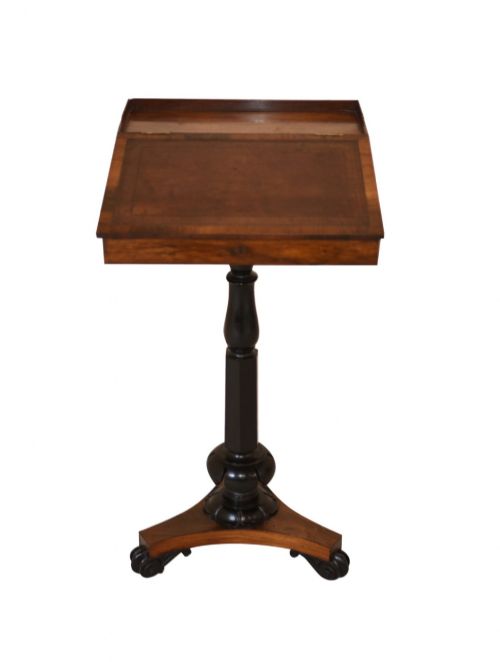
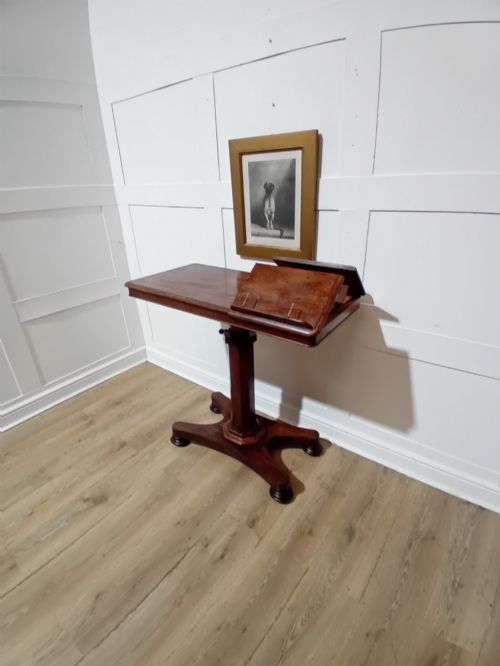
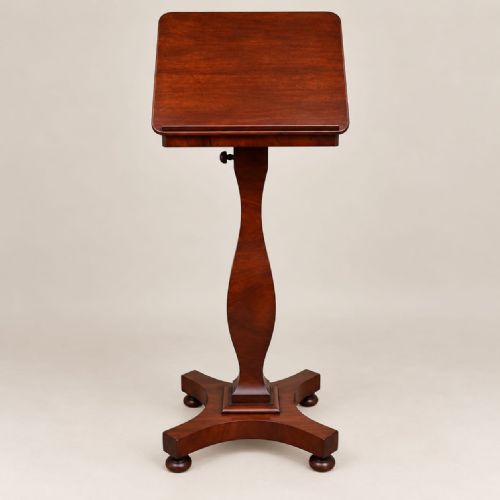
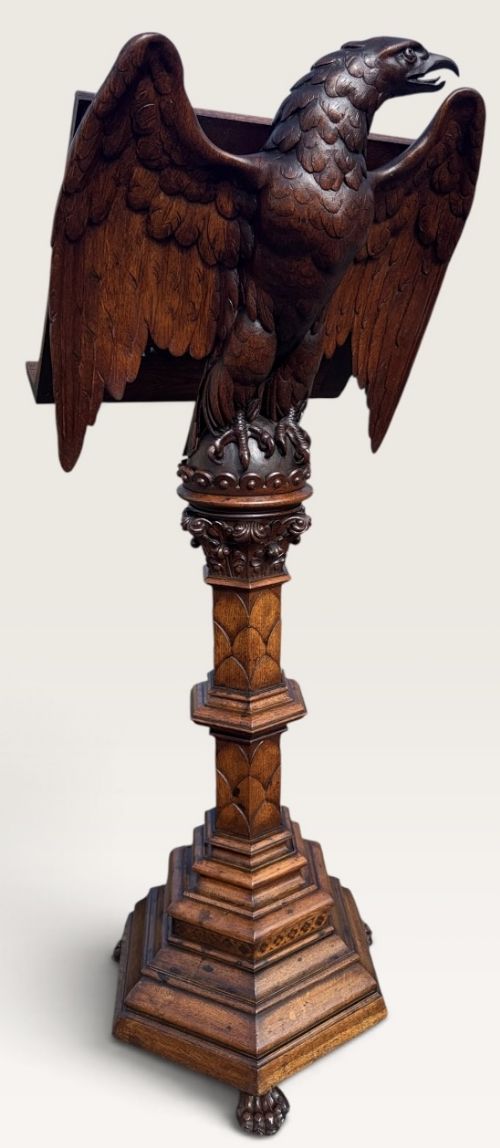



Pedestal Reading Desk
A pedestal reading desk brings together timber furniture and mechanical adjustment for comfortable study, offering practical surfaces designed for books, music, and writing.
Pedestal Reading Desk
When you search for a pedestal reading desk, you encounter pieces designed to hold books and papers at adjustable angles for readers, scholars, and musicians. The items listed under this description span centuries of craftsmanship, connecting functional library furniture with decorative stands and writing surfaces.
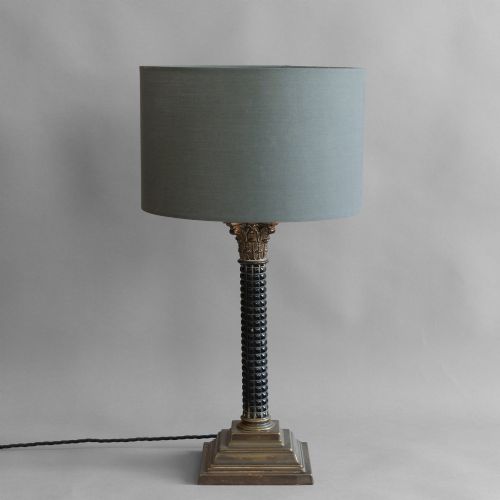
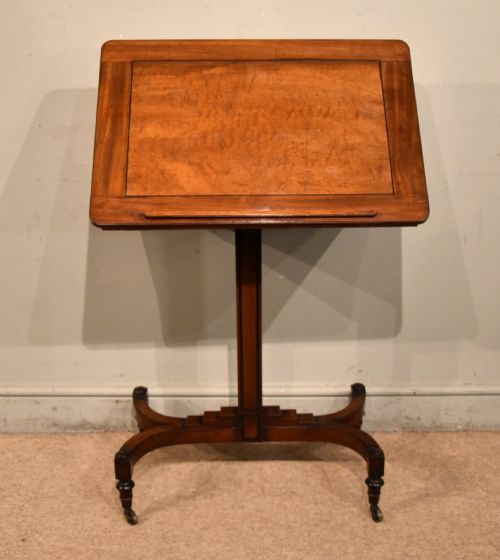
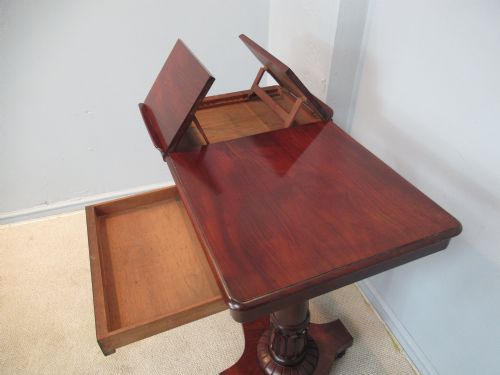
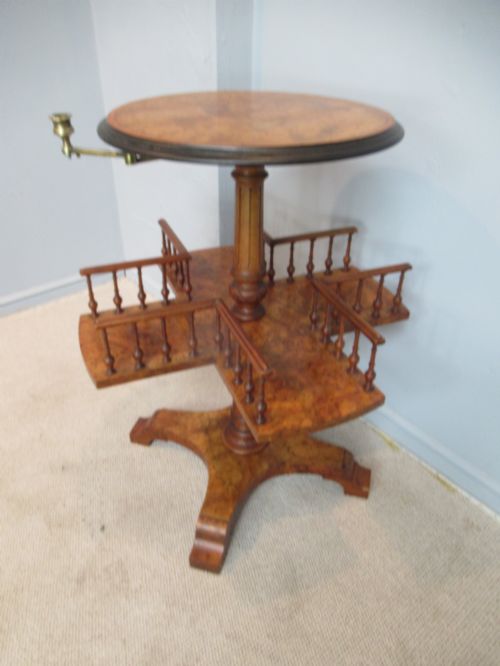
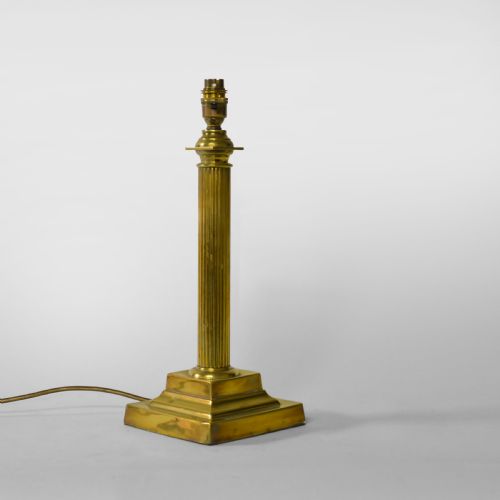
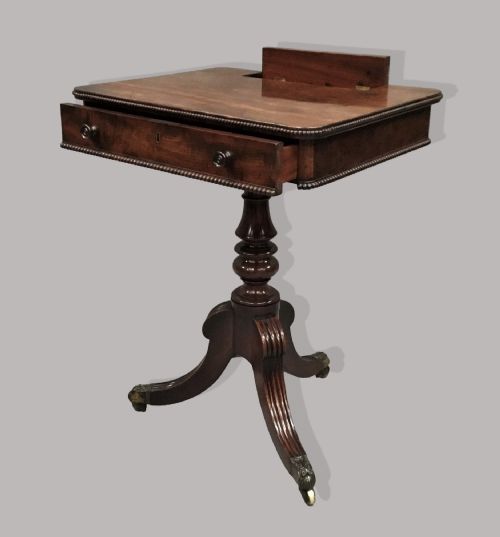
You are most likely to meet mahogany or walnut reading tables and music stands dating from the Regency and Victorian periods, alongside Edwardian designs and brass column lamps. These items appear in various forms, including folding book pedestals, cantilever extending tables, and double-sided library desks.
The selection reflects both domestic study spaces and institutional libraries from the nineteenth and early twentieth centuries. Pieces often combine structural timber pedestals with metal ratchets or brass columns to allow height and angle modification.
Materials and construction methods
Cabinet makers utilised dense hardwoods such as mahogany, rosewood, and walnut for the primary structure of these reading tables and desks. Timber components were frequently carved, turned, or polished to emphasise the grain and provide robust support for heavy volumes.
Metal elements, particularly brass and bronze, appear extensively in the construction of columns, ratchets, and adjustable reading mechanisms. Cast brass capitals and weighted bases provide stability to tall table lamps and reading stands, while iron or steel components often reinforce internal joints.
Pedestal Reading Desk Retail Price Guide 2026
Typical asking prices for pedestal reading desk among the pieces listed under this phrase on Sellingantiques today, from the lower quarter to the upper quarter. They describe what is for sale here now, not the wider market.
Calligraphers and scholars clearly enjoyed good leverage, as nineteenth-century extending tables could transform a quiet corner into an impromptu writing station.
Distinctions in standard and execution
The sophistication of the mechanical adjustment mechanism separates standard items from superior examples. Smooth movement in ratchets, screws, and cantilever joints indicates high-grade engineering and careful assembly by the maker.
Timber selection and decorative detail heavily influence the standing of a piece. Finer examples display figured mahogany or burr walnut veneers, precise boxwood stringing, and well-executed classical carving rather than plain surfaces.
Gillow
The Pedestal Reading Desk Glossary
- Pedestal
- A supporting column or base that elevates a desk, table, or lamp above the floor or surface. It provides central stability for pieces with adjustable tops.
- Lectern
- A slanted stand designed to hold a book or manuscript at a readable angle for a speaker or reader. They often sit on a column or table base.
- Cantilever
- A rigid structural member extending horizontally and supported at only one end. In reading furniture, this allows the surface to project over a chair or bed.
- Ratcheted
- Fitted with a notched bar and catch that allows a reading surface to lock at various angles. This mechanical adjustment is common on music stands and reading tables.
- Column lamp
- A lighting fixture styled after classical architectural orders with a vertical shaft. These frequently utilise brass or bronze and appear in Corinthian or Doric designs.
- Partners desk
- A large double-sided writing table designed for two people to work opposite one another. They incorporate pedestals with drawers or cupboards on both sides.
Pedestal Reading Desk: Frequently Asked Questions
What is a pedestal reading desk?
A pedestal reading desk is a piece of furniture designed to support books, music, or writing materials at a convenient height and angle. They often feature central columns or pedestals.
These items range from compact scholar stands to large library tables equipped with mechanical adjustments for the reader.
How do adjustable reading tables work?
Adjustable tables utilise mechanical joints, ratchets, or screws hidden beneath the surface to alter the height or slope. This allows users to read comfortably while seated or standing.
Brass and metal fittings support these moving parts, ensuring the wooden surface locks securely into position.
What materials were commonly used?
Maker workshops predominantly relied on hardwoods like mahogany, walnut, and rosewood for the main structure and surfaces. These timbers were selected for durability and finished to highlight the natural grain.
Brass and bronze also feature heavily, particularly in the columns of reading lamps and the mechanical ratchets of adjustable stands.
How do I identify a Regency piece?
Regency items typically date from the early nineteenth century and reflect Neoclassical design influences. They often display clean lines, dark mahogany timbers, and restrained brass mounts.
Proportions tend to be classical and balanced, drawing inspiration from ancient Greek and Roman architectural forms.