


Pedestal Chess Board Table
A pedestal chess board table brings ingenuity and social play together in a single centrepiece, offering a clever surface that turns any room into a parlour for quiet strategy.
Pedestal Chess Board Table
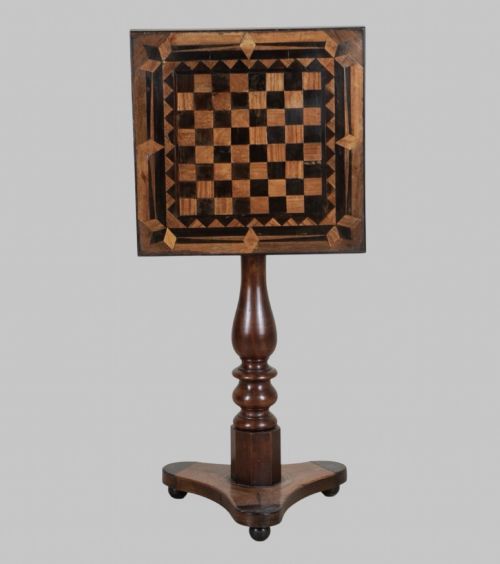
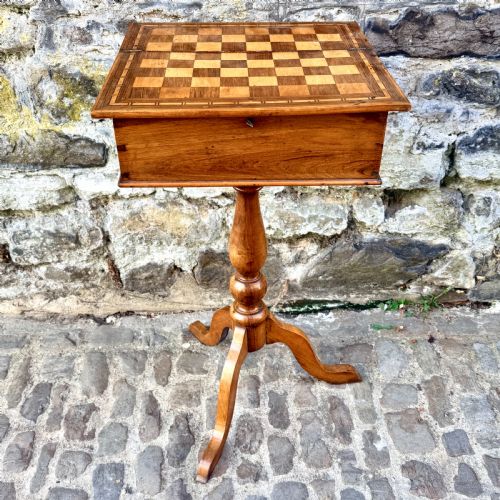
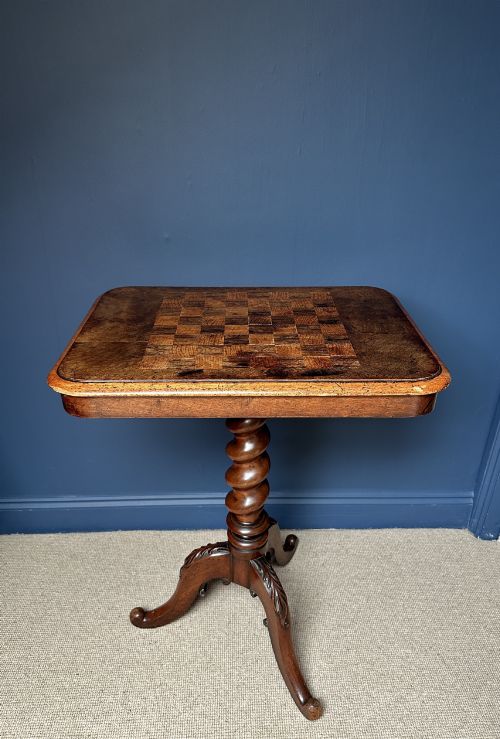
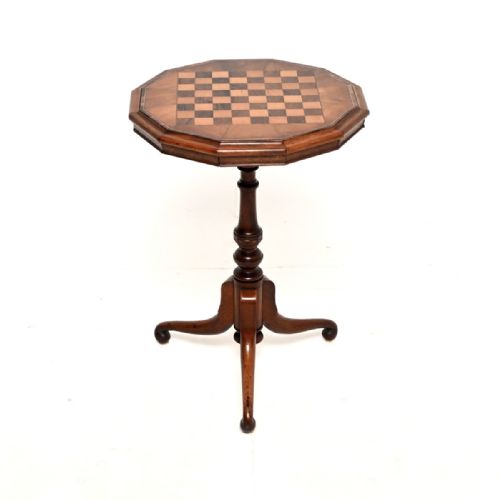
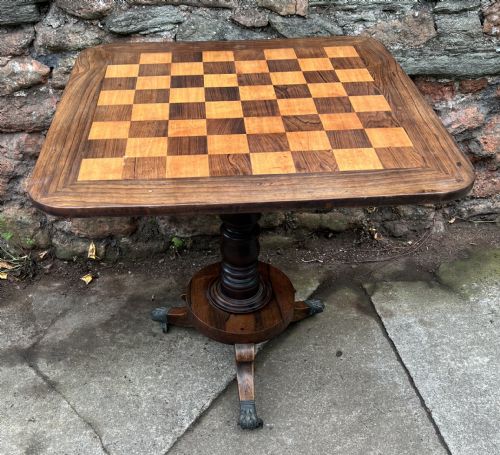
A pedestal chess board table is a specialised form of games table or occasional table designed for domestic entertainment, appearing across the Regency, Georgian, and Victorian periods. These pieces serve as functional furniture where the top incorporates an integrated chequer-board for play, supported by a central column or tripod base.
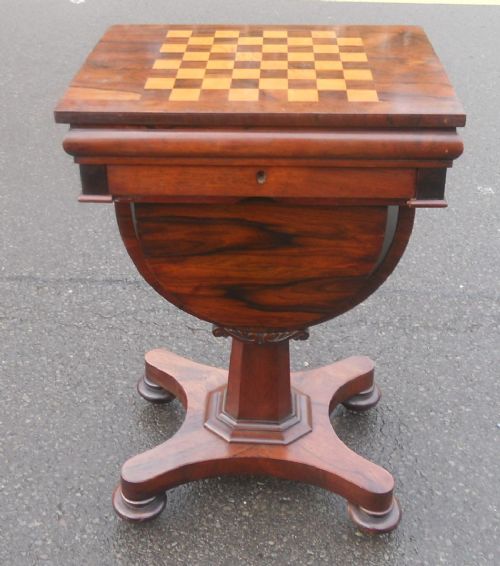
The versions most commonly met on this page span the early nineteenth century and the mid-nineteenth century, featuring distinct regional expressions including French Provincial, Swedish Biedermeier, and English Regency styles. Makers produced them primarily as games tables or dual-purpose lamp tables and work tables equipped with inlaid boards.
Surviving examples reflect the social habits of the nineteenth century, when parlour games demanded dedicated furniture that remained elegant enough for daily use in a drawing room. The combination of a pedestal base and a board top allows for comfortable seating during a match without bulky legs getting in the way.
How they were made
Cabinet makers utilised dense timber foundations such as rosewood, walnut, and mahogany, often applying intricate veneers of satinwood, boxwood, and ebonised wood to construct the contrasting squares of the playing surface. Specimen woods also appear, showcasing varied natural grains and colours within the inlaid tops.
Decorative detailing on these tables relies on specialised surface techniques, including fine penwork and brass mounting, which add distinct linear patterns and metallic accents to the timber structures. Turners shaped central pedestals from solid hardwoods, anchoring them to tripod or platform bases to ensure stability during use.
Listings demonstrate that rosewood and walnut dominate the structural timbers of these tables, frequently paired with boxwood and ebonised wood for the contrasting squares.
What varies in quality
The standard of a pedestal chess board table depends heavily on the precision of its wood inlay and the complexity of its timber selection, where contrasting squares fit together without gaps. Finer pieces employ exotic specimen woods and meticulous penwork decoration rather than simple painted markers.
Structural refinement also separates standard examples from exceptional ones, particularly in the turning of the pedestal column and the quality of the brass mounts. The integration of the board into the wider table design dictates whether the piece succeeds purely as a gaming surface or as a balanced piece of occasional furniture.
George Merrifield
The Pedestal Chess Board Table Glossary
- Chequer-board
- A squared grid pattern of alternating dark and light tiles used for games such as chess and draughts. On these tables, the grid is typically inlaid directly into the wooden top.
- Penwork
- A decorative technique using fine ink lines drawn onto wood to create detailed geometric or pictorial borders. This ornamentation appears on several Regency period examples.
- Specimen wood
- Timber selected for its unusual grain, colour, or origin, often gathered from different regions and arranged in geometric patterns. These woods highlight the maker's skill in contrasting natural hues.
- Tripod base
- A three-legged support structure radiating from a central pedestal column. This configuration provides steady floor contact on uneven historic floorboards.
- Ebonised wood
- Timber treated to imitate the deep, dark appearance of ebony. This process creates stark contrast against lighter woods like boxwood on the playing surface.
Pedestal Chess Board Table: Frequently Asked Questions
How were these tables used originally?
These tables served as functional furniture for domestic entertainment and quiet strategy games in nineteenth-century drawing rooms and parlours. Between matches, their decorative inlaid tops allowed them to function as regular lamp tables, work tables, or occasional tables.
The pedestal design ensured that players could sit comfortably close to the board without wooden legs obstructing their knees.
How do I date a chess table?
Dating a pedestal chess board table involves examining the primary timbers, the style of the pedestal base, and the method of inlay. Regency and Georgian examples often feature rosewood, brass mounts, and delicate penwork, while mid-nineteenth-century Victorian pieces frequently utilise walnut and more robust pedestal turnings.
Regional variations, such as French Provincial or Swedish Biedermeier construction methods, also provide strong clues to a table's period of origin.
How do I care for an antique chess table?
Caring for an antique inlaid table requires keeping it away from direct sunlight and extreme humidity changes, which can cause the delicate veneers and boxwood or ebony inlays to lift. Regular dusting with a soft, dry cloth maintains the polished finish of the rosewood or walnut surfaces without chemical buildup.
Applying occasional appropriate wax preserves the timber and protects the historic surface decoration from drying out.