


Pearl Halo Cluster Ring
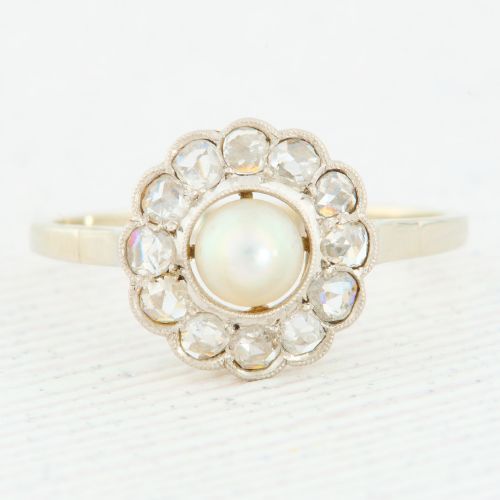
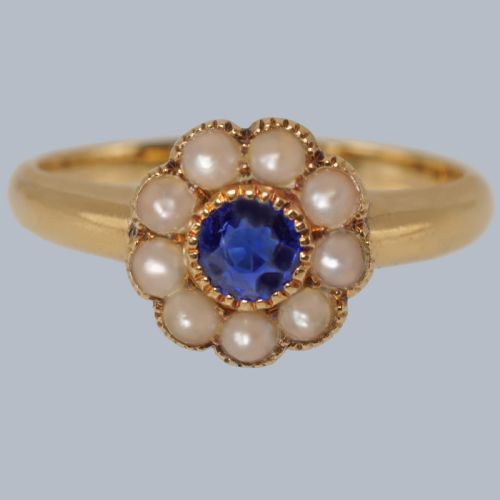
A pearl halo cluster ring brings together a central gem and a glowing fringe of pearls, spanning Victorian, Edwardian and Art Deco designs.
Pearl Halo Cluster Ring
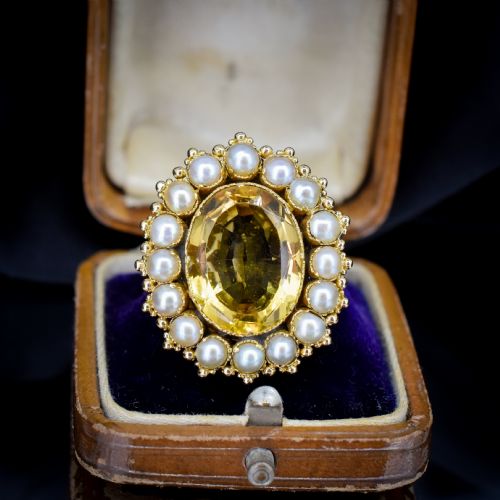
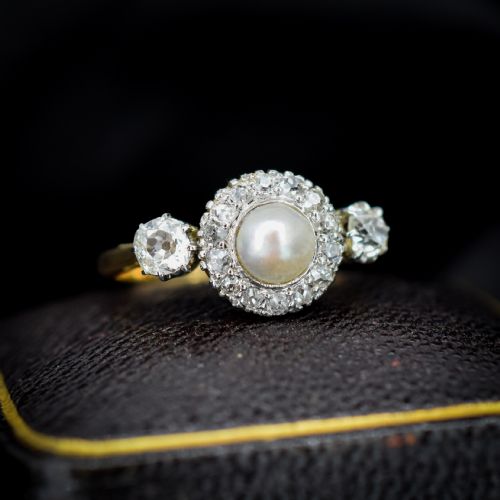
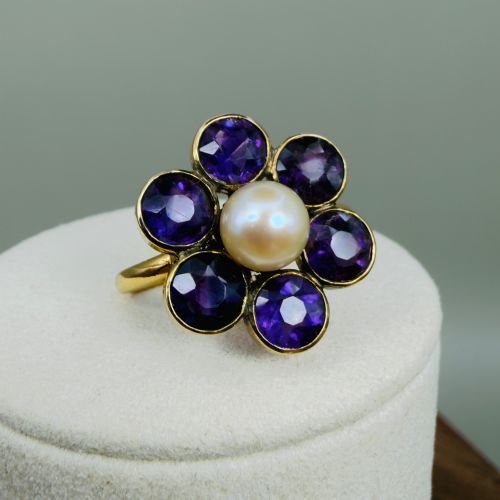
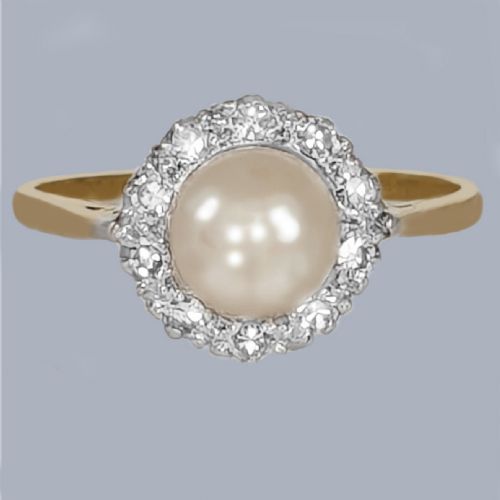
A pearl halo cluster ring centres on a pearl or a contrasting gemstone such as diamond, amethyst, citrine or sapphire, surrounded by a border of smaller pearls or diamonds. These pieces emerge across the Georgian, Victorian, Edwardian, Art Deco and Mid-Century periods.
The most common form on this page pairs a central diamond, amethyst or sapphire with lustrous pearls, mounted in yellow gold, rose gold, white gold or platinum. Variants incorporate seed pearls, coral or blue glass alongside garnets and emeralds.
Makers utilised distinct regional preferences, including French mountings alongside British hallmarks from Birmingham. Every piece functions primarily as a finger ring, spanning single clusters and triple cluster arrangements.
Materials and construction
Goldsmiths shaped mounts in 18ct yellow gold, 18ct rose gold, 18ct white gold, 9ct gold and platinum, securing central stones alongside pearls using claw and bezel settings. Older examples from the Georgian era often feature closed-back foils or rose cut diamonds.
Pearls are integrated alongside old cut diamonds, seed pearls and coloured gemstones, held firmly within the concentric halo framework characteristic of cluster rings.
Distinguishing quality
Quality rests on the uniform lustre and matching size of the surrounding pearls, alongside the clarity and cut of central stones such as old cut diamonds or amethysts. Heavier metal weight in the shank and refined claw work elevate an example above standard production.
The integration of precious platinum alongside 18ct gold, together with crisp hallmarks or documented origins, distinguishes superior specimens from simpler 9ct or unhallmarked variations.
The Pearl Halo Cluster Ring Glossary
- Halo cluster ring
- A jewellery design where a central stone is entirely surrounded by a concentric border of smaller gems or pearls. This arrangement maximises visual impact and light reflection.
- Seed pearl
- A very small, naturally formed pearl, often drilled and threaded or set closely together in rows and clusters. They were widely utilised during the Victorian and Edwardian eras.
- Old cut diamond
- A diamond cut by hand before modern machinery, characterised by a high crown, small table and deep pavilion. These stones exhibit a softer, warmer candlelit sparkle.
- Rose cut diamond
- A vintage diamond cut featuring a flat base and a domed crown faceted with triangles. It produces a subtle transparency distinct from brilliant cuts.
- Hallmark
- An official stamp applied to precious metals indicating purity and origin. British examples often denote specific assay offices such as Birmingham.
Pearl Halo Cluster Ring: Frequently Asked Questions
How do I wear a pearl ring daily?
Pearls are softer than diamonds and require gentle care during routine wear. Avoid exposing them to harsh chemicals, perfumes or ultrasonic cleaners to preserve their natural lustre.
Removing the ring before heavy manual tasks or sleeping protects the delicate pearl surface and setting integrity over decades of use.
What periods do these rings date from?
The selection encompasses Georgian, Victorian, Edwardian, Art Deco and 1960s periods. Each era brings distinct metal choices and gemstone combinations, from early rose cut diamonds to mid-century hallmarks.
Examining the shank construction and mounting style helps identify the specific historical period of manufacture.
Are the pearls natural or cultured?
Evidence across the listings includes natural pearls, cultured pearls, seed pearls and split pearls. Each type reflects the prevailing techniques and materials available during the ring's period.
Examining the pearl under magnification helps determine its formation method and structural history.
What metals are used in the settings?
Rings on this page utilise 18ct yellow gold, 18ct rose gold, 18ct white gold, 9ct gold, 15ct gold and platinum. Combinations of yellow gold and platinum are particularly common in Edwardian pieces.
The choice of metal often corresponds to the manufacturing period, with platinum gaining prominence in the early twentieth century.