





Pearl Enamel Pendant
A pearl enamel pendant brings together lustrous gems and vitrified glass across Victorian, Edwardian and Art Nouveau designs.
Pearl Enamel Pendant
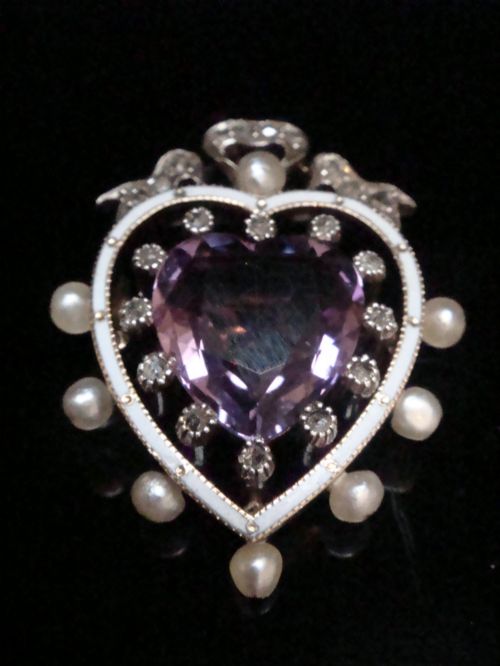
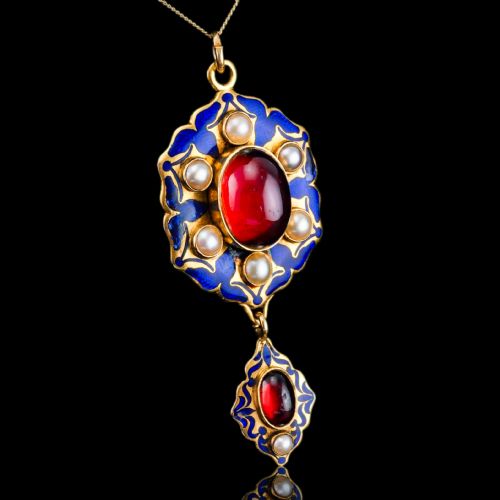
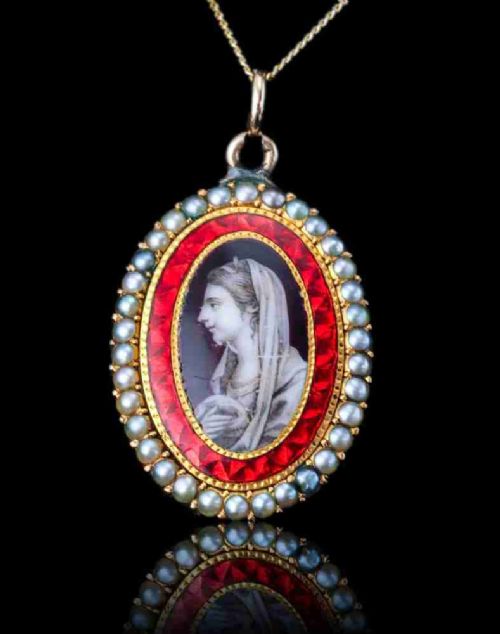
A pearl enamel pendant combines vitreous surface colour with organic or cultured gems, taking forms such as hearts, lockets, and floral motifs. When exploring a pearl enamel pendant, buyers encounter pieces spanning the Georgian era through to the early twentieth century, with strong representation from Victorian and Edwardian workshops.
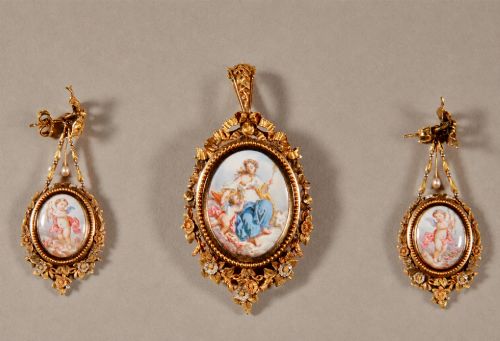
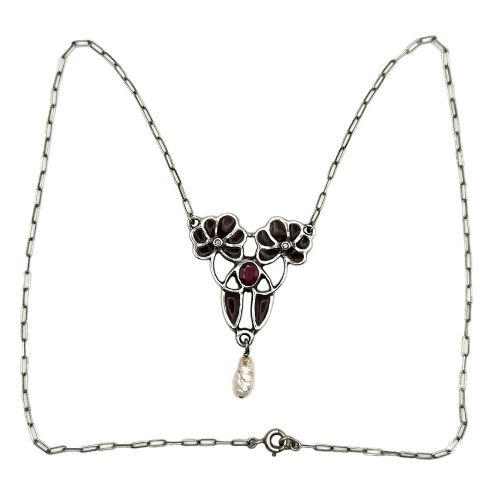
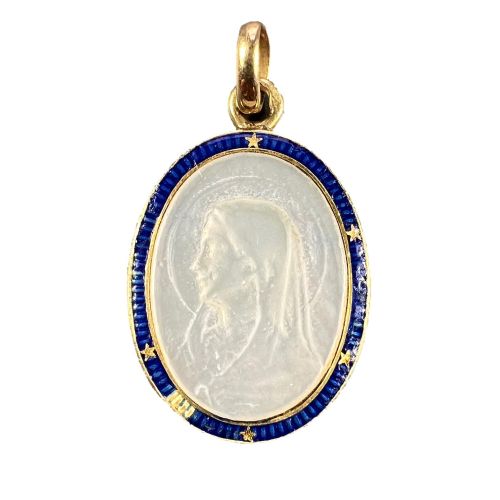
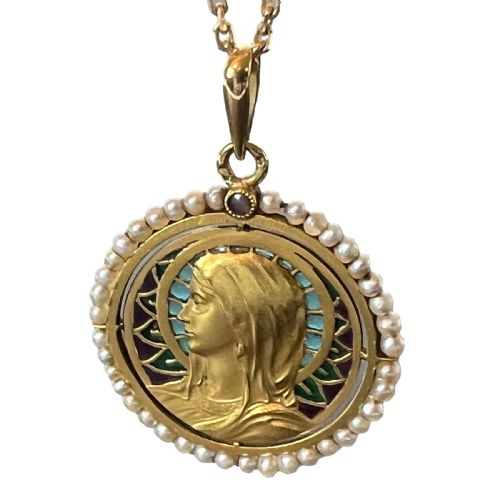
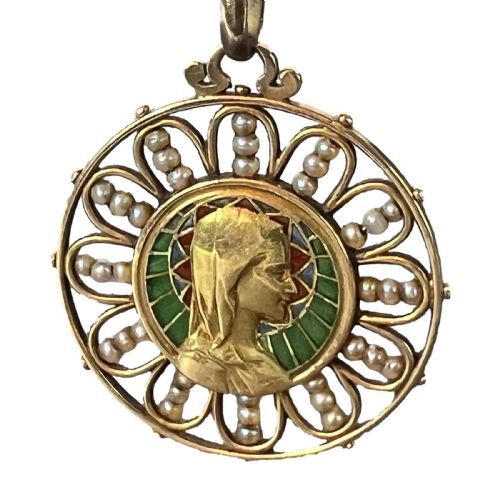
The selection ranges from simple silver and seed pearl iterations to substantial high carat gold examples set with diamonds, garnets and elaborate coloured enamel. Regional variations include French devotional medals, Austro-Hungarian multi-gem creations and British Arts and Crafts designs.
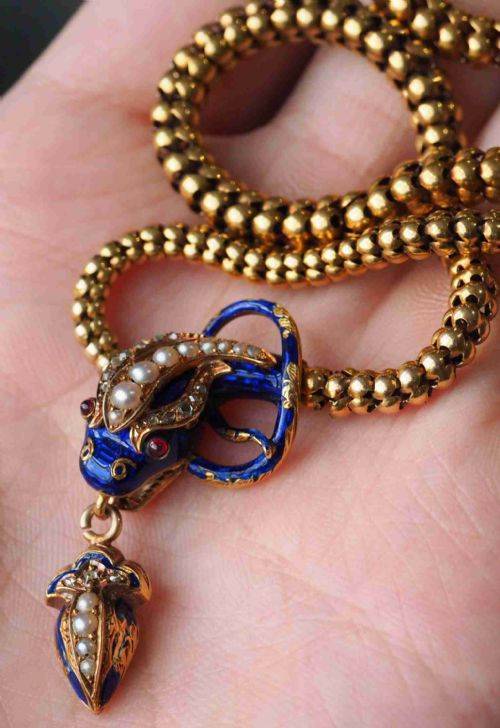
Makers frequently integrated symbolism into these jewels, utilising serpents, pansies, crosses and portraits alongside traditional pearl drops. Surviving items often function as both pendants and brooches, offering versatility in how they are worn.
Materials and construction
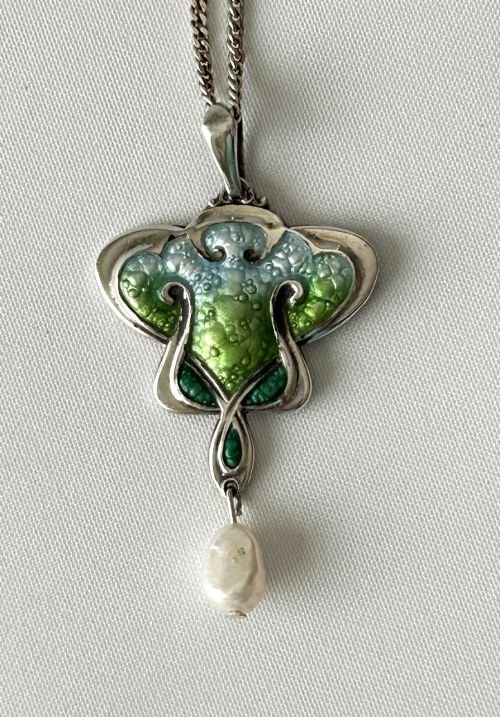
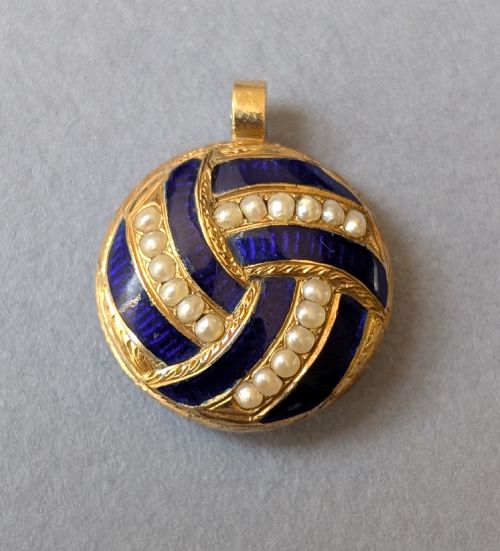
Goldsmiths and silversmiths employed various caratages of yellow and rose gold alongside silver and silver gilt to form the structural mounts. Enamel techniques varied from opaque black and blue mourning applications to translucent guilloche and plique-a-jour, which allowed light to pass through the coloured glass like stained glass.
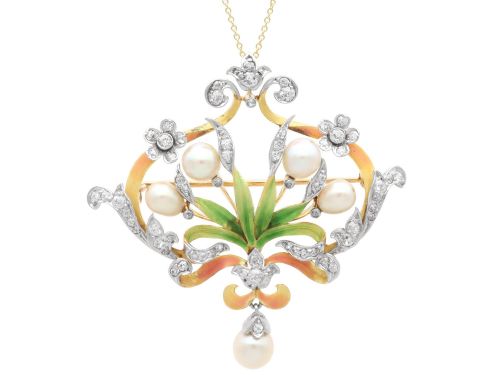
Pearls and seed pearls were meticulously drilled and secured on pegs, stitched with silk, or set in closed-back mounts alongside rose-cut diamonds, rubies, amethysts and peridots. Artisans built intricate wirework, box hinges and glazed back compartments for hair or miniatures within the same piece.
Pearl Enamel Pendant Retail Price Guide 2026
Typical asking prices for pearl enamel pendant among the pieces listed under this phrase on Sellingantiques today, from the lower quarter to the upper quarter. They describe what is for sale here now, not the wider market.
Listings feature pearl enamel pendant examples utilising 9K, 15K and 18K gold alongside silver, incorporating diamonds, garnets, amethysts and rubies.
Distinguishing quality across periods
The sophistication of the enamel work dictates much of the distinction, where hand-turned guilloche engraving beneath translucent layers or flawless plique-a-jour cells require exceptional technical mastery. Superior examples display crisp casting and hand-finishing even on the reverse of the metalwork.
The matching and lustre of the pearls elevate a piece, alongside the integration of supplementary gemstones like clean diamonds or vibrant garnets. Designer attribution and documented provenance from prominent firms further separate standard commercial production from masterworks.
Archibald Knox·Liberty and Co·Murrle Bennett·Wilhelm Fuhner·Levinger and Bissinger·Otto Prutscher·Heinrich Levinger·Eduard Loss·Meyle and Mayer
The Pearl Enamel Pendant Glossary
- Plique-a-jour
- An enamelling technique where the glass is fired in open wire cells without a backing, creating a translucent, stained-glass effect. This delicate method is a hallmark of Art Nouveau jewellery.
- Guilloche
- A decorative mechanical engraving technique that etches a precise, intricate geometric pattern into the metal substrate. Enamel is subsequently applied over the top to let the pattern show through.
- Seed Pearl
- Very small natural or saltwater pearls, often pierced and threaded, widely utilised in clusters and floral arrangements during the nineteenth and early twentieth centuries.
- Holbeinesque
- A Victorian revival style inspired by sixteenth-century Renaissance ornament, typically featuring heavy goldwork, enamel, and dangling gem drops. These pieces often incorporate complex architectural elements.
- Mourning Locket
- A commemorative piece of jewellery designed to hold hair, a miniature portrait, or an inscription dedicated to a deceased person. They frequently utilise black or dark blue enamel.
Pearl Enamel Pendant: Frequently Asked Questions
How do I care for my pendant?
Enamel and pearls are sensitive to harsh chemicals, ultrasonic cleaners and prolonged immersion in water. Wipe them gently with a soft, dry cloth after wearing and store them away from harder metals to prevent scratching.
Perfumes, lotions and hairsprays should be applied before putting on the jewellery to protect the delicate surface of the glass and the organic nacre of the pearls.
Were these always worn on necklaces?
Many surviving examples were manufactured with dual fittings, featuring both a hidden or fold-down suspension loop and a secure pin stem on the reverse. This allowed the owner to wear the item interchangeably as a brooch or suspended from a chain.
Original configurations often depended on the fashion of the decade, shifting from pinned bodice ornaments in the Victorian era to suspended lavallieres during the Edwardian period.
How can I tell Victorian from Edwardian pieces?
Victorian items generally display heavier gold mounts, darker enamel palettes associated with mourning or sentimental symbolism, and robust construction like closed-back settings. Motifs often include serpents, hands, and heavy floral clusters.
Edwardian pieces tend to utilise lighter silver-on-gold settings, brighter pastel or guilloche enamel, and airy garlands of platinum or diamonds, reflecting a shift toward delicate, lace-like aesthetics.