


Pearl Cluster Necklace
A pearl cluster necklace brings together lustrous pearls and clustered gemstone settings, offering a refined piece of period jewellery.
Pearl Cluster Necklace
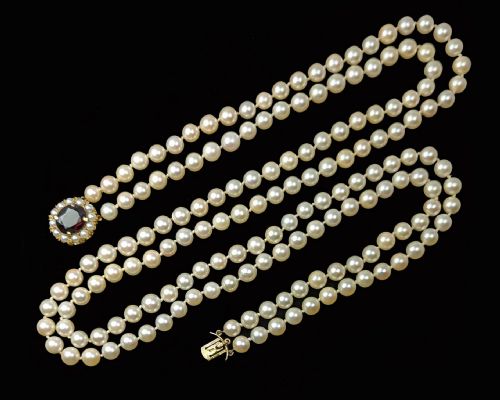
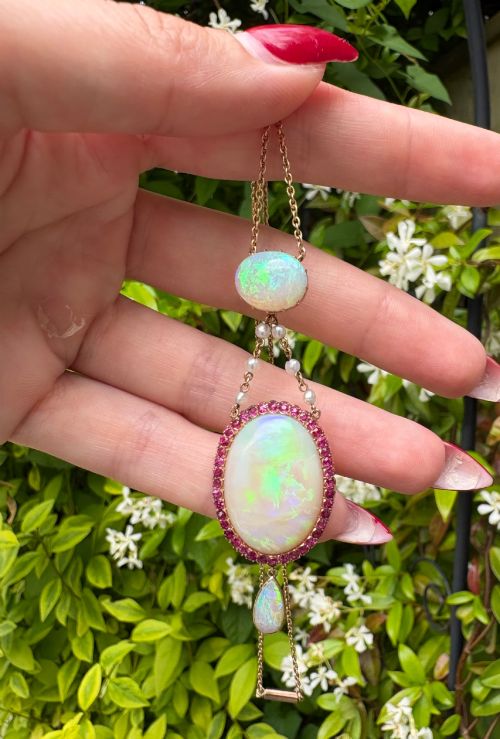
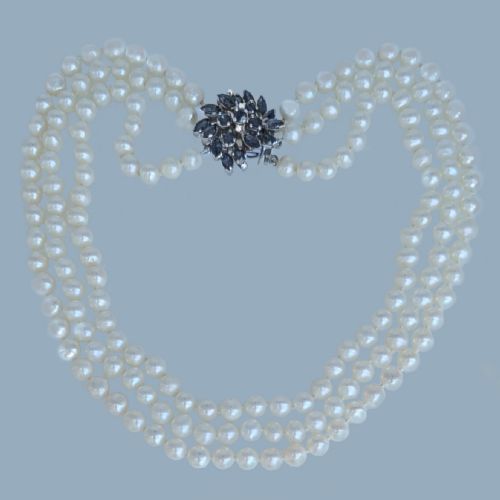
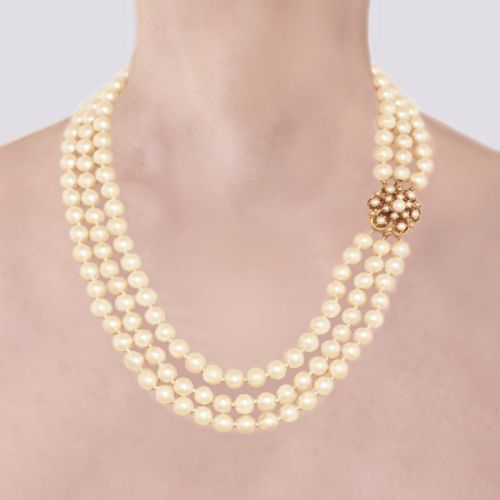
Buyers frequently encounter multi-strand pearl necklaces finished with clasps containing garnets, sapphires, rubies, and diamonds. Single pendants also appear, showing seed pearls combined with turquoise, amethyst, peridot, and citrine in gold settings.
Materials and construction
Goldsmiths utilised 9ct and 15ct yellow gold alongside platinum and silver to mount natural saltwater pearls, seed pearls, and cultured pearls. Settings incorporate rose-cut and brilliant-cut diamonds, rubies, sapphires, and garnets arranged around central stones.
Construction techniques include intricate wirework for seed pearl pendants and secure multi-strand stringing for pearl necklaces featuring detailed metalwork clasps. Metal components often bear hallmarks or test as higher-carat gold.
Witches' hearts and delicate starbursts hide among the clusters, proving that past generations loved a dramatic neckline just as much as we do.
Assessing craftsmanship and materials
Quality rests in the matching and lustre of the pearls, whether cultured or natural saltwater, and the density of the gold or platinum used in the mountings. Finer pieces demonstrate precise setting of supporting gemstones like diamonds and sapphires within the cluster.
The complexity of the metalwork distinguishes standard production from superior examples, particularly in the hand-finished details of floral or star-shaped pendant clusters and secure clasp mechanisms.
The Pearl Cluster Necklace Glossary
- Seed pearl
- A very small, naturally formed pearl, often pierced and threaded to create delicate floral or star motifs in period jewellery.
- Cluster clasp
- A decorative fastening designed to be worn visibly at the front or side of the neck, featuring a central gemstone surrounded by smaller stones.
- Cultured pearl
- A pearl formed by the introduction of a nucleus into an oyster, widely utilised in mid-century multi-strand necklaces.
- Natural saltwater pearl
- A pearl formed organically in marine oysters without human intervention, frequently found in early twentieth-century pieces.
- Rose-cut diamond
- An antique diamond cut with a flat base and a domed crown consisting of triangular facets.
Pearl Cluster Necklace: Frequently Asked Questions
How do I wear a pearl cluster necklace?
These pieces function well as statement items for formal wear or as elegant additions to daily attire.
Positioning the decorative cluster at the front showcases the detailed gemstone work, while wearing it toward the back conceals the clasp for a traditional pearl strand appearance.
What periods do these necklaces come from?
The selections date primarily from the Victorian and Edwardian eras through to the mid-century 1950s and 1960s.
Earlier examples often feature handcrafted gold settings with seed pearls, whereas later pieces frequently utilise cultured pearls paired with structured gemstone clusters.
Are the clasps meant to be seen?
Many mid-century multi-strand necklaces are designed specifically to display the gemstone cluster clasp prominently at the collarbone.
Victorian and Edwardian pendants integrate the cluster directly into the main drop ornament rather than functioning as a clasp.
How are seed pearls secured?
Seed pearls in antique pieces are typically threaded onto fine wire or silk and anchored within intricate gold or silver frameworks.
Jewellery from this era relies on close-set mounting techniques to hold the multitude of tiny pearls in place.