





Pearl and Aquamarine Jewellery
Pearl and aquamarine jewellery brings together pale blue beryl and lustrous nacre, offering delicate colour combinations that define early twentieth-century design.
Pearl and Aquamarine Jewellery
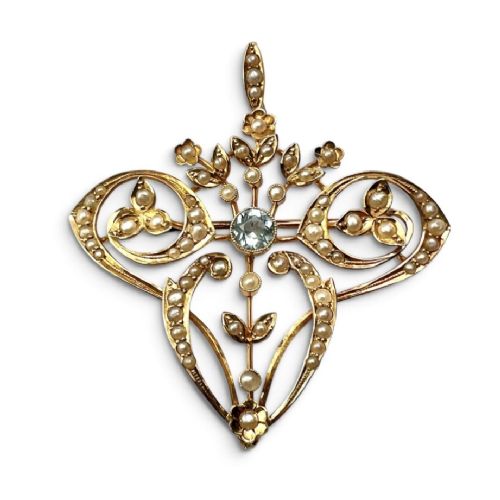
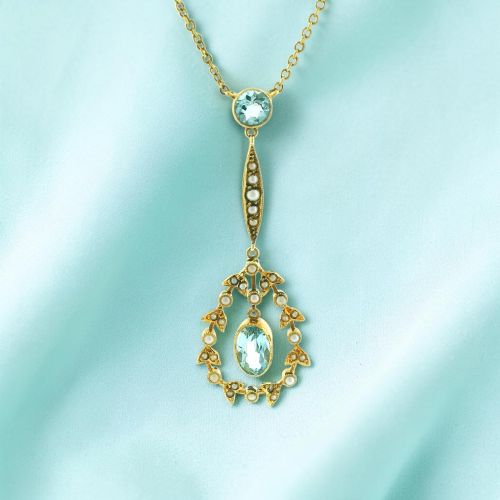
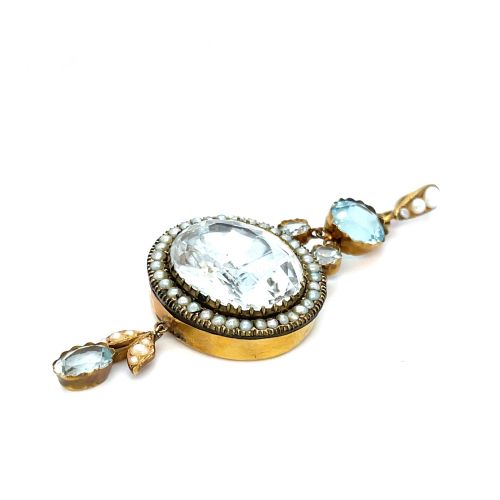
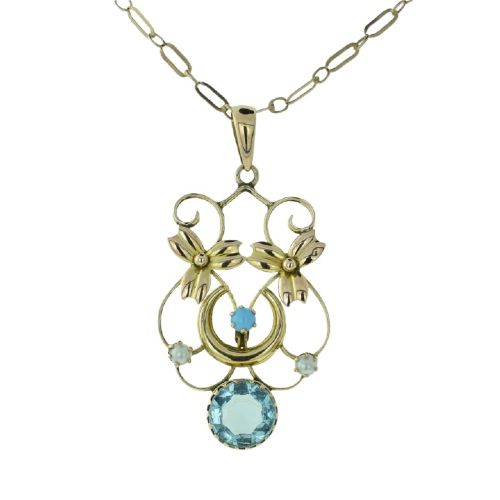
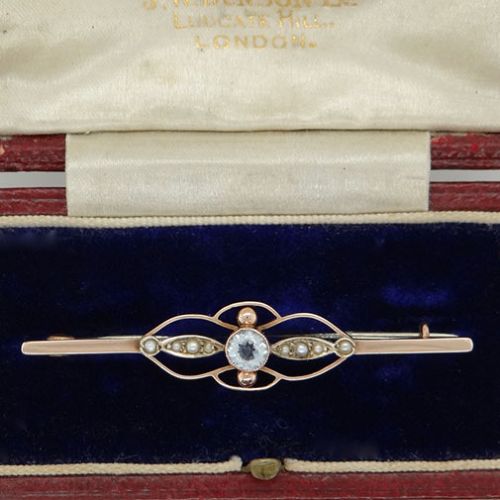
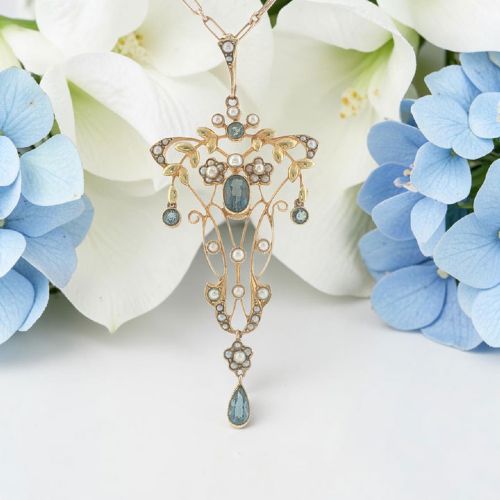
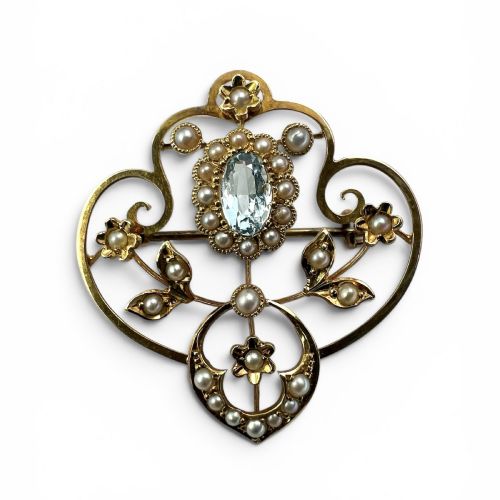
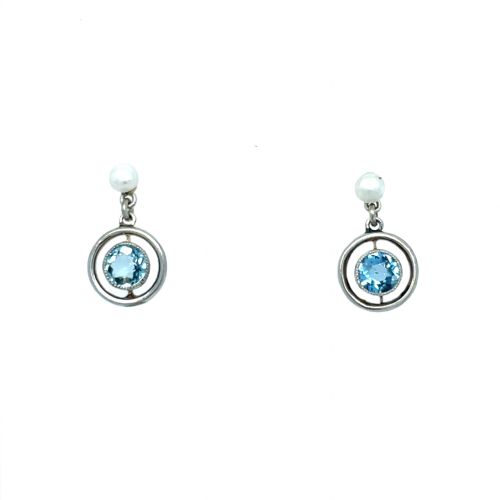
Pearl and aquamarine jewellery encompasses pendants, necklaces, brooches, earrings, and bracelets created during the Victorian, Edwardian, and Art Nouveau eras. The most frequent discoveries on this page are pendants and drop necklaces from the Edwardian period, often incorporating delicate seed pearls alongside central aquamarine stones.
Makers of these pieces utilised distinct stylistic markers from the late nineteenth and early twentieth centuries, moving from heavier Victorian mounts into the fluid, organic lines of Art Nouveau. The combination of cool blue aquamarines with creamy pearls remains a consistent hallmark across these surviving forms.
Distinctions in quality
The distinction between standard and superior pieces rests upon the saturation and clarity of the aquamarine crystal, alongside the uniformity and lustre of the pearls. Higher-tier examples display exceptional transparency in the beryl, complemented by finely matched seed pearls that retain their original orient.
Pearl and Aquamarine Jewellery Retail Price Guide 2026
Typical asking prices for pearl and aquamarine jewellery among the pieces listed under this phrase on Sellingantiques today, from the lower quarter to the upper quarter. They describe what is for sale here now, not the wider market.
Edwardian jewellers sometimes tucked secret tiny seed pearls into leafy gold tendrils just to catch the afternoon light.
The Pearl and Aquamarine Jewellery Glossary
- Seed pearl
- A very small, naturally formed or cultured pearl, often half-drilled and threaded onto fine wire or pegged into gold mounts. These delicate spheres create soft borders and floral clusters around larger stones.
- Aquamarine
- A transparent, pale blue to light greenish-blue variety of beryl, valued for its crystalline clarity and watery hue. It serves as the primary focal gemstone in Edwardian and Victorian pendant designs.
- Art Nouveau
- A decorative art style popular around nineteen hundred, characterised by asymmetrical flowing lines, whiplash curves, and stylised natural motifs. This aesthetic heavily influenced the pendant and necklace settings of the era.
- Lavalier
- A pendant necklace featuring a central drop stone suspended below a smaller motif or chain connector. This graceful form gained immense popularity during the Edwardian period.
Pearl and Aquamarine Jewellery: Frequently Asked Questions
How do I care for antique pearl and aquamarine jewellery?
Organic pearls require gentle handling because they are sensitive to harsh chemicals, perfumes, and prolonged immersion in water. Clean them simply with a soft, dry cloth after wearing and store them separately from harder gemstones.
Aquamarines are durable beryl crystals that tolerate mild soapy water, but the fragile seed pearls demand caution. Avoid ultrasonic cleaners entirely, as the vibrations can dislodge tiny pearls from their delicate gold settings.
What defines Edwardian jewellery style?
Edwardian jewellery is known for its lightness, grace, and intricate openwork metal designs inspired by garlands, ribbons, and natural forms. Jewellers frequently employed yellow and rose gold alongside platinum to create airy, lace-like frameworks.
This era favoured pastel colour palettes, pairing pale aquamarines with seed pearls and small accent diamonds. The resulting pieces project an understated elegance distinct from heavier Victorian ornamentation.
Are seed pearls natural or cultured?
Seed pearls found in antique pieces from the Victorian and Edwardian eras are predominantly natural saltwater pearls harvested from pearl oysters. Their minute size and irregular organic shapes distinguish them from modern cultured varieties.
Because they formed naturally over time, each pearl exhibits slight variations in lustre and tone. This subtle asymmetry adds to the charm and authenticity of early twentieth-century necklaces and brooches.
Can I wear these antique pieces every day?
Daily wear is possible with careful attention to how the jewellery is handled and stored during physical tasks. Because seed pearls are held by delicate pins or adhesives in antique mounts, heavy impact can cause losses.
Rotating your pieces and reserving them for special occasions helps preserve their structural integrity. Regular inspection by a specialist ensures the tiny settings remain secure over time.