

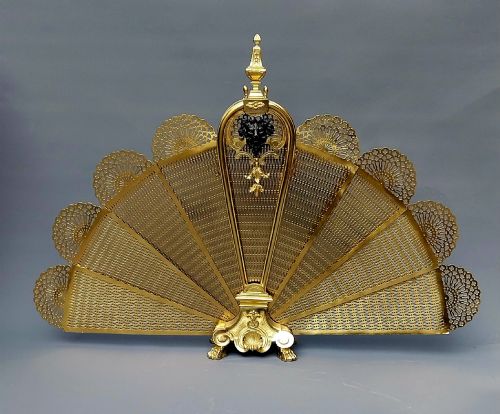
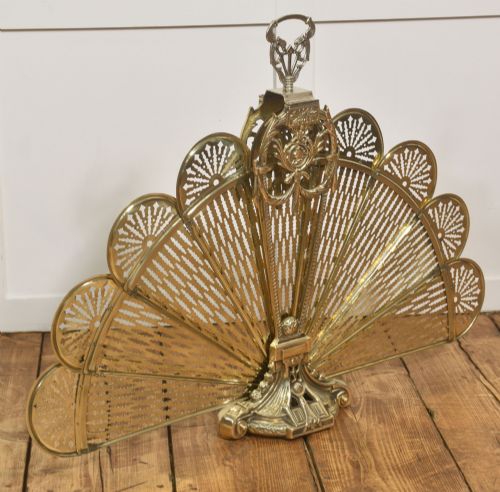
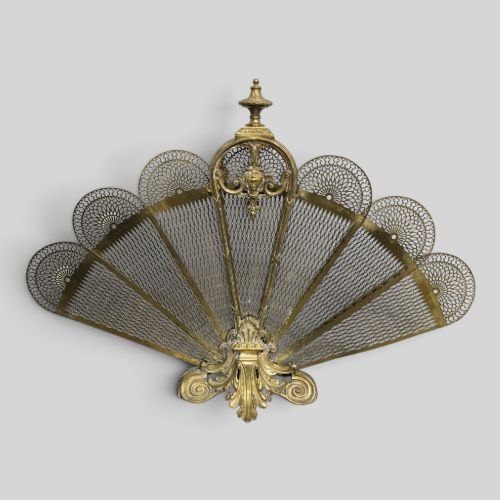
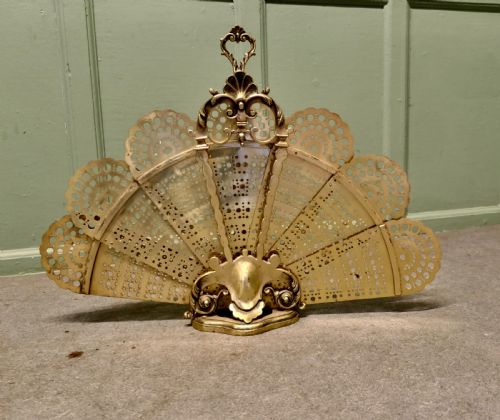


Peacock Fire Guard
A peacock fire guard offers a clever folding fan design that protects the room from stray sparks while adding a dramatic focal point to the hearth.
Peacock Fire Guard
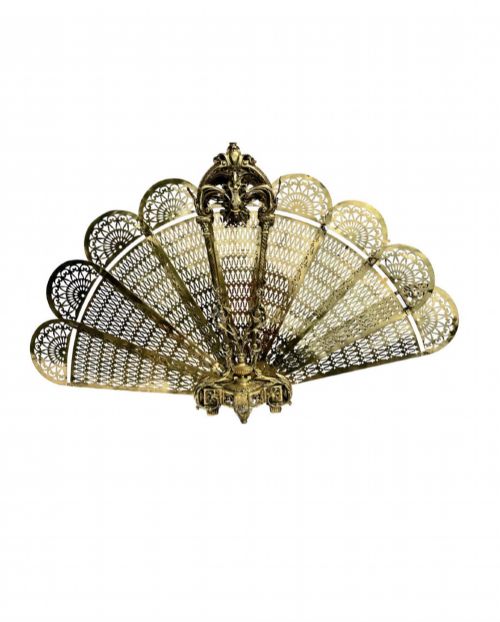
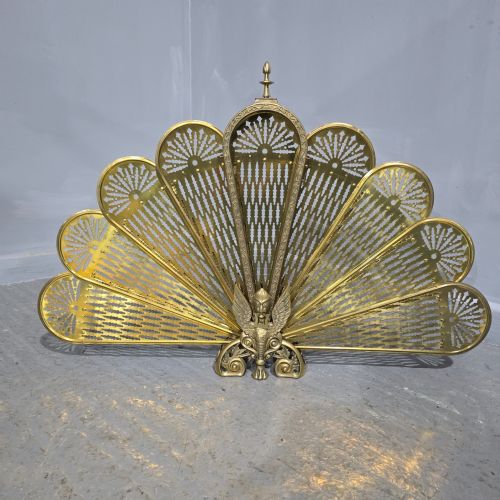
A peacock fire guard uses a clever folding fan mechanism constructed with multiple individual metal blades that expand outwards to resemble a tail. When not in use, the blades collapse neatly together to save space beside the hearth.
Most examples found here date from the nineteenth and early twentieth centuries, spanning the Victorian era through the nineteen-twenties. These screens appear in various forms, from simple brass wire arrangements to ornate French revival designs.
Makers utilised different metals to achieve distinct decorative effects, pairing polished brass with cast iron or gilt bronze. The silhouettes range from utilitarian domestic pieces to elaborate revival furnishings designed for formal reception rooms.
How they were made
Artisans constructed these folding screens using sheet brass and wire mesh, shaping individual metal leaves to form the iconic fan silhouette. Rivets and pivot pins allowed each segment to swing smoothly outwards without binding.
Foundry workers employed casting and wrought iron techniques for the supporting frames and bases, ensuring the structure remained stable when fully expanded. Heavier decorative crests and mounts often utilised cast brass or gilt bronze.
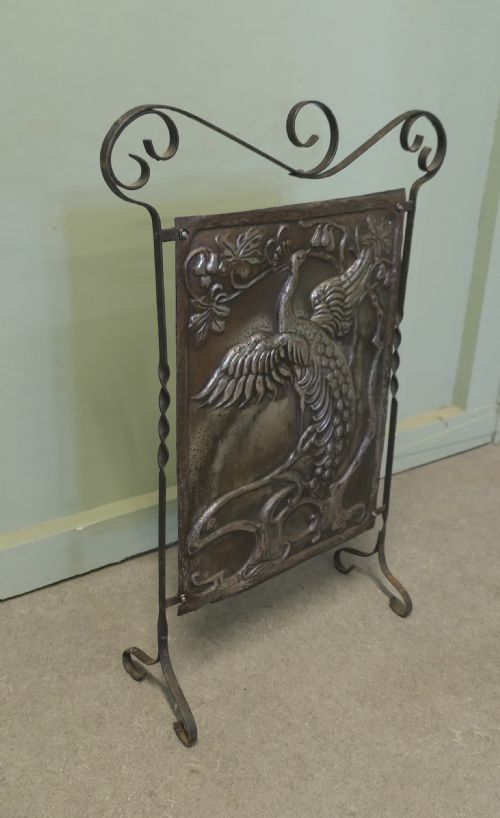
Finishes varied according to the prevailing style, utilising polished surfaces on brass components alongside darker patinated iron. Some Arts and Crafts examples emphasised hammered textures and honest metalwork over high-gloss plating.
Peacock Fire Guard Retail Price Guide 2026
Typical asking prices for peacock fire guard among the pieces listed under this phrase on Sellingantiques today, from the lower quarter to the upper quarter. They describe what is for sale here now, not the wider market.
Listings demonstrate that peacock fire guards span from the eighteen-eighties through the nineteen-twenties, incorporating both Victorian and Arts and Crafts aesthetics.
What varies in quality
The precision of the folding mechanism dictates the overall mechanical success of the piece, with finer examples opening smoothly with uniform spacing between each metal blade. Loose pivots and misaligned segments indicate hurried assembly.
Material selection and decorative depth separate standard domestic guards from ambitious exhibition pieces. Heavier gauge brass, crisp cast bronze mounts, and substantial iron frames provide both longevity and visual weight.
Bouhon Frères
The Peacock Fire Guard Glossary
- Fire screen
- A movable decorative panel placed before a fireplace opening to mask the hearth when the fire is unlit. They prevent drafts and contain residual ash.
- Gilt bronze
- Metalwork coated with a thin layer of gold to give a rich, durable surface finish. It appears frequently on decorative French fireplace furniture.
- Rococo Revival
- A nineteenth-century design style characterised by asymmetrical scrolls, naturalistic plant motifs, and C-scroll flourishes. It heavily influenced ornate domestic metalwork.
Peacock Fire Guard: Frequently Asked Questions
What is a peacock fire guard?
A peacock fire guard is a folding metal screen designed to protect a room from embers while beautifying an unused hearth.
Its distinct fan shape expands to resemble a peacock tail and collapses flat when the fireplace is active.
How do you use a folding fan screen?
You gently pull the outer metal blades apart to fan the screen across the fireplace opening.
The pivoting base allows the individual vanes to spread evenly and lock into a stable semi-circular position.
Are these screens safe to use with an open fire?
These guards function primarily as decorative room furnishings and spark deflectors rather than heavy safety barriers.
Most period examples utilise lightweight brass blades and wire mesh intended to catch minor embers rather than intense heat.
How do I date a brass fire screen?
Dating relies upon observing the manufacturing techniques, mounting styles, and stylistic motifs present in the metalwork.
Victorian and early twentieth-century pieces often combine machine-rolled brass blades with hand-finished cast bronze bases.