



Patterned Wingback
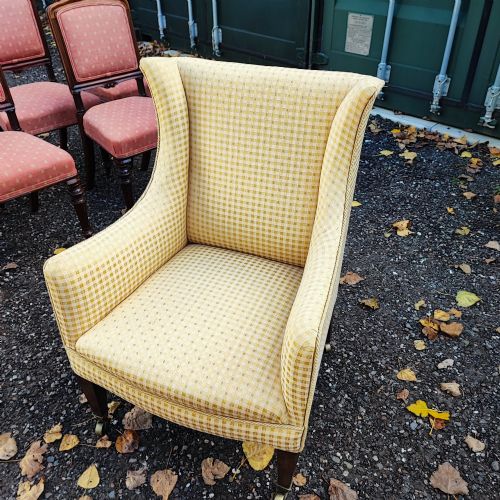
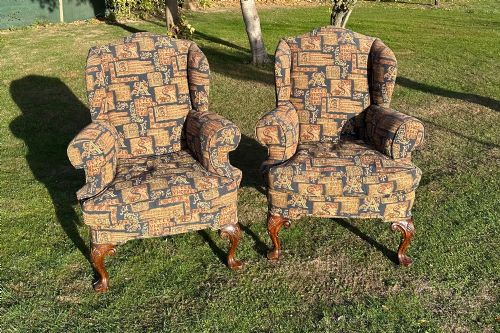
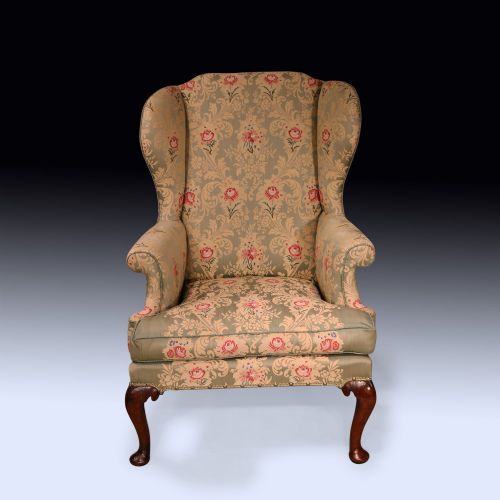
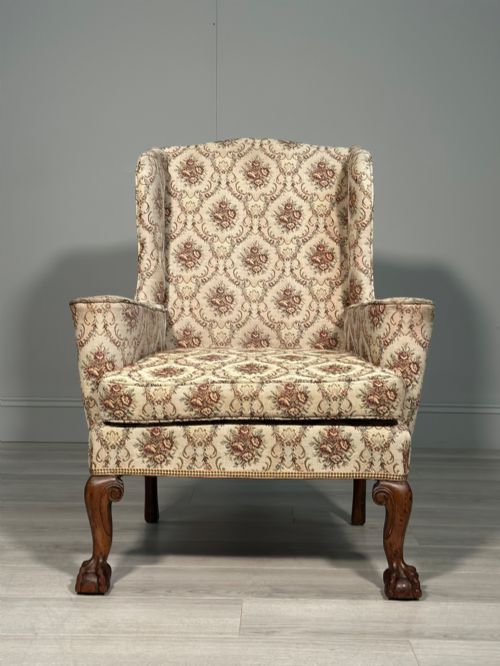
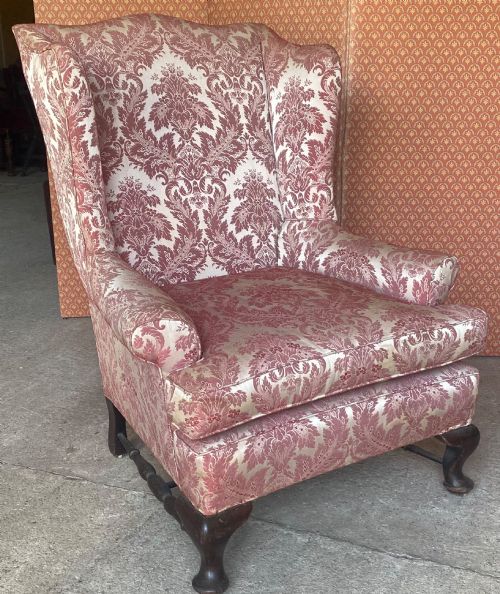
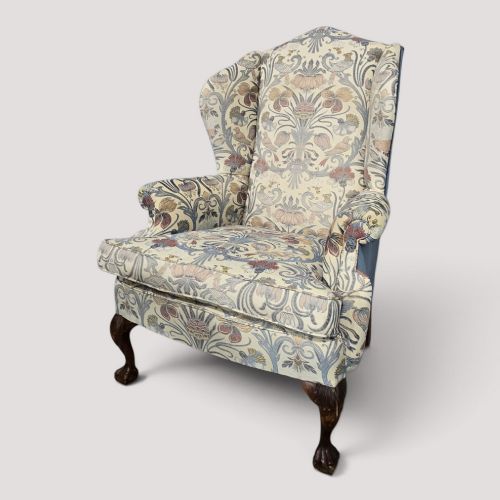
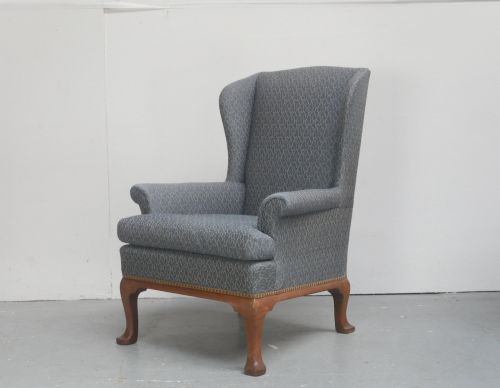
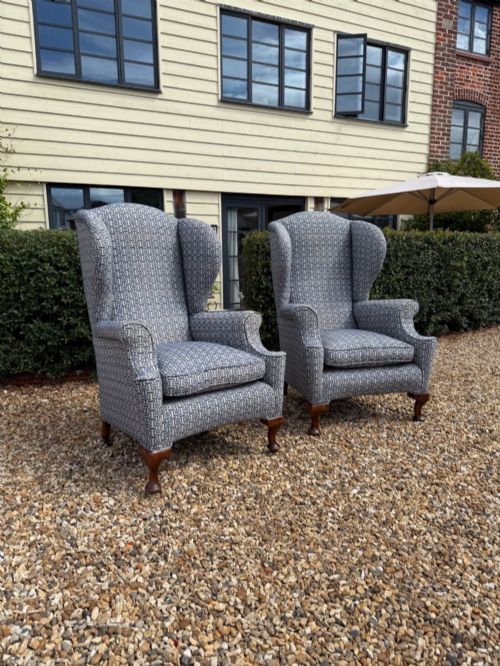
These patterned wingback chairs and sofas bring draught-excluding comfort and striking textiles to a room, offering deep seats and sheltering sides.
Patterned Wingback
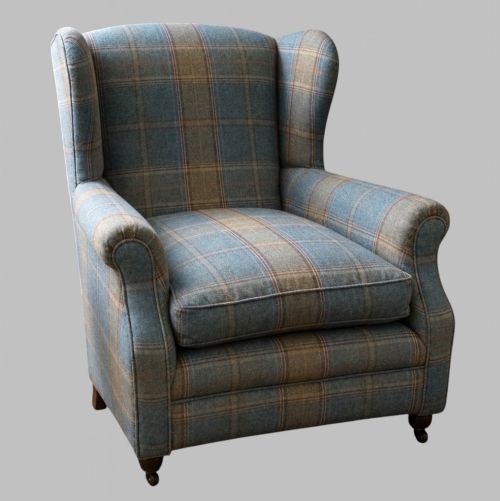
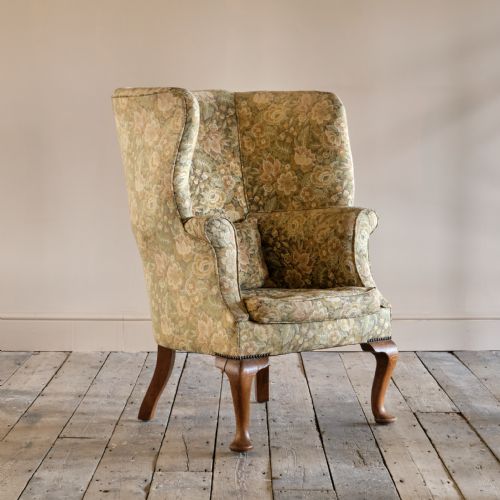
A patterned wingback provides a high back and protective side panels designed originally to deflect cold draughts from hearths. Pieces meeting this description span several decades from the Victorian and Edwardian eras into the early twentieth century, alongside revivals drawing on earlier Georgian and Queen Anne forms.
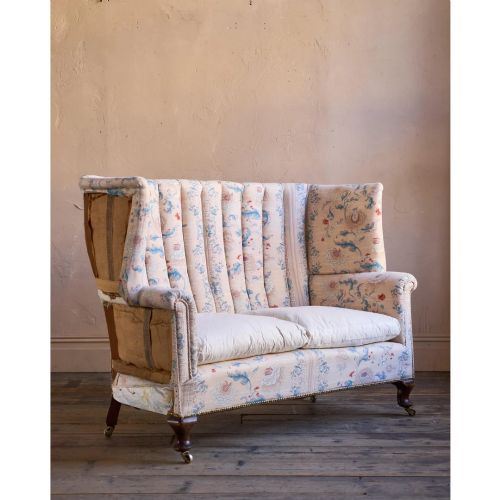
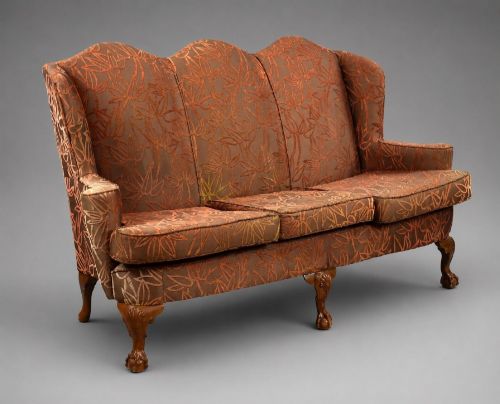
The assortment on this page ranges from single armchairs to pairs, barrel-backed seats, and larger settees or sofas. Upholstery varies from plaid wool and tapestry fabric to patterned textiles, supported by frames in mahogany, walnut, oak, and other hardwoods.
Materials and construction
Frames rely on sturdy timbers such as mahogany, walnut, and oak, sometimes incorporating exposed carved wood on the legs and arm supports. Brass accents and hardware appear alongside traditional joinery techniques.
Upholstery involves textiles, fabric, and tapestry materials stretched over internal padding and webbing. Wool plaids and patterned weaves dominate the outer covers, fastened with tacks or piping.
Patterned Wingback Retail Price Guide 2026
Typical asking prices for patterned wingback among the pieces listed under this phrase on Sellingantiques today, from the lower quarter to the upper quarter. They describe what is for sale here now, not the wider market.
Early draftsmen designed the wings specifically to catch stray pipe smoke and trap body heat.
Distinctions in quality
The standard of a piece rests on the solidity of its hardwood frame and the crispness of any carved woodwork on the legs, such as claw and ball feet. Heavier, more substantial timber construction signals superior craftsmanship compared to lighter secondary woods.
Textile selection and upholstery execution also divide the range, with dense woven wools, tapestries, and precise pattern matching indicating higher workshop standards. Original frame integrity and balanced proportions determine the standing of each armchair or sofa.
Whytock & Reid·Howard & Sons·William Morris
The Patterned Wingback Glossary
- Wingback
- An armchair or sofa featuring projecting side panels attached to the backrest. These wings were designed to trap heat and block room draughts.
- Bergère
- An enclosed upholstered armchair with wooden framing visible around the sides and back. The style often includes cane work or tight fabric panels.
- Barrel back
- A seating form where the backrest curves in a continuous semicircular sweep around the user. This shape offers enclosed support similar to a wingback.
- Settee
- A long upholstered seat with a back and arms, designed to accommodate multiple people. These pieces match the timber frames and upholstery of contemporaneous armchairs.
Patterned Wingback: Frequently Asked Questions
How do I date a wingback chair?
Dating relies on combining the timber species, leg style, and upholstery evidence. Victorian and Edwardian examples show distinct turning and wood choices that separate them from earlier revival pieces.
Looking beneath the upholstery or at the frame construction reveals joinery methods typical of specific decades between the nineteenth and twentieth centuries.
Were wingback chairs only used by firesides?
While the wings served to trap heat from open hearths, these seats also appeared in libraries, parlours, and drawing rooms. Their enclosed shape offered privacy and comfort away from the fireplace.
Larger variations included settees and sofas placed along main walls in formal rooms rather than strictly beside chimneys.
How do I choose between a sofa and an armchair?
Choosing depends on available room space and seating needs. Single armchairs and pairs suit corners or firesides, while two or three-seat sofas anchor larger reception spaces.
Both forms share similar patterned textiles and timber frames, allowing mixed seating arrangements within a room.