



Patterned Ottoman Bench
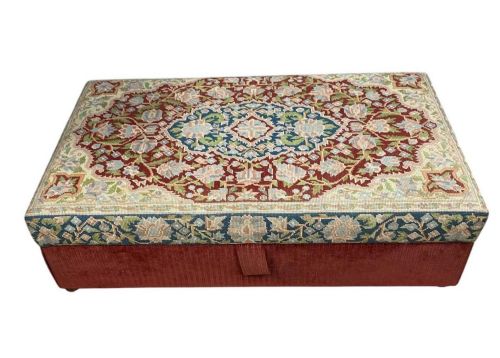
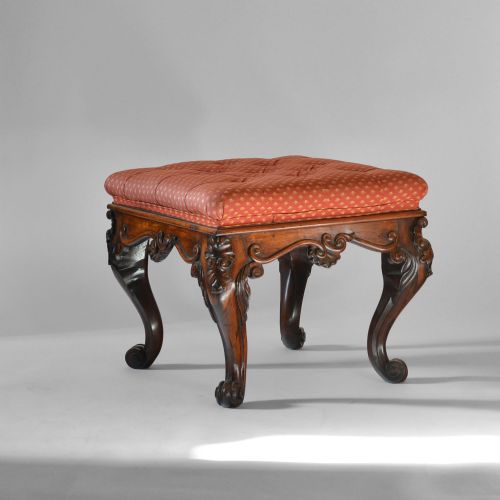
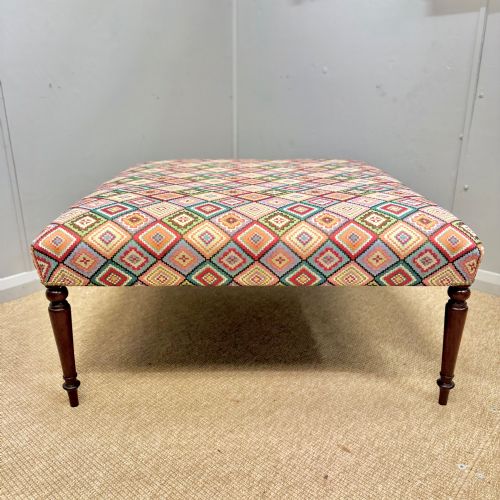
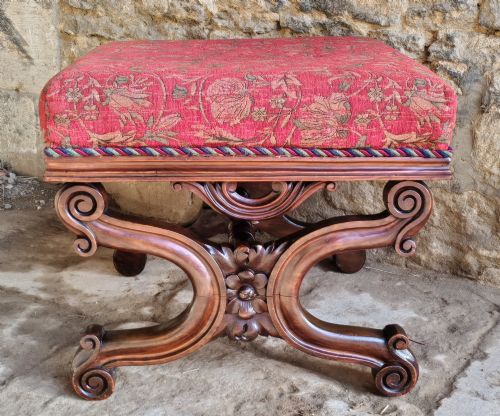
These patterned ottoman bench pieces bring tactile upholstery and sturdy timber frames into a room, offering both a seat and a surface.
Patterned Ottoman Bench
A patterned ottoman bench serves primarily as a footstool, a coffee table, or a centre stool, combining textile surfaces with wooden structures. When searching for a patterned ottoman bench, buyers encounter pieces spanning the nineteenth century through to the early twentieth century.
The forms vary from large geometric upholstered footstools and country house ottomans to x-frame stools and low coffee table heights. Common styles represented include Victorian, Anglo-Indian, Jacobean Revival, and Art Deco.
Most items rely on substantial timber frames paired with decorative textile coverings such as wool tapestry, kilim, velvet, and patterned fabrics. These variations reflect the shifting domestic tastes across different decades and provincial English or colonial workshops.
Materials and construction
The foundational frames utilise hardwoods including mahogany, oak, rosewood, and walnut, often shaped with carved details or structural x-frame supports. Brass elements sometimes appear as decorative accents or castors on the heavier timber bases.
Upholstery techniques bring softness to the rigid wood frames, using textiles like wool tapestry, flatweave kilim, and plush velvet. These coverings are secured over firm padding, creating durable surfaces designed for daily use as seats or rests.
Patterned Ottoman Bench Retail Price Guide 2026
Typical asking prices for patterned ottoman bench among the pieces listed under this phrase on Sellingantiques today, from the lower quarter to the upper quarter. They describe what is for sale here now, not the wider market.
Listings span the nineteenth century through the 1930s, featuring woods like mahogany, oak, walnut, and rosewood paired with tapestry and velvet.
Judging quality and character
Quality rests in the substance of the timber frame and the integrity of the joinery, distinguishing heavy, solid oak or carved mahogany from lighter constructions. The density of the wood and the precision of the carving dictate the baseline endurance of each piece.
The textile covering dictates the visual appeal, where hand-worked wool tapestry or traditional kilim upholstery holds greater depth than standard printed fabrics. Matching the textile to the period style elevates the overall coherence of the design.
The Patterned Ottoman Bench Glossary
- Ottoman
- A low, upholstered seat or footstool without arms or a back, frequently used as a coffee table or resting place.
- Kilim
- A flatwoven textile originating from the Middle East or Eastern Europe, often utilised to cover traditional footstools.
- X-frame
- A furniture base constructed from two intersecting pieces of timber forming an 'X' shape for structural support.
- Centre stool
- A large freestanding stool designed to sit in the middle of a room rather than against a wall.
Patterned Ottoman Bench: Frequently Asked Questions
What is an ottoman bench used for?
These pieces function flexibly as footrests, extra seating, or improvised coffee tables depending on their height and surface area. Their sturdy timber frames and cushioned tops allow them to handle heavy daily domestic use.
Placed centrally in a room or beside seating groups, they anchor the space while providing practical utility.
Are these benches comfortable to sit on?
Most pieces feature firm upholstered tops designed originally for resting feet or supporting trays rather than deep lounging. The padding underneath the tapestry or velvet provides a solid, supportive surface.
Over time, the firmness depends on the historic stuffing materials retained within the upholstery.
What woods were used for frames?
Cabinet makers utilised dense hardwoods including mahogany, oak, walnut, and exotic timbers like rosewood for Anglo-Indian pieces. These heavy woods ensured the frame could withstand the weight of upholstery and daily pressure.
Lighter woods appear less frequently, with heavier oak and mahogany dominating the selection.