


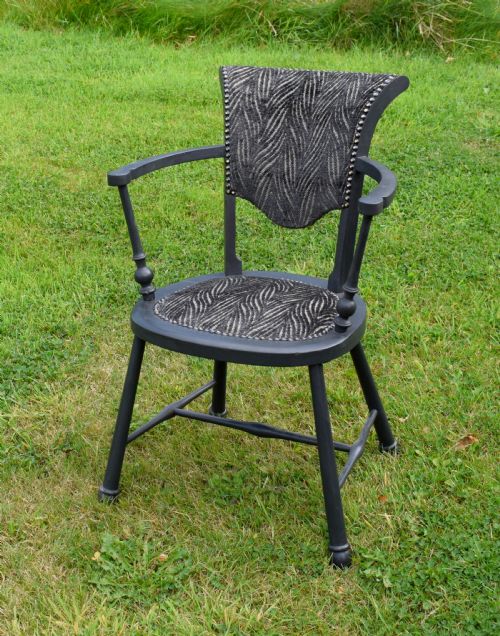
Patterned Occasional Chair
These patterned occasional chair examples offer practical seating with distinct periods and textiles that transform a neglected corner into a focal point.
Patterned Occasional Chair
A patterned occasional chair provides flexible seating across sitting rooms, bedrooms, and halls, taking forms such as side chairs, armchairs, and nursing chairs. These items arrive from periods spanning the eighteenth century through the early twentieth century, encompassing Victorian, Edwardian, and earlier aesthetic traditions.
The selections on this page lean heavily toward Victorian bedroom chairs and nineteenth-century side chairs, alongside Edwardian inlaid pieces and Arts and Crafts elbow chairs. Buyers frequently encounter turned wooden legs, castors, and contrasting textile coverings that update historical frames for contemporary rooms.
Makers and designers from the George III era to the nineteen-thirties produced these items in various woods, including mahogany and satinwood. Each seating option balances structural woodwork with decorative upholstery fabric, velvet, or geometric coverings.
How they were made
Cabinetmakers constructed the frames primarily from solid timbers like mahogany and satinwood, occasionally applying giltwood or brass details for visual emphasis. Structural elements involve traditional joinery, turned front legs, and carved folding mechanisms suited for campaign use.
Upholstery forms an essential component of construction, utilising fabric, velvet, and specialised textiles fixed over sprung or padded seats. Many frames integrate new upholstery fabrics applied during restoration while retaining their nineteenth-century wooden skeletons.
Patterned Occasional Chair Retail Price Guide 2026
Typical asking prices for patterned occasional chair among the pieces listed under this phrase on Sellingantiques today, from the lower quarter to the upper quarter. They describe what is for sale here now, not the wider market.
Form variations recorded here include folding campaign frames, tall back hall armchairs, and matching pairs of nineteenth-century bedroom chairs.
What varies in quality
The distinction between tiers rests upon the crispness of timber carving, the choice of primary woods such as figured mahogany versus standard softwoods, and the integrity of the frame joints. Superior examples exhibit refined proportions, intact brass castors, and harmonious integration between the wooden structure and the textile covering.
Upholstery execution alters the character of each piece, where hand-stitched details and sympathetic fabric choices elevate historical frames. Lower variations often display heavy alterations or mismatched elements that obscure the original period silhouette.
The Patterned Occasional Chair Glossary
- Occasional chair
- A movable seating item designed for use in various rooms rather than a permanent spot. These pieces function as decorative accents while remaining practical for sitting.
- Nursing chair
- A low-seated upholstered chair originally designed for feeding infants in Victorian nurseries. They typically feature low seats and supportive high backs.
- Elbow chair
- An armchair featuring low arms designed to support the elbows rather than fully enclose the sitter. These timber frames often incorporate inlaid mahogany or satinwood details.
- Castor
- A small wheel mounted on a swivel attached to the foot of a leg. They appear frequently on nineteenth-century bedroom chairs to ease movement across carpets.
- Biedermeier
- A Central European style emphasising utilitarian comfort and clean lines without excessive ornamentation. Pieces in this taste date from the nineteenth century onward.
Patterned Occasional Chair: Frequently Asked Questions
Where should I place an occasional chair?
These chairs fit neatly into empty bedroom corners, beside a hallway table, or as supplementary seating in a main living room. Their modest scale allows them to supplement existing furniture without crowding the floor plan.
Selecting a version with contrasting velvet or geometric fabric helps tie together existing colour schemes within the interior space.
How do I identify a Victorian bedroom chair?
Victorian examples typically feature low seats, turned wooden front legs fitted with metal castors, and fully upholstered backs. Many date from around eighteen-sixty.
They frequently arrive with newly fitted upholstery fabrics that contrast with the darker nineteenth-century wooden frames.
Can these antique chairs handle daily sitting?
Most solid wood frames constructed during the eighteenth and nineteenth centuries remain structurally robust for regular use. Many pieces feature updated internal webbing and new upholstery to ensure reliable support.
Placing them on level flooring protects the original turned legs and attached castors from undue strain.