



Patterned Hearth Rug
These patterned hearth rug examples bring warmth and regional character to a fireplace, offering tactile comfort and traditional design.
Patterned Hearth Rug
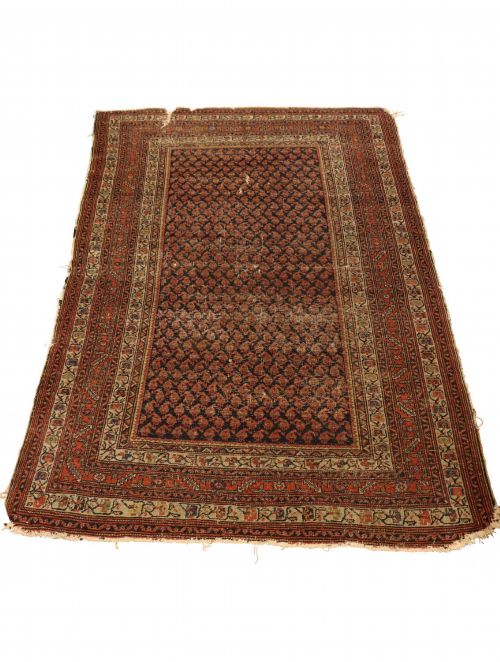
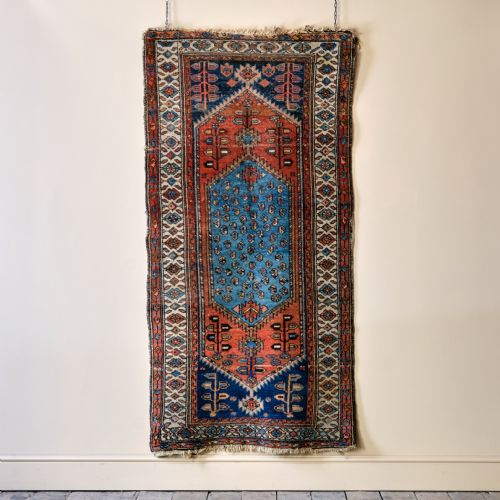
A patterned hearth rug serves as a durable, decorative floor covering designed specifically for placement in front of a fireplace. When searching for a patterned hearth rug, buyers encounter pieces originating from Persian, Turkish, Kurdish, and Turkmen traditions spanning the late nineteenth and early twentieth centuries.
How they were made
These floor coverings are constructed primarily from hand-knotted wool and cotton foundations, utilising traditional techniques handed down through generations. Artisans tied dense knots by hand to secure the soft wool pile, ensuring durability in high-traffic hearth areas.
The construction relies on natural fibre materials that provide both resilience and a rich texture underfoot. Weavers employed traditional hand-knotting methods to render intricate tribal and village patterns with enduring precision.
Patterned Hearth Rug Retail Price Guide 2026
Typical asking prices for patterned hearth rug among the pieces listed under this phrase on Sellingantiques today, from the lower quarter to the upper quarter. They describe what is for sale here now, not the wider market.
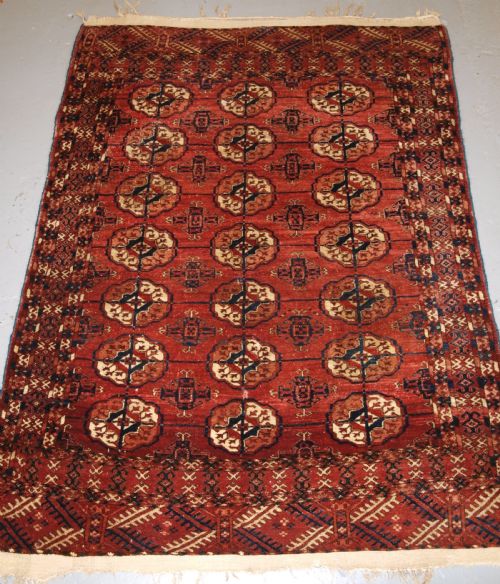
Tekke Turkmen weavers created small dowry rugs with exceptionally soft wool, meant to accompany a bride into her new home.
What varies in quality
Quality differences stem from knot density, the fineness of the wool, and the crispness of the woven design. Finer examples display meticulous precision in rendering complex patterns like star medallions and boteh motifs.
The grade of wool and the tightness of the knotting dictate how well the pile resists wear beside an open hearth. Superior pieces exhibit greater dexterity in the hand-knotted execution, creating a more durable and visually distinct surface.
The Patterned Hearth Rug Glossary
- Boteh
- A stylised almond or pear-shaped motif of Persian origin representing a bush or floral spray. It appears frequently in traditional village and tribal weaving.
- Medallion
- A central decorative motif placed in the middle of the rug field. It often takes a star or geometric form in Turkish and Persian examples.
- Pile
- The raised surface of the rug formed by the ends of the knotted yarn. Soft wool pile provides the tactile warmth characteristic of these hearth coverings.
- Foundation
- The underlying structure of warp and weft threads that supports the knotted wool pile. Cotton is commonly utilised for this sturdy structural grid.
Patterned Hearth Rug: Frequently Asked Questions
Where should I place a hearth rug?
These pieces are traditionally positioned directly in front of a fireplace to protect flooring from stray embers and provide warmth.
Their smaller dimensions also suit narrow hallways, bedside settings, or compact seating areas.
How do I care for wool rugs?
Regular gentle vacuuming without a beater bar helps remove dust and grit from the wool pile safely.
Professional cleaning is recommended periodically to preserve the natural lanolin and colour vibrancy.
What periods do these rugs span?
The available selection primarily dates from the late nineteenth century through the early twentieth century, specifically between eighteen ninety and nineteen thirty.
This era encompasses traditional village and tribal weaving across Persia, Anatolia, and Central Asia.
Are these pieces hand knotted?
Every piece in this collection is produced using traditional hand-knotting techniques executed by village and tribal artisans.
This meticulous method creates a durable pile from natural wool fibres.