



Patterned Fabric Club Chair
These patterned fabric club chairs bring deep upholstery and striking textiles together for a seat built to last.
Patterned Fabric Club Chair
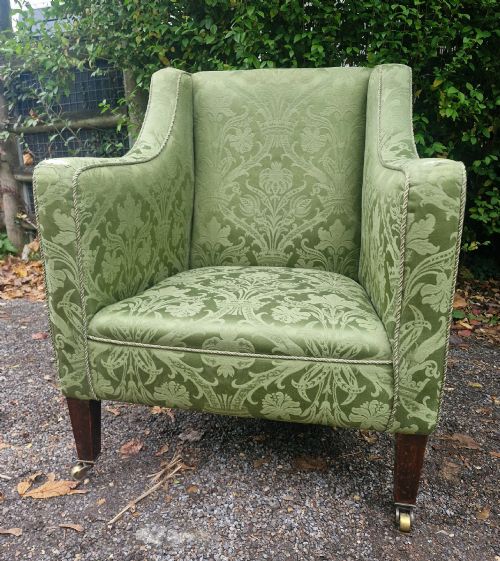
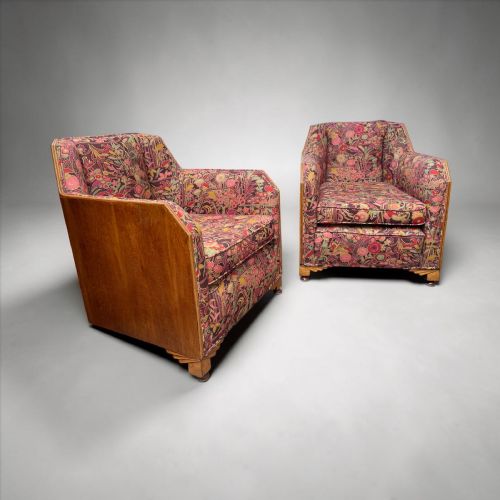
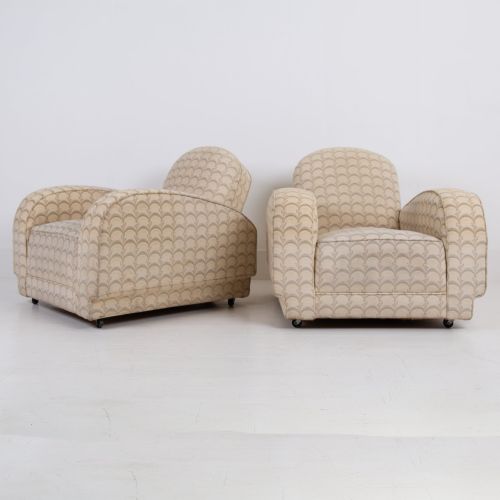
A patterned fabric club chair offers deep, sprung comfort wrapped in textiles ranging from traditional floral prints to bold Art Deco designs and antique carpets. These armchairs span the nineteenth century through the Edwardian era and into the nineteen-thirties, with Victorian and Edwardian examples appearing most frequently.
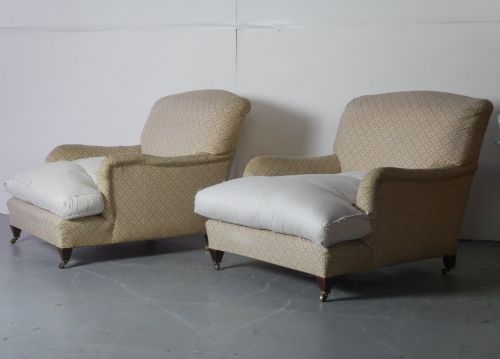
The forms on this page include library chairs, reclining armchairs, and low-slung lounge seating designed for relaxed sitting. Makers such as Howard and Sons and Whytock and Reid define the higher end of the selection, while French Empire and traditional Scottish styles provide formal alternatives.
Buyers often encounter large pairs alongside single armchairs, offering flexible seating options for drawing rooms and studies. The overarching style moves from button-backed Victorian upholstery to cleaner geometric lines from the nineteen-thirties.
Construction and materials
Frames rely on sturdy timbers including mahogany, oak, elm, birch, and general hardwood to support the heavy internal springing required for deep seats. Upholstery fabrics cover cotton, ticking, and patterned textiles, occasionally complemented by brass castors on the feet.
Traditional joinery secures the wooden skeletons before upholsterers build up the springs, stuffing, and outer covers by hand. The outer textiles utilise printed patterns, kilim carpets, or themed fabrics such as horse racing prints to finish the exterior.
Patterned Fabric Club Chair Retail Price Guide 2026
Typical asking prices for patterned fabric club chair among the pieces listed under this phrase on Sellingantiques today, from the lower quarter to the upper quarter. They describe what is for sale here now, not the wider market.
An unexpected Edwardian armchair arrives upholstered in a lively horse racing theme, ready to bolt from the starting gate.
Assessing quality
Quality rests upon the integrity of the hidden internal frame and the resilience of the traditional upholstery build. Maker stamps from firms like Howard and Sons elevate a piece, denoting superior workshop standards and careful joinery.
The choice of textile and the precision of pattern matching across the arms, back, and cushions distinguish finer examples from standard seating. Original elements such as stamped brass castors and authentic top covers retain the historical integrity of the armchair.
Whytock and Reid·Howard and sons·Heals of London·JAMES SHOOLBRED·John Taylor and Sons
The Patterned Fabric Club Chair Glossary
- Club chair
- A deep, comfortable armchair with upholstered arms designed for relaxed lounging. These seats typically feature low backs and substantial padding.
- Ticking
- A tightly woven heavy cotton or linen fabric traditionally used as a durable inner lining for mattresses and upholstered furniture. It often appears as striped material.
- Castor
- A small wheel fitted to the foot of a chair leg to allow easy movement across floors. Brass and ceramic versions are common on nineteenth-century seating.
- Button-back
- An upholstery technique where buttons are pulled deep into the padding to create a quilted diamond pattern. This method secures the internal stuffing while adding texture.
Patterned Fabric Club Chair: Frequently Asked Questions
How do I date a club chair?
Dating relies on examining the timber frame, the upholstery methods, and stylistic cues such as carved mahogany legs or nineteen-thirties geometric lines. Maker marks and stamps provide the most reliable guide to a specific period.
Later pieces often feature lighter woods like birch and elm alongside streamlined Art Deco shapes, whereas Victorian examples tend to display heavier hardwood frames and button-backed padding.
Are these chairs comfortable for daily use?
These armchairs were built for deep, sustained comfort with sprung seats and padded arms designed to support long periods of sitting. Their robust internal construction makes them well-suited for everyday living rooms and libraries.
Traditional stuffing methods provide firm yet yielding support that differs noticeably from modern foam seating. Many buyers find them ideal for reading or relaxing.
What is a club easy armchair?
A club easy armchair refers to a generously proportioned seat with wide arms and deep cushioning intended for total relaxation. These chairs often feature heavy internal springing and substantial wooden frames.
Maker workshops like Howard and Sons specialised in this form, producing durable frames covered in ticking or heavy upholstery fabrics. They anchor a room with their solid presence.
How do I care for antique upholstery?
Protecting antique textiles involves regular gentle vacuuming with a soft attachment to lift dust from the weave. Keeping the chairs away from direct sunlight prevents the patterned fabrics from fading.
Professional cleaning is recommended for delicate materials like kilim carpets or printed cottons to preserve the integrity of the fibres. Spot cleaning should be approached with caution.