


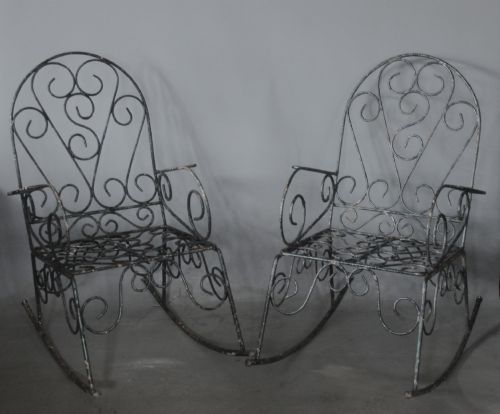
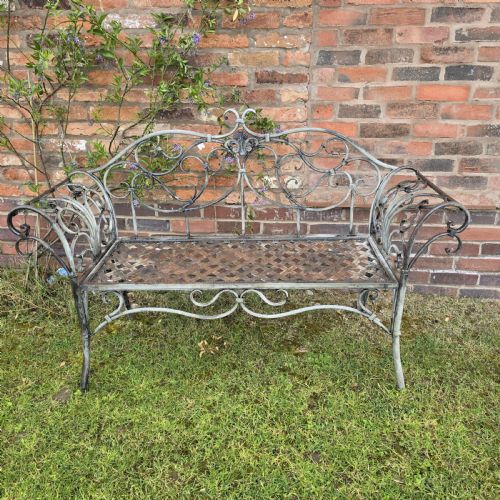

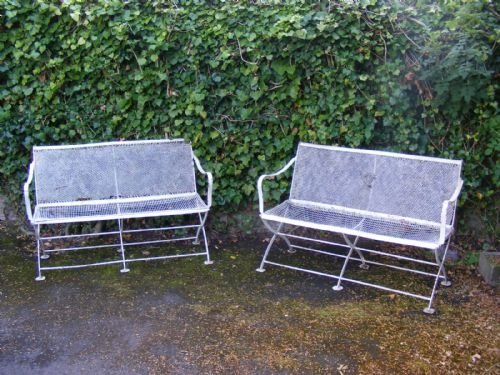


Patio Seating
Patio seating brings character to outdoor spaces through robust metal and timber furniture built to weather the elements.
Patio Seating
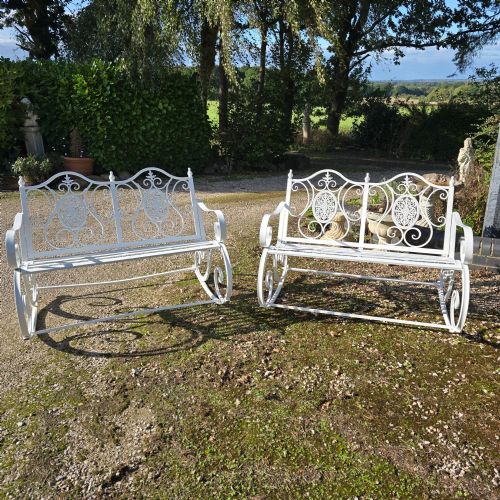
Patio seating encompasses durable outdoor furniture designed for gardens, terraces and courtyards, drawing on periods from the nineteenth century through to the mid-twentieth century. When searching for patio seating, buyers encounter forms ranging from single garden benches and rocking chairs to complete dining sets and bistro arrangements.
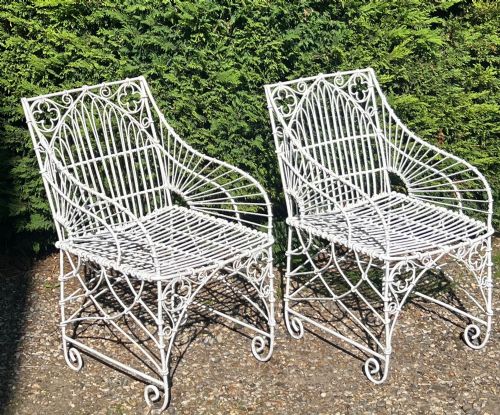
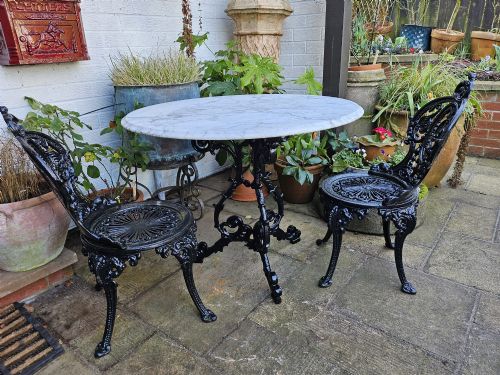
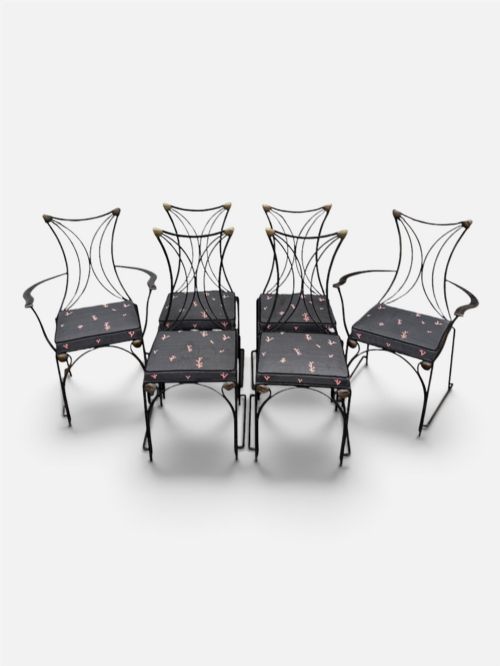
The selections on this page demonstrate substantial variety in origin and design, including French bistro sets, Gothic style iron chairs, and Regency style strap work seats. Pieces utilise robust materials intended for permanent outdoor placement while carrying distinct stylistic nods to Victorian, classical revival, and French country aesthetics.
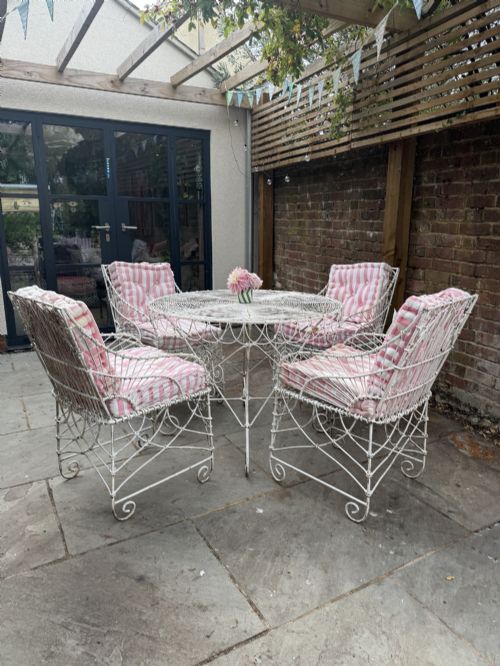
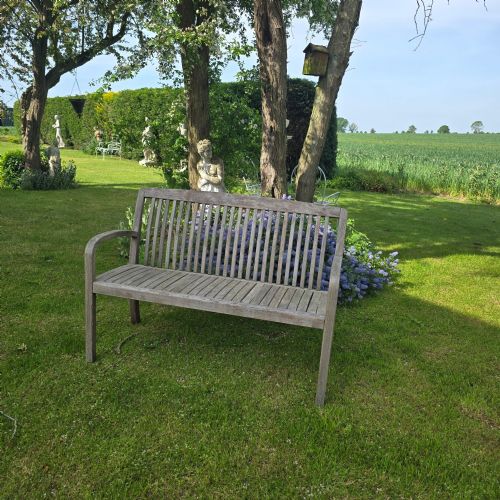
Most examples lean towards heavy metal construction, though traditional timber benches appear alongside stone and wirework variations. Buyers often find matched sets comprising a table and four or six chairs, alongside pairs of armchairs and standalone benches featuring lion mask or shell details.
Materials and construction methods
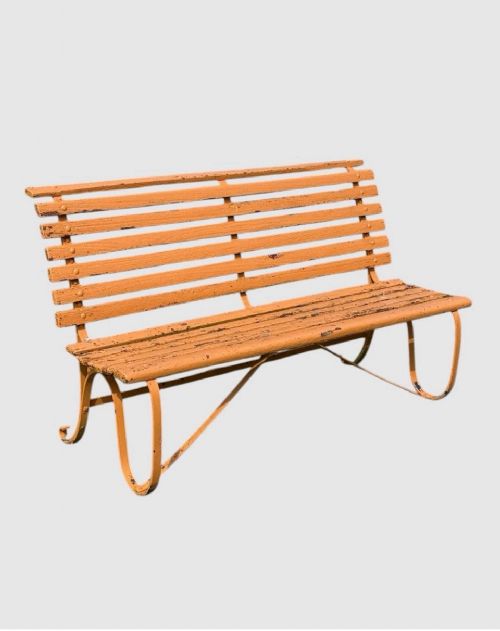
Makers relied heavily on cast iron and wrought iron for framing, moulding intricate details such as gothic arches, strap work, and lion masks into the metal. These iron elements frequently carry layered paint surfaces or weathered patinas acquired through decades of exposure.
Patio Seating Retail Price Guide 2026
Typical asking prices for patio seating among the pieces listed under this phrase on Sellingantiques today, from the lower quarter to the upper quarter. They describe what is for sale here now, not the wider market.
The listings span from the early nineteenth century through to the 1950s, featuring materials like wrought iron, cast iron, teak, wirework, and marble.
Markers of quality and execution
Quality in patio seating emerges from the crispness of the casting and the structural integrity of the joints, particularly in ironwork where intricate motifs should remain sharp and defined. Superior examples exhibit careful hand-forged elements in wrought iron or balanced proportions in timber and stone.
The longevity of a piece depends heavily on the original metal thickness and the survival of early or original paint layers rather than modern repainting. Sets that retain their matching tables and complete chairs command greater architectural cohesion than assembled groups.
Christopher Dresser·Val D'osne
The Patio Seating Glossary
- Cast iron
- Molten metal poured into a mould to create rigid, highly detailed furniture components. This technique allowed Victorian makers to produce elaborate openwork backs and decorative frames for garden seats.
- Wrought iron
- Iron heated and hammered into shape by hand, producing flexible and strong structural elements. It appears frequently in French bistro sets and folding chairs.
- Wirework
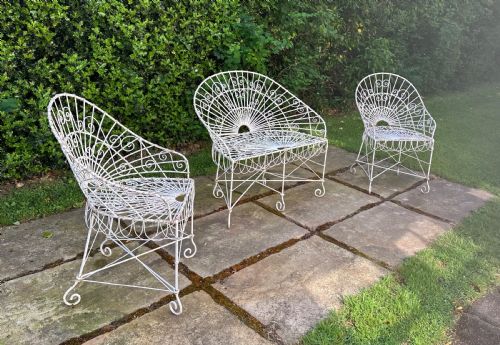
- Metal strands bent and woven into resilient mesh patterns for outdoor tables and chairs. Popular in the late nineteenth century, this method offered a lighter visual profile than cast iron.
- Strap work
- Flat strips of metal arranged in geometric or interlaced patterns across the backrests of seats. This decorative technique often reflects Regency style influences.
- Gothic Revival
- An architectural and decorative style incorporating pointed arches and medieval motifs. Iron garden chairs from this tradition echo ecclesiastical stonework.
Patio Seating: Frequently Asked Questions
Can iron patio seating stay outside all winter?
Iron patio seating handles outdoor conditions well due to its robust metal construction, though regular monitoring for moisture helps preserve the surface.
Storing pieces undercover during severe winter weather prevents excessive moisture accumulation in joints and protects painted finishes.
How do I identify a Victorian garden bench?
Victorian garden benches typically feature heavy cast iron frames with wooden slats or full cast iron construction incorporating ornate motifs. Look for classical revival details, robust weight, and structural proportions typical of nineteenth-century manufacturing.
Makers from this era often utilised heavy casting techniques that produce distinct tactile textures and deep relief patterns on the backrests.
What is the difference between bistro sets and dining sets?
Bistro sets generally consist of a small round table and two folding or lightweight chairs designed for compact outdoor spaces. They originate largely from French traditions and utilise slender metal or wirework construction.
Garden dining sets provide larger tables accompanied by four or six matching armchairs or dining chairs, intended for seated outdoor meals rather than casual resting.
How should I clean weathered garden furniture?
Cleaning weathered metal or stone furniture involves removing surface debris with a soft brush and mild soapy water to preserve the existing patina. Avoid harsh chemical strippers that might strip away historical paint layers.
For teak or wooden elements, gentle washing maintains the silvered appearance without damaging the underlying wood fibres.